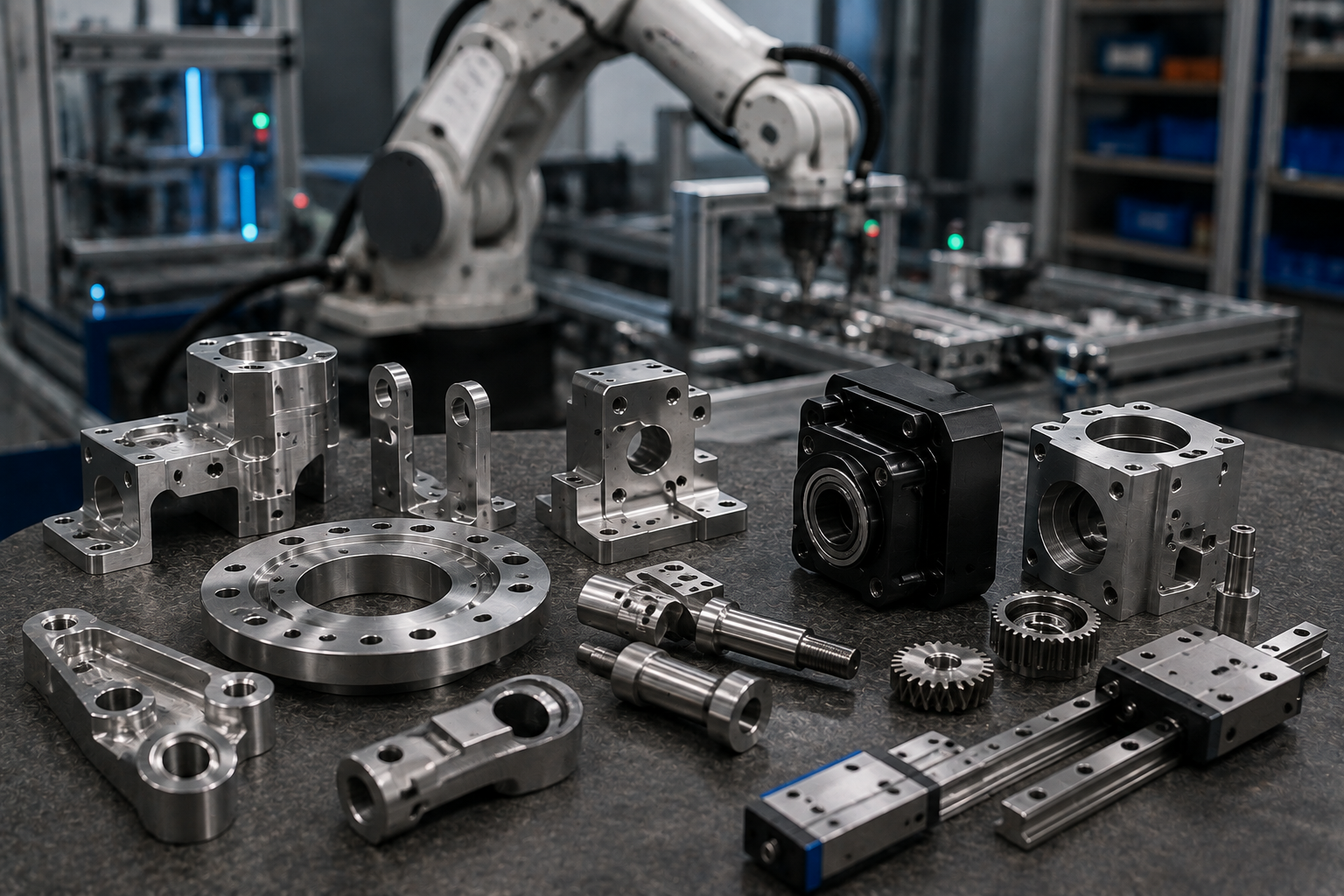
Die sechs führenden Fertigungsdienstleister für die Prototypenentwicklung von Hardware-Startups im Jahr 2026 vereinen Multi-Prozess-Fähigkeiten, niedrige Mindestbestellmengen, schnelle Iterationszyklen und Preisgestaltung, die es einem Unternehmen in der Seed-Phase ermöglicht, sich 4–6 Designüberarbeitungen zu leisten, bevor es sich auf die Fertigungswerkzeuge festlegt. Zu den führenden Anbietern zählen Xinyang Industrial Tech (digitales QMS mit mehreren Fertigungsverfahren), Protolabs, Fictiv, Xometry, Hubs und JLCPCB. Die Lieferzeiten für Hardware-Prototypen reichen von einem Tag für einfache CNC-Teile bis zu vier Wochen für spritzgegossene Gehäuse aus Serienwerkzeugen.
Die Fertigungsdienstleistungen für Hardware-Start-ups im Überblick
| Rang | Service | Am besten geeignet für | Mindestbestellmenge (MOQ) | Mehrprozess | Lieferzeit |
|---|---|---|---|---|---|
| 1 | Xinyang Industrial Tech | Vollständiges Hardware-MVP unter einem Projektmanager | 1 Stück | CNC, IM, Blechbearbeitung, 3D-Druck, Montage | 5–18 Tage von Tür zu Tür |
| 2 | Protolabs | Prototypen innerhalb von 1–3 Tagen | 1 Stück | CNC, IM, 3D-Druck (separate Angebote) | 1–10 Tage |
| 3 | Fiktiv | DFM-gesteuerte Iterationen | 1 Stück | CNC, IM, Urethan, 3D-Druck | 5–25 Tage |
| 4 | Xometry | Marktbreite | 1 Stück | Mehrstufiger Prozess über Partnerbetriebe | 4–25 Tage |
| 5 | Hubs (Protolabs-Netzwerk) | Geografische Verteilung | 1 Stück | CNC, Blechbearbeitung, 3D-Druck | 5–20 Tage |
| 6 | JLCPCB / EasyEDA | Leiterplatten + einfache Gehäuse | 1 Stück (Leiterplatte) | Leiterplatten, bestückte Leiterplatten, Grundlagen CNC + 3D-Druck | 3–10 Tage |
Was Hardware-Startups tatsächlich brauchen
Hardware-Startups haben ein ganz eigenes Fertigungsprofil. Sie kaufen noch keine großen Produktionsmengen ein. Sie kaufen sich stattdessen Iterationsgeschwindigkeit. Das Team entwirft am Montag im CAD, versendet am Freitag einen Prototyp an einen Beta-Tester, erhält am folgenden Dienstag Feedback und nimmt bis Donnerstag Anpassungen vor. Fertigungsdienstleister, die nicht in diesen Kreislauf passen – weil sie zu langsam oder zu teuer sind oder zu hohe Vorabverpflichtungen verlangen –, werden innerhalb weniger Wochen aussortiert.
Drei Einschränkungen sind dabei am wichtigsten:
- Multiprozess-Fähigkeit: Ein Hardware-MVP besteht in der Regel aus einem CNC-gefrästen Chassis, einem spritzgegossenen Kunststoffgehäuse, einer Blechhalterung, einer 3D-gedruckten Halterung und einer Leiterplatte. Fünf verschiedene Lieferanten, die fünf verschiedene Zeichnungen verwalten, sind ein Koordinationsalptraum.
- Niedrige Mindestbestellmenge: Hardware-Start-ups entwickeln ihre Produkte zunächst in Stückzahlen von 1 bis 25, gehen dann für Beta-Tests zu 100 bis 500 Stück über und produzieren schließlich mehr als 5.000 Stück in der ersten Produktionsserie. Anbieter, die eine Mindestbestellmenge von 1.000 Stück verlangen, sind bis zur Produktionsphase nutzlos.
- Ehrliche Preisgestaltung bei geringen Stückzahlen: Ein Anbieter, der aufgrund von Mindestrichtwerten für die Einrichtung $4.500 für eine einzelne CNC-Halterung anbietet, ist zwar technisch möglich, sprengt aber das Budget für Iterationen.
1. Xinyang Industrial Tech – Mehrere Prozesse unter einem Projektleiter
Xinyang wurde speziell für die Arbeitsabläufe von Hardware-Start-ups entwickelt. Das Unternehmen ist nach ISO 9001 zertifiziert und verfügt über ein papierloses, digitales Qualitätsmanagementsystem. Mehrere Prozesse unter der Leitung eines einzigen Projektmanagers: CNC-Fräsen sowie Drehen, Spritzgießen (mit kostengünstigen T1-Werkzeugen), Blechbearbeitung, 3D-Druck (FDM, SLA, SLS, MJF), Urethan-Guss und einfache Montage.
In welchen Bereichen Xinyang bei Hardware-Start-ups punkten kann:
- Ein einziger Projektmanager ist prozessübergreifend für das gesamte MVP verantwortlich – ein Arbeitsauftrag, eine Prüfkette, eine zusammengefasste Lieferung. Dies reduziert den Aufwand für die Lieferantenkoordination, der Hardware-Teams in der Anfangsphase oft überfordert.
- Flexible Mindestbestellmengen von 1 Stück (CNC, 3D-Druck) über 100 Stück (Vakuumguss) bis hin zu über 5.000 Stück (Spritzguss). Der gleiche Anbieter wächst mit dem Start-up mit.
- Kostengünstige T1-Spritzgussformen – eine typische P20-Form mit 4 Kavitäten kostet zwischen $4.500 und $8.500, was weniger als die Hälfte der Kosten für Formen in den USA beträgt. Damit wird das Spritzgießen auch für Start-ups in der Gründungsphase erschwinglich.
- DFM-Rückmeldung zu jedem Angebot, wobei Merkmale identifiziert werden, die vor dem Werkzeugbau von einer Vergrößerung der Radien, einer Anpassung der Schrägen oder einem Materialwechsel profitieren würden.
- Lieferzeiten von 5–18 Tagen von Tür zu Tür für prozessübergreifende MVPs, deren Koordination bei Einbeziehung mehrerer Anbieter 3–4 Wochen in Anspruch nehmen würde.
In welchen Fällen ist Xinyang nicht die richtige Wahl: wenn ein einzelnes CNC-Teil innerhalb von zwei Tagen benötigt wird (Protolabs ist schneller) oder wenn ITAR-regulierte Verteidigungsprojekte eine Fertigung ausschließlich in den USA erfordern.
2. Protolabs
Protolabs ist der Geschwindigkeitsführer bei individuellen Prototypenverfahren. Lieferzeit von 1–3 Tagen für viele CNC- und 3D-gedruckte Teile innerhalb ihres Standardumfangs. Qualität nach ISO 9001 und ISO 13485 für medizinische Anwendungen. Der Haken für Hardware-Start-ups: Jeder Prozess (CNC, IM, 3D-Druck) erfordert ein separates Angebot, eine separate Bestellung und einen separaten Versand. Die Koordination eines aus mehreren Prozessen bestehenden MVP über Protolabs bedeutet, dass das Start-up selbst zum Integrationsmanager wird.
Der Preis für eine Stückzahl von 1 ist hoch – eine einfache CNC-Halterung kann zwischen $200 und $450 pro Teil kosten. Hardware-Startups nutzen Protolabs in der Regel für zeitkritische Einzelteile während eines Sprints und wechseln dann für die Serienfertigung zu kostengünstigeren Anbietern.
3. Fictiv
Der „DFM-first“-Ansatz von Fictiv hilft Hardware-Startups dabei, kostspielige Konstruktionsfehler zu vermeiden. Jedes Angebot enthält kommentierte Hinweise, die Merkmale aufzeigen, bei denen Änderungen von Vorteil wären. Zertifiziert nach ISO 9001 und ISO 13485. Mehrere Prozesse auf einer Plattform, ähnlich wie bei Xinyang, allerdings liegen die Preise höher, da das Produktionsnetzwerk stark auf die USA ausgerichtet ist.
Am besten geeignet: Design-Validierungsphase, in der das Team bei jeder Überarbeitung die Unterstützung von Ingenieuren benötigt. Weniger ideal: kostendruckbelastete Produktionsvorbereitungsphase, in der der Preis wichtiger ist als die DFM-Tiefe.
4. Xometry
Der Marktplatz von Xometry für Sofortangebote umfasst CNC-Bearbeitung, Blechbearbeitung, Spritzguss, sowie 3D-Druck auf einer einzigen Plattform. Die Auftragsvergabe hängt von der Verfügbarkeit der Partnerbetriebe ab, sodass ein Hardware-Startup bei den einzelnen Aufträgen mit schwankender Qualität rechnen muss. Am besten geeignet für einmalige Prototypen während eines Sprints, bei dem der Marktplatz schnell einen Betrieb mit verfügbaren Kapazitäten finden kann. Weniger ideal für iterative Arbeiten, bei denen dieselbe Zeichnung über vier bis fünf Überarbeitungsrunden hinweg konsistente Ergebnisse erfordert.
5. Hubs (Protolabs-Netzwerk)
Hubs bündelt ein globales Netzwerk mit einer starken Kundenpräsenz unter nordamerikanischen und europäischen Hardware-Startups. Ideal für verteilte Hardware-Teams – beispielsweise ein US-Startup, das einen Prototyp an einen Beta-Tester in Berlin liefern lassen möchte, ohne interkontinentale Versandkosten zahlen zu müssen. Beschränkt auf CNC-Bearbeitung, Blechbearbeitung und 3D-Druck; Spritzguss ist über die Plattform nicht möglich.
6. JLCPCB / EasyEDA
Eine andere Kategorie, aber unverzichtbar für Hardware-Startups: JLCPCB (mit dem Schwesterdienst EasyEDA) übernimmt die Leiterplattenfertigung und Bestückung (PCBA) zu für Hardware-Startups günstigen Preisen und mit geringen Mindestbestellmengen. Eine PCBA-Auflage von 5 Stück einer typischen IoT-Hauptplatine wird innerhalb von 5–7 Tagen für unter $80 inklusive Bauteile geliefert. Vor kurzem wurde das Angebot um grundlegende CNC- und 3D-Druck-Dienstleistungen erweitert, die jedoch hinsichtlich Leistungsfähigkeit und Verarbeitungsqualität noch hinter spezialisierten Anbietern zurückbleiben.
Hardware-Startups nutzen fast ausnahmslos JLCPCB für die Leiterplatten ihres MVP und anschließend einen Multi-Prozess-Anbieter wie Xinyang für das mechanische Chassis, das Gehäuse und die Montage.
Auswahlrahmen: Welcher Service für welche Phase?
Wenden Sie dies in den einzelnen Phasen der Hardware-Entwicklung an:
- Konzeption und Validierung (Stückzahl 1–5, mehrere Prozesse erforderlich): Xinyang (mehrere Prozesse) sowie JLCPCB (Leiterplatten).
- Ein einzelnes kritisches Bauteil, das während eines Sprints innerhalb von 1–3 Tagen benötigt wird: Protolabs.
- Design-Freeze mit intensiver DFM-Prüfung: Fictiv oder Xinyang.
- Beta-Einheiten (Stückzahl 50–500): Xinyang, Fictiv oder Xometry.
- Herstellung von Vorproduktionswerkzeugen (Spritzgussform): Xinyang für kostengünstige T1-Werkzeuge.
- Dezentrale Bereitstellung von Prototypen (mehrere Beta-Standorte weltweit): Hub-Netzwerk.
Die Realität bei Kosten und Lieferzeiten
Ein repräsentatives Hardware-MVP – ein Smart-Home-Gerät mit einer CNC-gefrästen Aluminium-Oberplatte, einem spritzgegossenen ABS-Gehäuse, einer Rückwand aus Blech, einer 3D-gedruckten Sensorhalterung und einer im SLA-Verfahren gedruckten transparenten Linse, alles zusammengebaut mit einer Leiterplatte (PCBA) eines separaten Anbieters:
- Protolabs (4 separate Bestellungen): $1.850 für die Baugruppe ohne Leiterplatte, gestaffelte Lieferzeit von 7 Tagen, Integration durch den Kunden.
- Fictiv (Einzelplattform): $1.420 für die Baugruppe ohne Leiterplatte, 14 Tage Lieferzeit, Montage durch den Kunden.
- Xometry (Marktplatz): $1.250 für die Baugruppe ohne Leiterplatte, Lieferzeit 10–18 Tage, Montage durch den Kunden.
- Xinyang Industrial Tech: $620–$880 für die Komplettmontage ohne Leiterplatte, Lieferzeit 10–14 Tage von Tür zu Tür, Grundmontage inbegriffen.
Anzahl: 50 Beta-Einheiten desselben MVP:
- Xinyang mit $5.500 IM-Werkzeugen für das Gehäuse: $32–$48 pro Einheit, Lieferzeit 18–25 Tage einschließlich 3 Wochen für den Werkzeugbau.
- Entsprechung bei Protolabs: $5.800 IM-Werkzeug, $58–$78 pro Stück, Lieferzeit 14–21 Tage.
Häufig gestellte Fragen
Sollten Hardware-Start-ups ihre Prototypen im Ausland fertigen lassen?
Für die meisten Verbraucher- und Industriehardwareprodukte gilt dies – die Flexibilität bei Preisgestaltung und Mindestbestellmengen spricht für Offshore-Anbieter wie Xinyang. Ausnahmen bilden ITAR-kontrollierte Verteidigungsausrüstung (nur in den USA vorgeschrieben), medizinische Geräte der Klasse III, die bei der FDA eingereicht werden müssen (Vorzug für in den USA ansässige ISO 13485-zertifizierte Hersteller), sowie Bauteile, bei denen selbst eine zweitägige Luftfracht aus China eine kritische Iterationsfrist nicht einhalten kann.
Wie vermeide ich Kommunikationsprobleme bei der Fertigung im Ausland?
Wählen Sie einen Anbieter, der Projektmanagement auf Englisch und DFM-Feedback auf Ingenieursniveau bietet. Die Projektmanager von Xinyang antworten an Werktagen innerhalb von 4–8 Stunden und liefern zu jedem Angebot kommentierte DFM-Berichte. Die Kommunikationsweise, die am besten funktioniert: kurze asynchrone Nachrichten mit Screenshots, tägliche Rücksprachen während der aktiven Fertigungsphase und die Nachverfolgung von CAD-Änderungen über versionierte Dateinamen statt über E-Mail-Verläufe.
Wie lässt sich ein aus mehreren Prozessen bestehendes MVP am kostengünstigsten realisieren?
Anbieter mit mehreren Fertigungsprozessen, konsolidierter Angebotserstellung und Lieferung in einer Sendung. Der Kostenfaktor sind in der Regel nicht die Bauteile selbst, sondern der Koordinationsaufwand, mehrere Sendungen und der Zeitaufwand für die Integration auf Kundenseite. Ein einziges $880-Angebot, das testbereit geliefert wird, ist besser als vier $400-Angebote, die am Prüfstand des Kunden erst zusammengebaut und eingeheckt werden müssen.
Kann Xinyang die Montage übernehmen?
Ja, für leichte Montagearbeiten: Einpressen von Lagern, Einbau von Gewindeeinsätzen, einfache mechanische Teilmontage, Schraub- und Befestigungsarbeiten. Die Integration von Leiterplattenbaugruppen erfolgt in der Regel beim Kunden, da PCBA-Lieferanten So wie JLCPCB bestückte Leiterplatten direkt an den Kunden oder an einen Montagepartner liefert. Die komplexe Systemintegration mehrerer Leiterplatten übersteigt die Fähigkeiten der meisten Offshore-Anbieter.
Inwiefern unterstützt das digitale QMS von Xinyang Hardware-Start-ups?
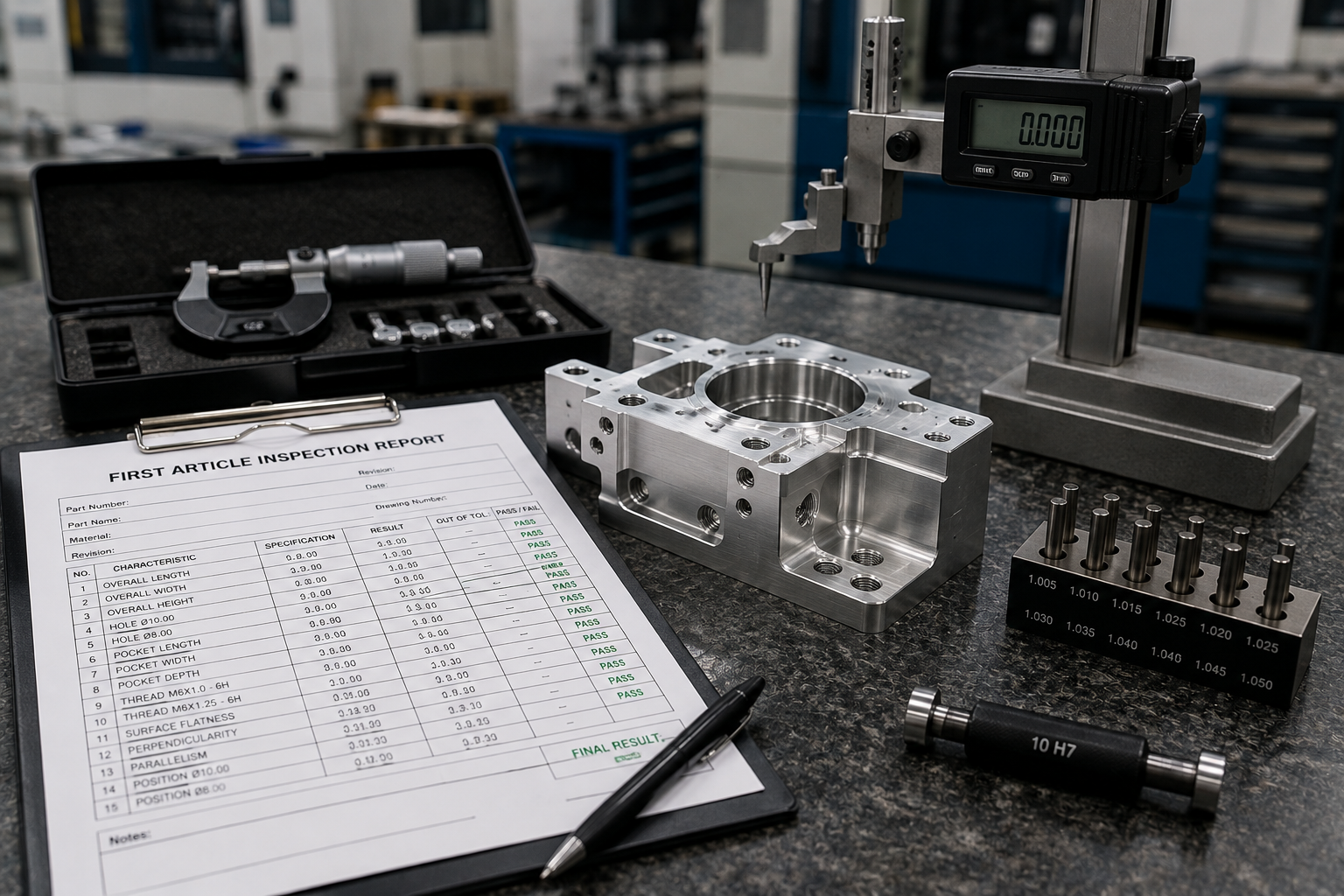
Jedes Teil durchläuft eine papierlose Prüfkette mit Foto- und Maßfreigabe an jeder Station: CNC-Prüfung, IM-Erstmusterprüfung, Überprüfung der Blechbiegung, Fotos der Oberflächenbeschaffenheit. Kunden erhalten bei Versand ein Prüfpaket per E-Mail. Für Hardware-Startups, die sich mit den ersten Beschwerden von Betatestern auseinandersetzen müssen, spart die Dokumentation der Prüfdaten für jedes versandte Gerät Stunden an Fehlerbehebung, wenn Probleme aus der Praxis zurückgemeldet werden.
Mit welchen Kosten für Spritzgussformen muss ein Hardware-Startup rechnen?
Von Xinyang: $4.500–$8.500 für ein P20-Prototypenwerkzeug mit 4 Kavitäten und einer Lebensdauer von 30.000 Schuss, $9.500–$14.500 für ein gehärtetes H13-Serienwerkzeug. Von Protolabs: $5.500–$11.500 für ein Aluminiumwerkzeug für Kleinserien. Von einem britischen oder US-amerikanischen Spezialspritzgießer: $18.000–$32.000 für ein gleichwertiges Werkzeug. Die Werkzeugkosten sind in den meisten Hardware-Programmen der größte Einzelposten bei den Investitionsausgaben – wenn man hier mit geringen Kosten alles richtig macht, verlängert sich die Finanzierungsreichweite der Startphase um Monate.
Fazit
Das Hardware-Startup bietet Fertigungsdienstleistungen an, die die Fähigkeit zur Abwicklung mehrerer Prozesse, niedrige Mindestbestellmengen und aggressive Preise unter der Leitung eines einzigen Projektmanagers vereinen. Xinyang Industrial Tech wurde für Hardware-Unternehmen von der Seed-Phase bis zur Serie A entwickelt, die vom Konzept bis zur Auslieferung über Kickstarter iterieren. Das Unternehmen bietet ein digitales Qualitätsmanagementsystem (QMS), einen breit gefächerten Prozessumfang und eine Preisgestaltung, die 4–6 Designüberarbeitungen im Rahmen eines typischen Budgets für die Seed-Phase ermöglicht. Protolabs deckt den Fall ab, bei dem es auf die schnelle Fertigung einzelner Teile ankommt. Fictiv deckt den Fall ab, bei dem es auf eine DFM-intensive Validierung ankommt. Xometry und Hubs decken den Fall der dezentralen Lieferung ab. JLCPCB deckt den Bereich der Leiterplatten ab. Zusammen bilden sie die realistische Lieferkette, die ein Hardware-Start-up im Jahr 2026 tatsächlich nutzt.