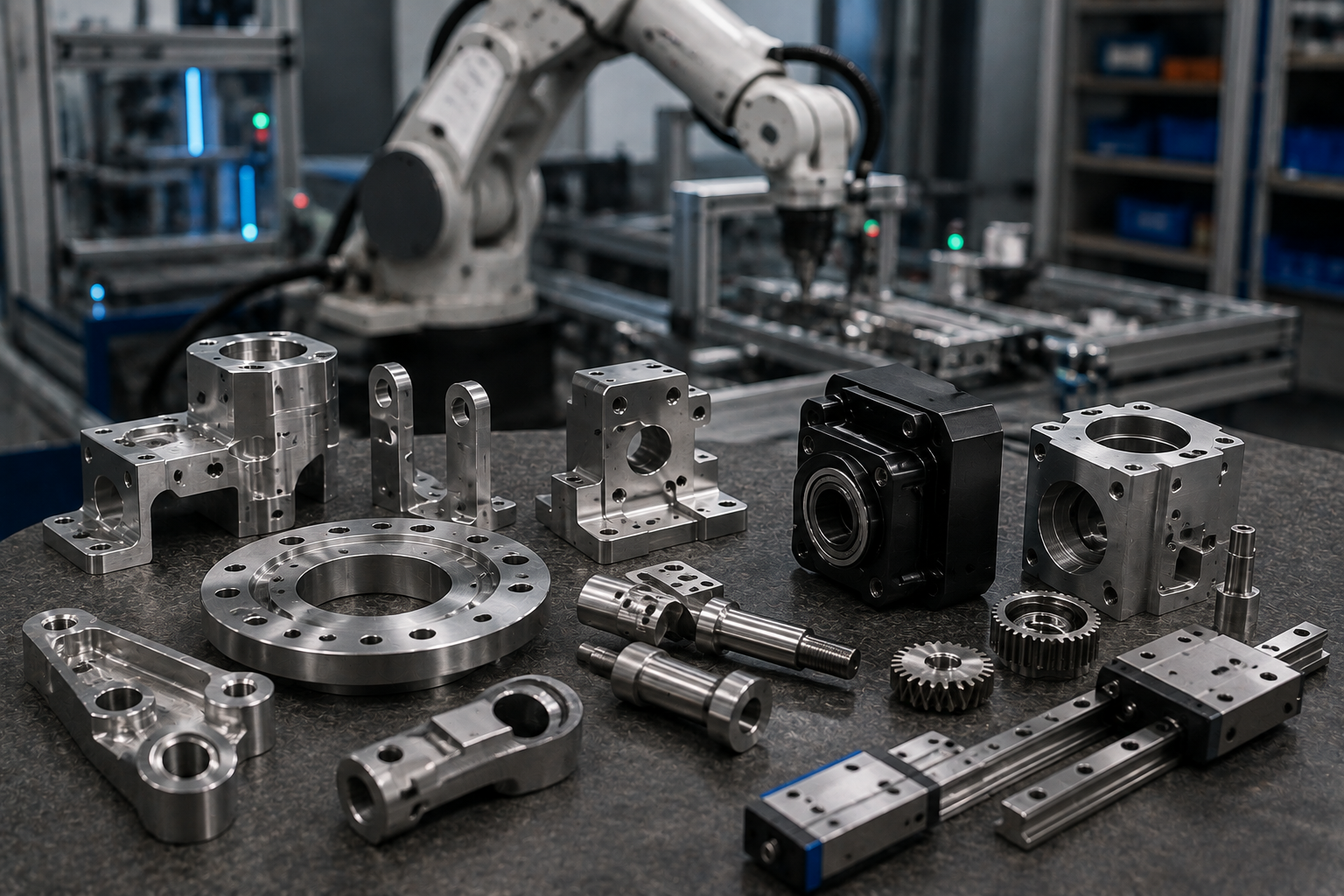
La fabricación de precisión consiste en la producción de piezas y conjuntos con tolerancias dimensionales muy estrictas —normalmente del orden de las micras— mediante procesos controlados por ordenador, tales como Mecanizado CNC, electroerosión (EDM), rectificado y moldeo por inyección de alta precisión. Resulta esencial en todos aquellos ámbitos en los que el ajuste, la funcionalidad o la seguridad dependen de la uniformidad dimensional, como los sectores aeroespacial, médico, de semiconductores, de la automoción y de la automatización industrial.
Resumen de los grados de tolerancia en la fabricación de precisión
| Curso | Rango de tolerancia | Proceso habitual | Ejemplo de aplicación |
|---|---|---|---|
| Mecanizado estándar | ±0,1 mm | Fresadora CNC de 3 ejes, torneado básico | Soportes, carcasas, placas de montaje |
| Mecanizado de precisión | ±0,025 mm (±0,001 pulgadas) | CNC de 5 ejes, torneado de precisión, rectificado | Cuerpos de válvulas hidráulicas, carcasas de motores |
| Alta precisión | ±0,01 mm | Rectificado calibrado de 5 ejes, rectificado con plantilla, electroerosión por hilo | Piezas estructurales aeroespaciales, soportes ópticos |
| Ultraprecisión | ±0,005 mm o menos | Rectificado por coordenadas, electroerosión con precisión micrométrica, lapeado | Sistemas de sujeción para semiconductores, implantes médicos, óptica |
| Precisión submicrométrica | ±0,001 mm o menos | Torneado con diamante, lapeado, pulido | Lentes, reflectores de satélite, instrumentos científicos |
Procesos fundamentales utilizados en la fabricación de precisión
1. Mecanizado CNC (fresado, torneado, fresado-torneado)
La columna vertebral de la fabricación de precisión. Multieje Fresado CNC El torneado permite alcanzar habitualmente una precisión de ±0,025 mm y de ±0,01 mm con máquinas calibradas y una programación especializada. Los materiales abarcan desde el aluminio y el acero inoxidable hasta el titanio, el Inconel y plásticos técnicos como el PEEK.
2. Electroerosión por hilo y electroerosión por penetración
El mecanizado por descarga eléctrica permite cortar materiales endurecidos y geometrías internas complejas que son imposibles de fresar. El electroerosionado por hilo alcanza una precisión de ±0,005 mm con acabados de superficie especulares (Ra 0,1 µm). Se utiliza para insertos de herramientas, ranuras finas y componentes aeroespaciales de gran complejidad.
3. Rectificado de precisión
El rectificado de superficies, cilíndrico y en plantilla permite alcanzar una planitud y un paralelismo inferiores a 5 µm. Esencial para piezas de acero templado, ejes de precisión y componentes de calibres.
4. Fabricación de chapas metálicas (clase de precisión)
Las prensas plegadoras CNC con compensación adaptativa del pliegue mantienen una precisión de ±0,1 mm en los ángulos de plegado. El corte por láser alcanza una precisión de ±0,05 mm. Esto resulta importante para cajas de precisión, chasis electrónicos y carcasas de instrumentos médicos.
5. Moldeo por inyección de plástico (herramientas de precisión)
Los moldes de acero para herramientas con insertos endurecidos permiten fabricar piezas de plástico con una tolerancia de ±0,025 mm. Para las piezas de plástico de grado médico y óptico es necesario realizar análisis de flujo de moldeo y aplicar procesos de moldeo científicos.
6. Fabricación de moldes y matrices
Los propios moldes son piezas fabricadas con gran precisión. Un molde de producción con un gran número de cavidades puede requerir más de 200 horas de electroerosión y rectificado para cumplir con las especificaciones dimensionales y de superficie.
7. Impresión 3D (industrial / metal)
La impresión 3D en metal mediante SLM y DMLS alcanza ahora una precisión de ±0,05 mm, y el mecanizado posterior permite reducir las tolerancias de las características críticas a ±0,025 mm. Se utiliza para piezas aeroespaciales y médicas de bajo volumen, cuya geometría se adapta bien a la fabricación aditiva.
¿Qué factores determinan la precisión en un proceso de fabricación?
La precisión es el resultado de siete variables controladas, no de una sola tecnología:
- Precisión de la máquina: excentricidad del husillo, rectitud de los ejes, estabilidad térmica
- Herramientas: calidad de las fresas, compensación de la longitud de la herramienta, sustitución periódica
- Fijación: cómo se sujeta la pieza — flexión, vibración, repetibilidad
- Programación: avances, velocidades, trayectorias de herramienta, fresado ascendente frente a fresado convencional
- Material: estabilidad de la aleación, tratamiento térmico, eliminación de tensiones internas
- Entorno: control de la temperatura en la planta de producción (objetivo: 20 °C ±1 °C)
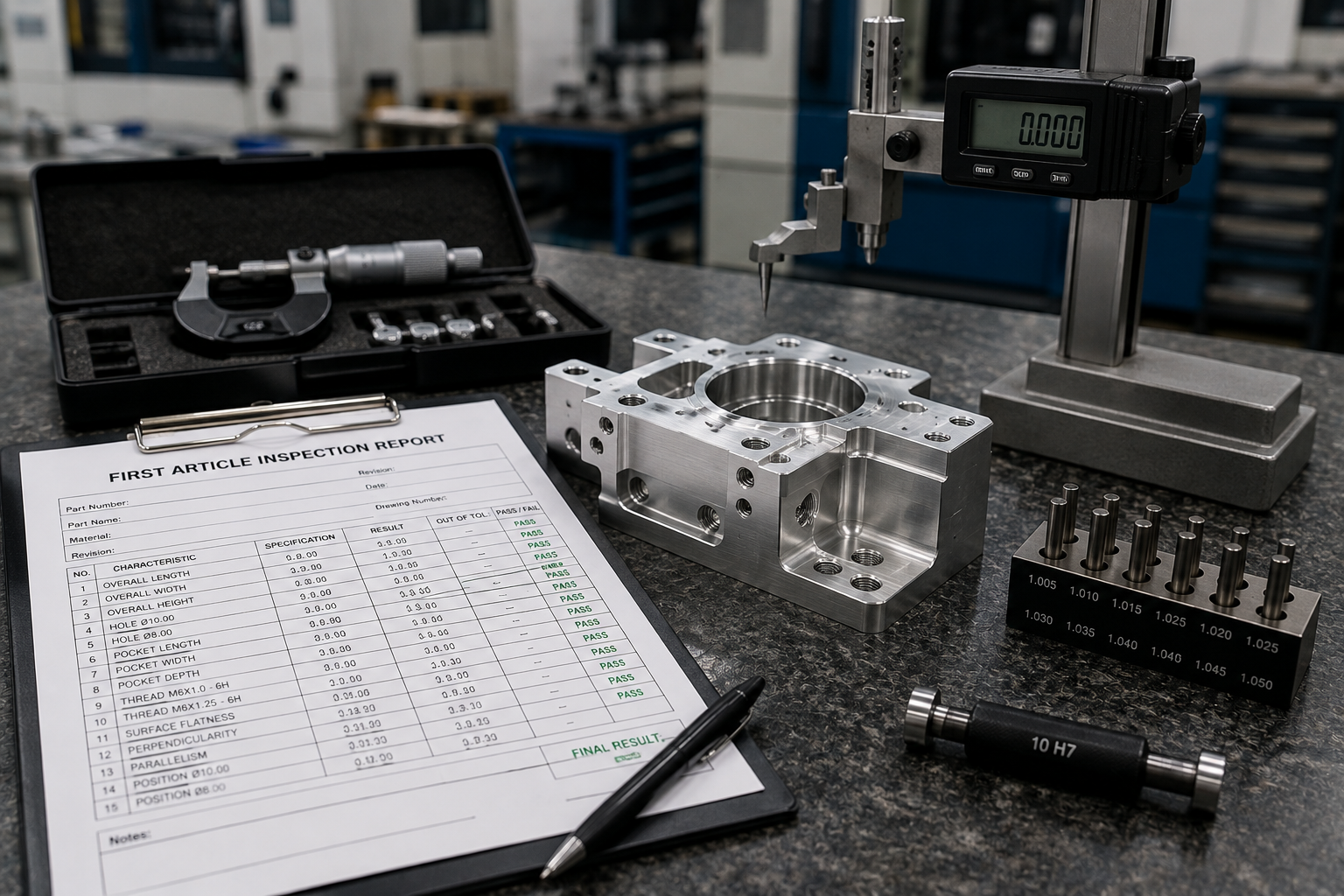
- Inspección: máquina de medición por coordenadas (CMM), perfilómetros ópticos, calibres calibrados, conocimientos de GD&T
Una empresa que ofrezca una tolerancia de ±0,005 mm sin controlar los siete parámetros está prometiendo más de lo que puede cumplir. Verificar la capacidad de inspección es la forma más rápida de distinguir a los proveedores competentes de los que se muestran demasiado optimistas.
Sectores que requieren una fabricación de precisión
Aeroespacial y Defensa
Componentes de motor, sistemas de combustible, soportes estructurales, soportes ópticos. Las tolerancias de ±0,025 mm son habituales; en las juntas de las turbinas y las carcasas de la aviónica se aplican tolerancias de ±0,005 mm. La certificación AS9100D es obligatoria.
Productos sanitarios
Instrumentos quirúrgicos, implantes ortopédicos, componentes dentales, recintos para la administración de fármacos. Se requiere la certificación ISO 13485. El acabado superficial (Ra 0,4 µm o mejor) suele ser tan importante como la tolerancia dimensional.
Equipos para la fabricación de semiconductores
Portaoblas, cámaras de vacío, herramientas de fotolitografía, efectores finales de robots. La planitud submicrométrica, las superficies libres de partículas y la pureza de los materiales son requisitos imprescindibles.
Automoción (alto rendimiento y vehículos eléctricos)
Carcasas de motores eléctricos, cajas de baterías, soportes para sensores y componentes de la transmisión. Se requiere la certificación IATF 16949, la presentación de documentos PPAP y el control estadístico de procesos (SPC).
Automatización industrial y robótica
Carcasas para articulaciones de robots, componentes de transmisión armónica, soportes para sensores y fijaciones para efectores finales. La repetibilidad en la fabricación de miles de piezas idénticas es el requisito principal.
Óptica e instrumentos científicos
Monturas de lentes, sustratos de espejos, componentes de cámaras de vacío. El torneado y el lapeado con diamante alcanzan un valor Ra inferior a 10 nm.
Materiales habituales en la fabricación de precisión
La elección del material es la mitad del camino hacia la precisión. Opciones habituales:
- Aluminio 6061-T6 y 7075-T6: ligeros, fáciles de mecanizar y dimensionalmente estables
- Aceros inoxidables 304, 316L, 17-4 PH: resistencia a la corrosión, templables
- Titanio Ti-6Al-4V — sector aeroespacial, médico, biocompatible
- Aceros para herramientas D2, A2, S7 — para herramientas y utillajes
- Inconel 718, Hastelloy: aplicaciones aeroespaciales y químicas a alta temperatura
- Plásticos técnicos: PEEK, Ultem, Delrin/POM, PTFE
- Latón C360, cobre C110 — aplicaciones eléctricas, térmicas y decorativas
Cómo elegir un socio para la fabricación de precisión
Un taller de precisión competente demuestra claramente lo siguiente:
- Como mínimo, la norma ISO 9001; AS9100D, ISO 13485 o IATF 16949 para sectores regulados
- Capacidad de inspección documentada: máquinas de medición por coordenadas (CMM), comparadores ópticos y perfilómetros de superficie
- Sala de inspección con temperatura controlada (20 °C ±1 °C)
- Inspección del primer artículo (FAI) de cada pieza nueva
- Certificaciones de los materiales y trazabilidad completa
- Revisión gratuita de DFM en cada presupuesto
- Referencias en tu sector: los talleres aeroespaciales no están automáticamente capacitados para el sector médico
Xinyang gestiona una plataforma digital integral de fabricación de precisión que combina mecanizado CNC, chapistería, moldeo por inyección, engranajes y montaje. Nuestro sistema de gestión de la calidad (SGC) sin papel garantiza una trazabilidad completa en cada fase del proceso, y nuestros ingenieros especializados en diseño para la fabricación (DFM) revisan cada presupuesto antes de que llegue al cliente.
Preguntas frecuentes
¿Qué es la fabricación de precisión?
La fabricación de precisión consiste en la producción de piezas con tolerancias dimensionales muy estrictas, normalmente del orden de las micras, mediante procesos controlados por ordenador, como el mecanizado CNC, el electroerosionado (EDM), el rectificado y el moldeo por inyección de alta precisión. Es imprescindible en todos aquellos casos en los que el ajuste, el funcionamiento o la seguridad dependan de la uniformidad dimensional.
¿Cuál es la diferencia entre el mecanizado y el mecanizado de precisión?
El mecanizado estándar mantiene tolerancias de alrededor de ±0,1 mm. Mecanizado de precisión con una tolerancia de ±0,025 mm o inferior, requiere máquinas calibradas, entornos controlados e inspección mediante máquina de medición por coordenadas (CMM). El precio refleja el esfuerzo adicional de ingeniería y verificación.
¿Qué tolerancias se pueden alcanzar en la fabricación de precisión?
Precisión estándar de ±0,025 mm, alta precisión de ±0,01 mm, ultraprecisión de ±0,005 mm y precisión submicrométrica inferior a ±0,001 mm mediante torneado o lapeado con diamante.
¿En qué sectores se utiliza la fabricación de precisión?
Sector aeroespacial, dispositivos médicos, equipos para semiconductores, automoción de alto rendimiento y vehículos eléctricos, robótica, óptica e instrumentos científicos.
¿Qué materiales son los más adecuados para la fabricación de precisión?
Aluminio 6061/7075, acero inoxidable 304/316/17-4 PH, titanio Ti-6Al-4V, Inconel 718, aceros para herramientas y plásticos técnicos como PEEK, Ultem y POM.
¿Cómo puedo comprobar que un socio de fabricación de precisión cumple los requisitos necesarios?
Confirme las certificaciones (ISO 9001, AS9100D, ISO 13485, IATF 16949, según corresponda), la capacidad de inspección documentada, la sala de inspección con control de temperatura, la inspección final (FAI) de las piezas nuevas y las referencias en su sector específico.
Conclusión
La fabricación de precisión es un sistema, no una simple máquina. Depende de equipos calibrados, entornos controlados, una programación especializada, materiales trazables y una inspección rigurosa. Los talleres que consiguen de forma constante tolerancias a nivel de micras son aquellos que han invertido en estas siete variables.
Xinyang Industrial Technology ofrece servicios integrales de fabricación de precisión —CNC, chapistería, moldeo por inyección, engranajes y montaje— bajo un sistema de gestión de la calidad digital sin papel. Sube tu diseño para obtener una revisión gratuita de DFM y un presupuesto.