Pour les ingénieurs en matériel chargés d’établir le budget des boîtiers et des supports en tôle, le dépassement budgétaire le plus courant n’est pas le coût par pliage, mais le nombre de pliages requis par la conception et que l’ingénieur n’avait pas pris en compte. Chaque pliage d’une pièce en tôle entraîne un temps de réglage supplémentaire, un temps de repositionnement et des besoins en outillage de matriçage. La conception d’un châssis comportant 14 plis ne coûte pas deux fois plus cher qu’une conception à 7 plis : elle coûte trois à quatre fois plus cher en raison de la complexité des dispositifs de fixation, du nombre de réglages de la presse plieuse et du cumul des tolérances géométriques résultant de multiples plis séquentiels nécessitant une correction progressive.
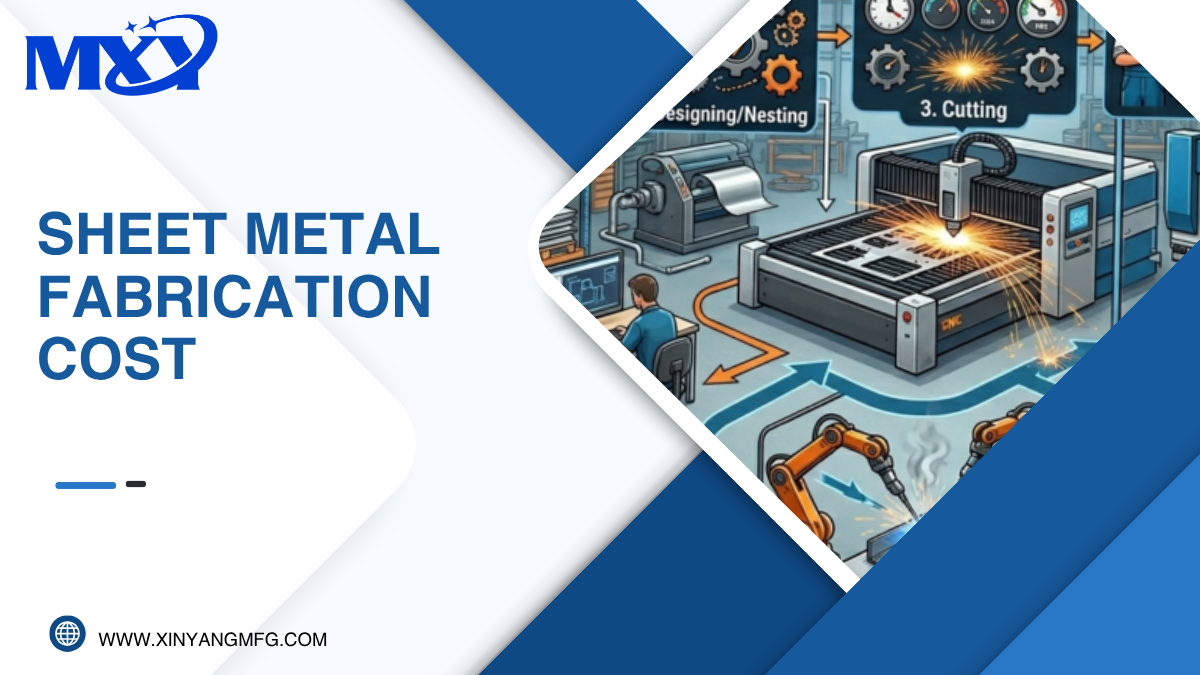
En 2026, les coûts de fabrication de pièces en tôle varient entre $5 et $200+ par pièce, en fonction du matériau, de l'épaisseur, de la complexité et du volume. La structure des coûts est déterminée par trois facteurs principaux : le temps de découpe au laser (qui dépend de la longueur de coupe et de l’épaisseur du matériau), la configuration du pliage (qui dépend du nombre de plis et des contraintes minimales liées aux rebords) et la finition de surface (le thermolaquage, l’anodisation ou la galvanisation ajoutent entre 15 et 40% au coût de fabrication de base). C’est en comprenant le comportement de chaque facteur et en identifiant les modifications de conception pour la fabrication (DFM) qui permettent de le réduire le plus efficacement que les ingénieurs maîtrisent les budgets des programmes de tôlerie.
Formule de calcul du coût de la fabrication de tôles
Coût total par pièce = coût des matériaux + coût de la découpe au laser + coût du pliage + soudage (le cas échéant) + finition de surface + mise en place/programmation (amorti en fonction de la quantité)
Formule de calcul du coût des matériaux : (surface de la pièce × épaisseur × densité × prix du matériau au kg) ÷ taux d'utilisation du matériau (généralement compris entre 75 et 85% en raison des chutes liées à l'imbrication).
Coût unitaire par pièce, par matériau et par opération : barème 2026
| Matériau | Épaisseur | Vitesse de découpe au laser | Coût du pliage (par pli) | Peinture en poudre (par pièce) | Ensemble de pièces simples (5 coudes, 10 pièces) | Pièce simple complète (5 coudes, 100 pièces) |
|---|---|---|---|---|---|---|
| Acier laminé à froid (CRS) | 1,0–2,0 mm | $70–$100/h | $8–$18/courbe | $12–$35/pièce | $85–$180/pièce | $30–$70/pièce |
| Acier galvanisé | 1,0–2,0 mm | $75–$110/h | $8–$18/courbe | Non obligatoire | $75–$160/pièce | $28–$65/pièce |
| Aluminium 5052-H32 | 1,0–3,0 mm | $80–$120/h | $10–$22/courbe | Anodisation $15–$45 | $110–$230/pièce | $40–$90/pièce |
| Acier inoxydable 304/316L | 1,0–2,0 mm | $90–$140/h | $12–$25/courbe | Passivation $8–$20 | $130–$280/pièce | $50–$110/pièce |
| Cuivre / laiton | 0,5 à 2,0 mm | $100–$160/h | $12–$28/courbe | Vernis transparent $8–$18 | $140–$320/pièce | $55–$130/pièce |
Xinyang Industrial Tech’s usinage de la tôle Cette opération utilise de la fibre optique découpe au laser (1 à 6 kW), presse plieuse à commande numérique équipée d'une matrice en V et d'outils de découpe, ainsi que des traitements de finition complets (peinture en poudre, anodisation, zingage) réalisés en interne — ce qui permet de réduire les délais et les coûts par rapport aux programmes faisant appel à plusieurs fournisseurs.
Les principaux facteurs de coût dans la fabrication de tôles
1. Nombre de plis — le facteur de coût le plus facile à maîtriser
Chaque pliage nécessite un réglage de la presse plieuse, un repositionnement du matériau et un changement d'outil si l'angle de la bride, le matériau ou le rayon de pliage diffèrent de l'opération précédente. Sur une série de prototypes de 10 pièces, chaque pliage ajoute $8–$25 au coût direct de fabrication, plus $15–$40 au titre de l’amortissement des coûts de réglage. Une pièce comportant 12 pliages qui pourrait être redessinée pour n’en comporter que 7 (en supprimant les rebords de renfort et en utilisant une section transversale différente) permet d’économiser entre $75 et $200 par pièce lors d’une série de prototypes.
2. Longueur minimale de la bride — la contrainte qui impose des opérations supplémentaires
Chaque combinaison « épaisseur du matériau – largeur de rebord » correspond à une longueur minimale de rebord que l’outillage de la presse plieuse peut former sans opérations secondaires. La règle : longueur minimale du rebord ≥ 4 × épaisseur du matériau. Pour de l’acier inoxydable de 2,0 mm : longueur minimale du rebord = 8 mm. Un plan spécifiant des rebords de 5 mm sur de l’acier inoxydable de 2,0 mm nécessite soit un outillage spécial (coût supplémentaire de $200 à $600 par configuration), soit une séquence de formage différente (ce qui augmente le temps et le coût). Concevez tous les rebords avec une longueur ≥ 4 × l’épaisseur du matériau avant la validation.
3. Complexité de la découpe au laser — Angles internes aigus et proximité des trous
Les rayons d'angle internes inférieurs à la largeur de la tranchée laser (généralement comprise entre 0,1 et 0,3 mm) obligent le laser à ralentir ou à s'arrêter au niveau de l'angle, ce qui augmente la durée de découpe de 10 à 30% sur les pièces comportant de nombreux angles internes. De même, des trous situés à une distance inférieure à 2 fois l'épaisseur du matériau les uns des autres ou par rapport aux bords de la pièce provoquent une déformation du matériau pendant la découpe, ce qui nécessite des opérations secondaires ou des vitesses de découpe plus faibles. Règle standard : diamètre minimal des trous ≥ épaisseur du matériau ; espacement minimal entre les trous ≥ 2 fois l'épaisseur du matériau.
4. Spécifications relatives à la finition de surface — le supplément de coût 20–40%
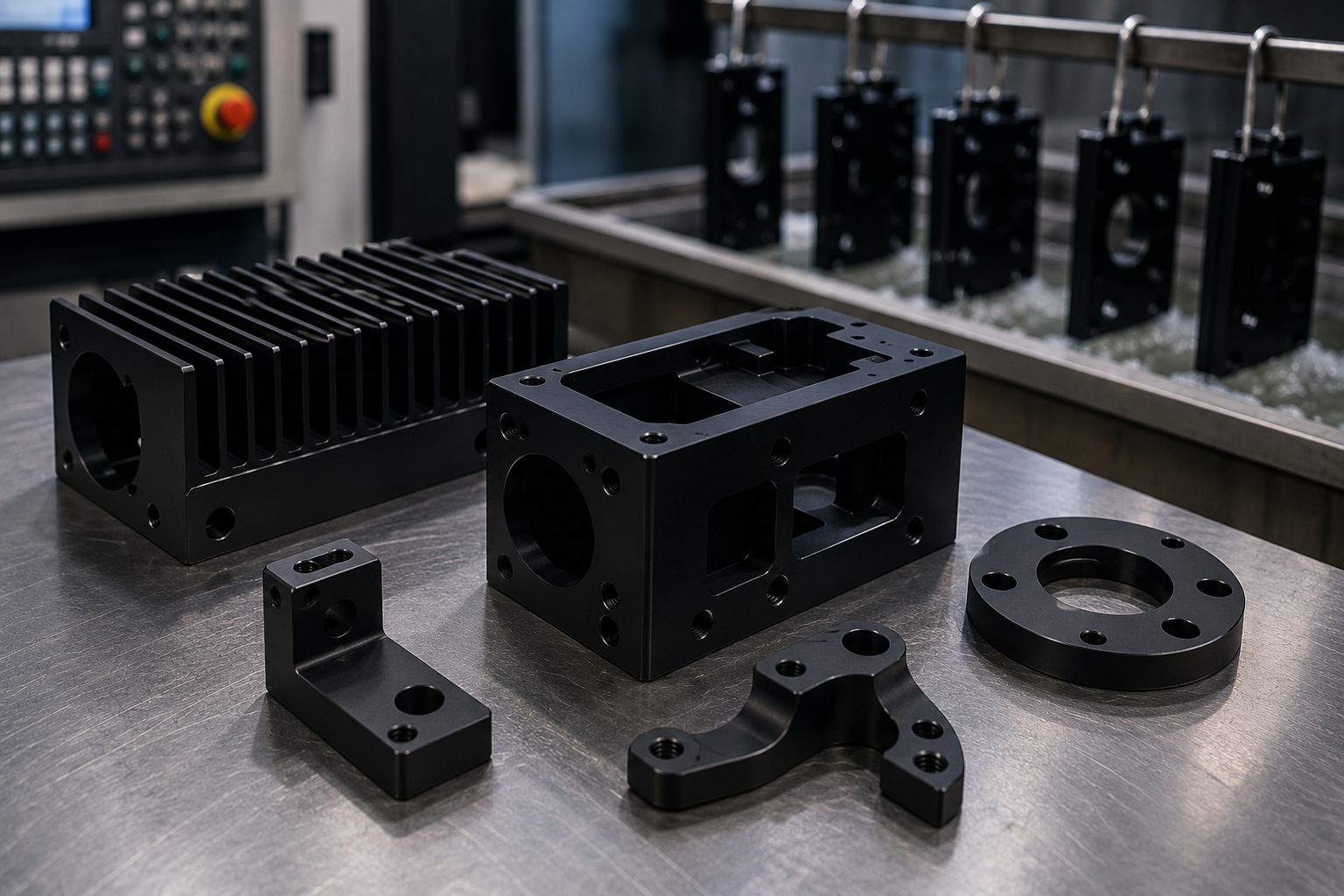
La finition « telle que fabriquée » (finition d'usine, légère couche d'oxyde) n'entraîne aucun surcoût. Le revêtement par poudrage ajoute 15–30% au coût de fabrication de base. L'anodisation de type II ajoute 20–35%. L'anodisation dure de type III ajoute 30–50%. Le zingage ajoute 12–20%. Pour les prototypes et les échantillons de validation technique, spécifiez « tel que fabriqué » ou « ébavurage léger uniquement » — n’ajoutez une finition de surface que lorsque la pièce est destinée à une application en contact avec le client ou nécessite une protection contre la corrosion en service.
5. Amortissement des coûts d'installation — Pourquoi le volume change tout
Programmation et configuration d'un nouveau coûts des pièces en tôle $80–$300 selon la complexité. Ce coût fixe est réparti sur l'ensemble du cycle de production. Pour 5 pièces : la mise en place de $80 ajoute $16 par pièce. Pour 100 pièces : la mise en place de $80 ajoute $0,80 par pièce. Pour 1 000 pièces : négligeable. La différence de coût unitaire entre un prototype de 5 pièces et une production de 100 pièces pour une même pièce est généralement de 50 à 70% de réduction — principalement due à l’amortissement de la mise en place et à l’amélioration de l’efficacité de l’imbrication des matériaux.
Courbe de coût par quantité : comment le volume permet de réduire le coût de la tôle
| Quantité | Châssis en aluminium 5052 (8 plis, 200 × 150 × 50 mm, revêtement par poudrage) | Facteur de coût à ce volume |
|---|---|---|
| 1 partie | $180–$320/pièce | La configuration domine (configuration 100% sur 1 pièce) |
| 5 parties | $120–$200/pièce | Configuration avec amortissement ; imbrication inférieure à l'optimum |
| 10 parties | $85–$150/pièce | Amélioration de l'efficacité de l'imbrication ; coût de mise en place < 30% |
| 50 pièces | $55–$95/pièce | Le coût des matériaux et le temps machine sont les principaux facteurs ; temps de préparation <10% |
| 200 pièces | $38–$70/pièce | Optimisation par lots ; les facteurs déterminants sont les matières premières et la durée du cycle |
| 1 000 pièces | $25–$48/pièce | Presque optimal ; envisager l'utilisation d'outillage dédié pour réaliser des économies supplémentaires |
5 règles de conception pour la fabrication (DFM) qui permettent de réduire les coûts de fabrication de tôles de 20 à 40%
- Limiter à 7 plis maximum par pièce formée — chaque pli au-delà de 7 entraîne une mise en place supplémentaire et une gestion des tolérances géométriques qui alourdissent le coût
- Toutes les brides doivent avoir une épaisseur ≥ 4 fois celle du matériau (8 mm minimum pour une épaisseur de 2 mm) — cela permet d'éviter l'utilisation d'outillage spécial et les réglages supplémentaires qui entraînent un surcoût de $200 à $600 par référence.
- Diamètre minimal du trou ≥ épaisseur du matériau; espacement des trous ≥ 2 × épaisseur — évite les ralentissements du laser et les déformations qui allongent la durée de découpe de 10 à 30%
- Utilisez des rayons de courbure standard (0,5 mm ou 1,0 mm selon le matériau) — les rayons de courbure non standard nécessitent la fabrication d'outils sur mesure, au prix de $150 à $400 par outil.
- Il vaut mieux intégrer les éléments dans une seule pièce formée plutôt que de souder deux pièces plus simples : le soudage ajoute $30–$150 par joint, sans compter le dispositif de fixation ; le fait de former l'élément équivalent en une seule pièce permet d'éliminer ces deux éléments.
Foire aux questions
Combien coûte la découpe au laser de tôles en 2026 ?
En 2026, les cadences de découpe au laser de la tôle varient entre $70 et $160/h selon le matériau et le type de laser. L'acier laminé à froid et l'acier galvanisé se situent dans la fourchette inférieure ($70 à $100/h en cadence effective). L'aluminium affiche des vitesses comprises entre $80 et $120/h. L'acier inoxydable affiche des vitesses comprises entre $90 et $140/h (laser à fibre). Le cuivre et le laiton ont un rendement de $100 à $160/h. Le coût de découpe au laser par pièce dépend de la longueur totale de découpe, de l’épaisseur du matériau et du nombre de perçages (chaque début de découpe interne ajoute 2 à 5 secondes). Un panneau simple en aluminium comportant 3 trous internes et une découpe périphérique d’une longueur totale de 700 mm prend généralement entre 45 et 90 secondes sur un laser à fibre de 3 kW, ce qui ajoute $0,90–$4,00 au temps de découpe laser et donc au coût unitaire à volume de production.
Quel est le matériau en tôle le moins cher pour la fabrication ?
L'acier laminé à froid (CRS, 1008/1010) est le matériau de tôle le moins cher, à environ $0,80–$1,20/kg, suivi de l’acier galvanisé ($0,90–$1,40/kg), qui permet d’éviter le coût d’une protection anticorrosion supplémentaire. L’aluminium 5052-H32 est 1,5 à 2,0 fois plus cher au kg que l’acier laminé à froid, mais il est plus léger et présente une meilleure résistance à la corrosion ainsi qu’une meilleure usinabilité. L’acier inoxydable 304/316L est 3,5 à 5,0 fois plus cher au kg que l’acier laminé à froid, avec la plus haute temps d'usinage et coût associé. Pour les programmes où le budget est un facteur déterminant, où la résistance à la corrosion n'est pas requise et où le poids ne constitue pas une contrainte de conception, l'association CRS + revêtement en poudre est la solution la plus rentable.
Combien de plis une pièce en tôle peut-elle comporter avant que son coût ne devienne trop élevé ?
Il n’y a pas de limite absolue, mais les coûts augmentent de manière non linéaire au-delà de 7 à 8 pliages par pièce, car chaque pliage supplémentaire nécessite un repositionnement du matériau, un réglage potentiellement différent de la matrice et une gestion de l’accumulation des tolérances. Une pièce comportant 12 plis coûte généralement 2,5 à 4 fois plus cher qu’un modèle équivalent à 5 plis lors d’une série de prototypes — et non pas 2,4 fois (12 ÷ 5) comme le suggérerait le calcul arithmétique. Conseil pratique d’ingénierie : examinez votre conception pour identifier tout pli dont l’objectif principal est la rigidité, et envisagez de le remplacer par une forme structurelle, une alvéole ou une nervure permettant d’obtenir la même rigidité sans opération supplémentaire de pliage.
Quel est le rayon de courbure minimal pour la tôle ?
Rayon de courbure intérieur minimal pour les matériaux courants : Acier laminé à froid : 0,5 à 1,0 fois l'épaisseur. Aluminium 5052-H32 : 1,0 à 1,5 fois l'épaisseur (l'aluminium est moins ductile que l'acier ; des rayons plus serrés provoquent des fissures dans le matériau). Acier inoxydable 304/316L : 0,8 à 1,0 fois l'épaisseur. Laiton : 0,5 à 1,0 fois l'épaisseur. Spécifier un rayon de courbure inférieur au minimum admissible pour le matériau provoque des fissures au niveau du coude — ce qui constitue un critère de rejet. La spécification d’un rayon non standard (par exemple, 0,75 mm alors que votre fournisseur dispose de matrices de 0,5 mm et 1,0 mm) nécessite un outillage sur mesure dont le coût est compris entre $150 et $400.
Conclusion : le nombre de pliages et l'amortissement des coûts de mise en place sont les principaux facteurs déterminants du coût de la tôlerie
- Le principal facteur de coût pour les séries de prototypes de 1 à 10 pièces est l'amortissement des frais de mise en place — et non le coût des matériaux ni le temps d'utilisation du laser. Commander 10 pièces au lieu de 5 permet généralement de réduire le coût unitaire de 20 à 35%.
- Chaque coude au-delà de 7 entraîne un surcoût disproportionné — vérifiez votre conception afin d'identifier les coudes pouvant être supprimés ou remplacés par des éléments formés avant de valider la fabrication.
- La finition de surface est un supplément de coût 20–40% — préciser « tel que fabriqué » pour la validation technique ; n'ajouter la finition de surface que pour les applications destinées au client ou nécessitant une protection contre la corrosion