跳到内容
跳到内容 
The short answer: general sheet metal forming, built around press-brake bending and CNC cutting, is flexible and economical at low to medium volumes with little tooling, while stamping uses dedicated dies to produce complex formed parts very fast at high volume, but only after a significant tooling investment. If you are making hundreds of parts or fewer, or expect design changes, forming usually wins. If you are making tens of thousands of a settled design, stamping usually wins. Everything else is detail.
This guide breaks down how the two differ on tooling, speed, cost, tolerance, and design flexibility, so you can pick the right one before committing. Both fall under our sheet metal fabrication services, and you can see where they sit in the wider toolkit in our sheet metal forming processes guide.
What Each Process Actually Is
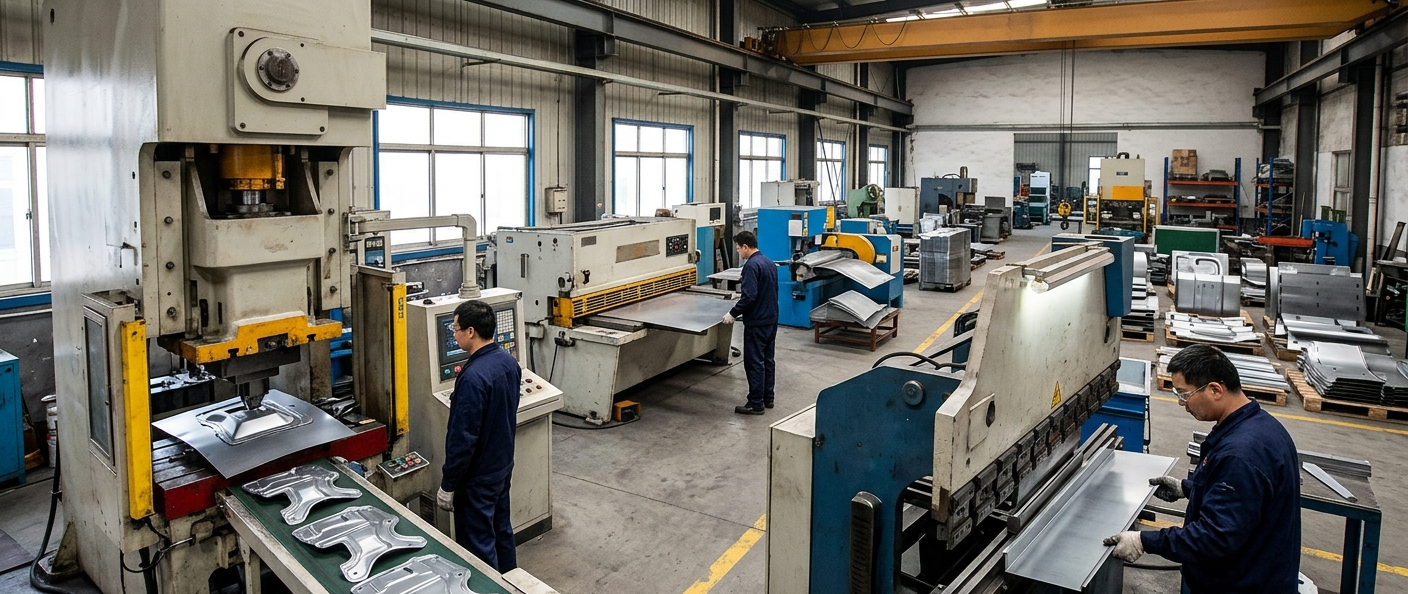
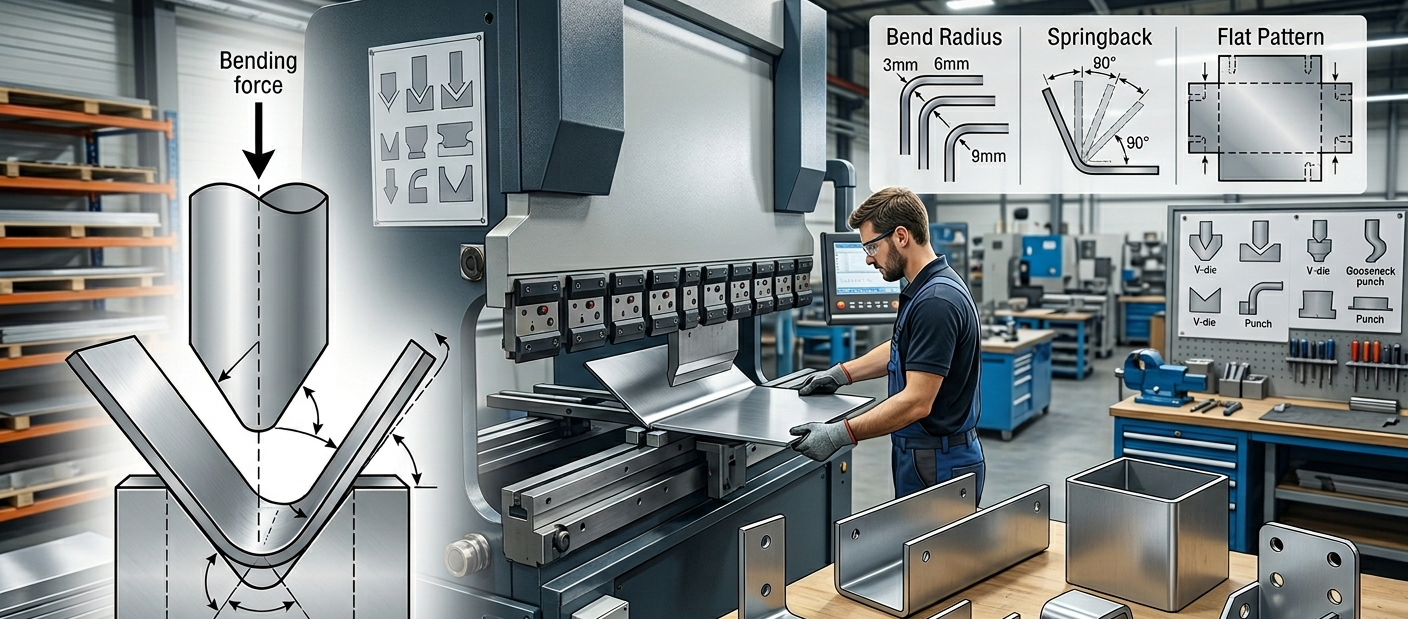
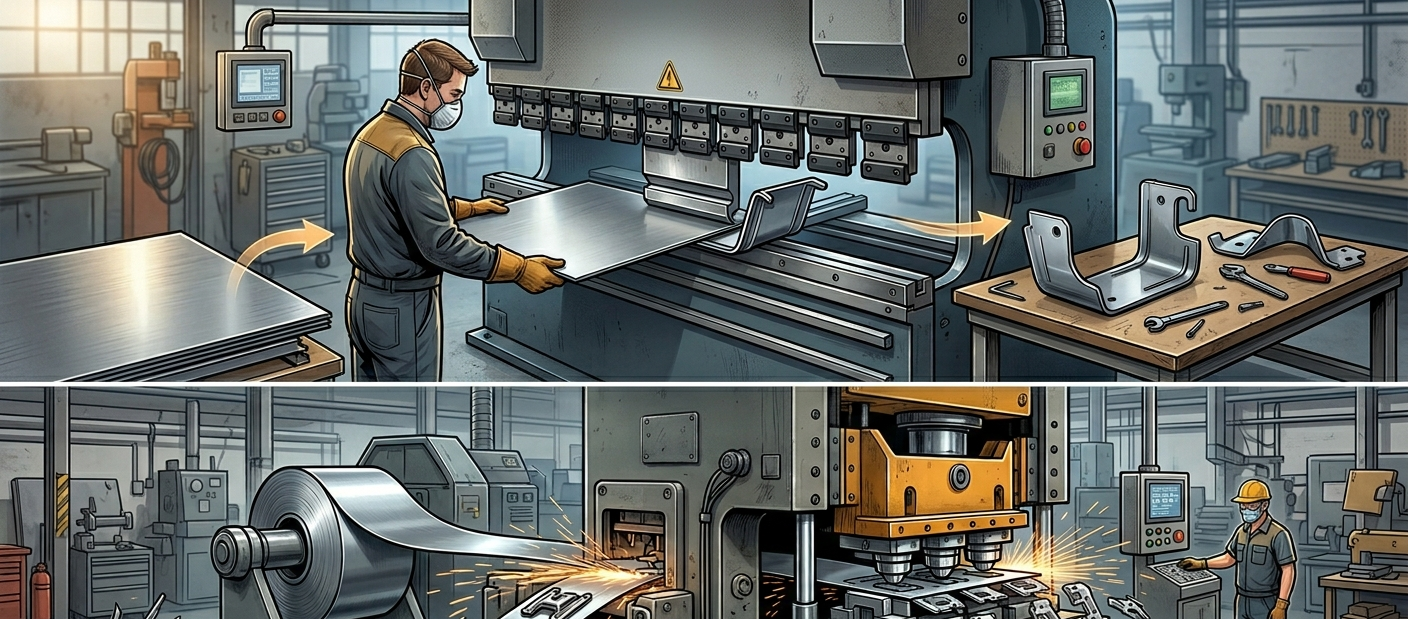
“Forming” in the everyday fabrication sense means shaping flat sheet with general-purpose equipment: cutting the blank by laser or turret punch, then bending it on a press brake, with secondary operations like flanging or hardware insertion. Tooling is generic, so the same machines make a bracket today and an enclosure tomorrow.
Stamping uses a custom die set in a press to cut and form the part, often in one stroke. Progressive dies move the strip through multiple stations, each adding a feature, so a finished part drops out with every press cycle. The die is built for one part, which is why stamping is a volume game.
The Core Trade-Offs
| Factor | General forming | Stamping |
| Tooling cost | Low (generic tools) | High (custom dies) |
| Per-part cost at volume | Higher | Very low |
| Setup and lead time | Short | Long (die build) |
| Best volume range | Prototype to medium | High to very high |
| Design changes | Easy and cheap | Costly (re-tooling) |
| Tolerance and repeatability | Good | Excellent, very consistent |
| Geometry | Bends, simple forms | Complex multi-feature forms |
The decision usually comes down to where the lines cross. Stamping’s high tooling cost is spread across the production run, so the more parts you make, the lower the cost per part. Forming has almost no tooling cost but a higher cost per part, so it stays cheaper until volume is high enough to amortize a die.
When to Choose Forming
Choose general forming when volumes are low to medium, when the design may still change, when you need prototypes or a fast first article, or when the part is mostly bends and cut features. It is the right call for enclosures, brackets, chassis, panels, and most build-to-order work. The flexibility to revise a design without scrapping a die is a major advantage early in a product’s life.
When to Choose Stamping
Choose stamping when volumes are high and the design is locked, when the part has complex formed features that benefit from a dedicated die, and when the lowest possible per-part cost matters more than tooling spend. It delivers excellent repeatability across long runs, which is why it dominates automotive, appliance, and hardware production. The catch is the upfront die cost and lead time, plus the expense of any later change.
A Practical Rule of Thumb
Many teams prototype and launch with forming, then switch to stamping once annual volume justifies the die. If you are unsure where your part falls, share the drawing and expected annual quantity, and a manufacturability review will tell you which process gives the lower total cost.
Frequently Asked Questions
Is stamping cheaper than forming?
Per part at high volume, yes, because the die cost is spread across many parts. But stamping has a high upfront tooling cost, so forming is cheaper for prototypes and low-to-medium volumes.
At what volume does stamping make sense?
There is no single threshold, but stamping typically pays off in the tens of thousands of parts or more for a stable design. Below that, general forming usually delivers lower total cost.
Which process holds tighter tolerances?
Stamping offers excellent repeatability across long runs because the die controls the geometry. Well-controlled press-brake forming also holds good tolerances, but stamping is generally more consistent at scale.
Can I prototype with forming and produce with stamping?
Yes, and many products do exactly that. Forming validates the design and serves early demand, then stamping takes over once volume justifies the tooling investment.
Choosing Between Forming and Stamping
Forming and stamping are not competitors so much as tools for different volumes. Forming is flexible and tooling-light for prototypes and modest runs; stamping is tooling-heavy but unbeatable on per-part cost at scale. Decide based on volume, design stability, and total cost, not unit price alone.