Die Materialauswahl für ein CNC-bearbeitetes Bauteil ist ein Optimierungsproblem mit Nebenbedingungen: Es gilt, das Material zu finden, das alle funktionalen Anforderungen – mechanische, umweltbezogene und ästhetische – bei möglichst geringen Gesamtkosten erfüllt, wobei die Gesamtkosten sowohl den Materialkaufpreis als auch die Bearbeitungskosten umfassen, die davon abhängen, wie schwer sich das Material bearbeiten lässt. Die Überdimensionierung einer hochwertigen Legierung verschwendet Geld, ohne das Bauteil zu verbessern. Eine Unterdimensionierung birgt das Risiko eines Versagens im Einsatz. Die optimale Wahl ist das wirtschaftlichste Material, das alle Anforderungen mit ausreichender Sicherheitsmarge erfüllt.
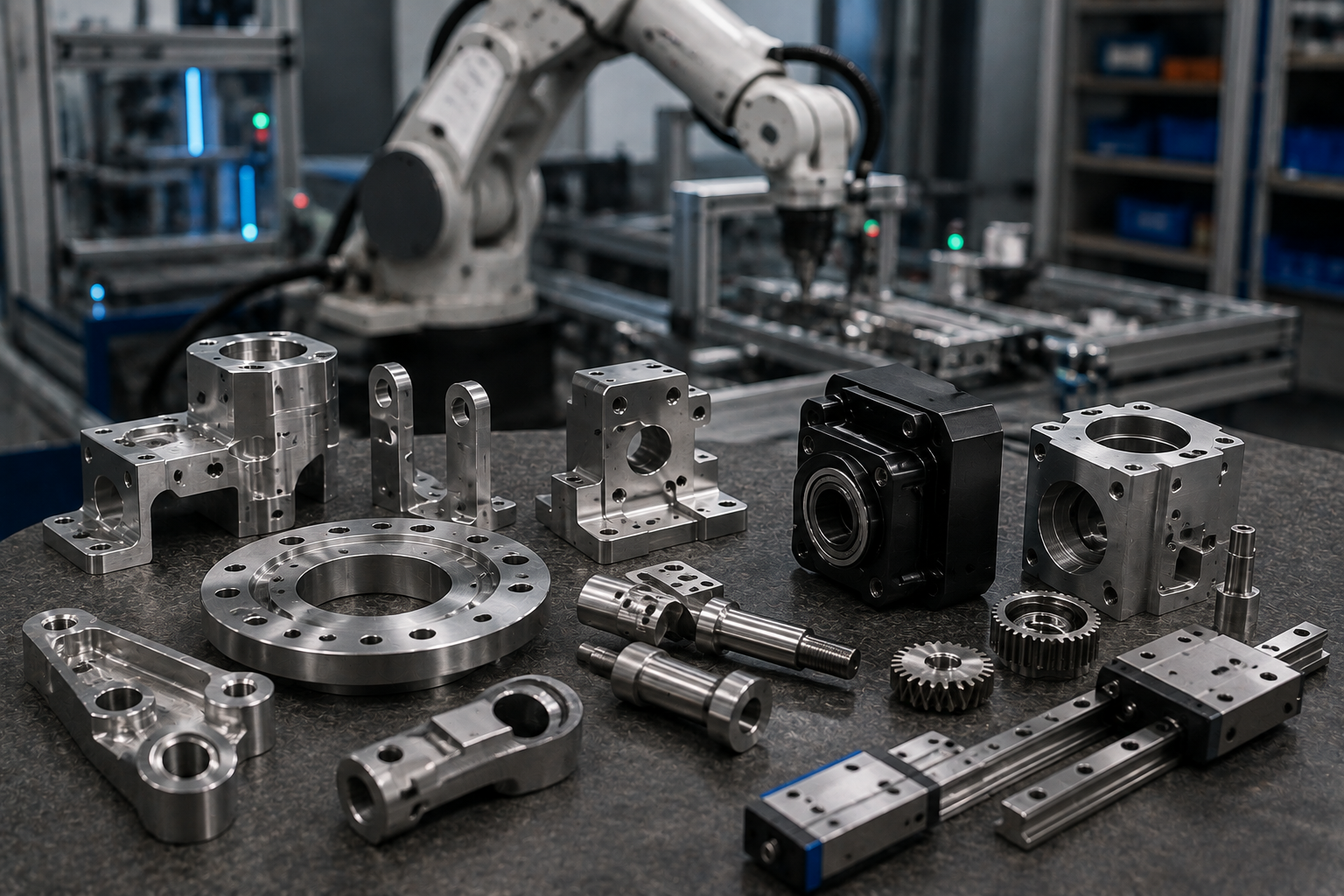
In der Praxis ist die Auswahl an Werkstoffen für die meisten CNC-bearbeiteten Teile begrenzt. Aluminiumlegierungen decken den Großteil der Anwendungen ab, bei denen Gewicht, Korrosionsbeständigkeit und wirtschaftliche Bearbeitbarkeit im Vordergrund stehen. Edelstähle und Kohlenstoffstähle kommen dort zum Einsatz, wo Festigkeit, Härte und Langlebigkeit im Vordergrund stehen. Titan rechtfertigt seine hohen Kosten nur dann, wenn das Verhältnis von Festigkeit zu Gewicht oder die Biokompatibilität eine zwingende Anforderung ist. Messing und Kupfer eignen sich für elektrische, thermische und fluidtechnische Anwendungen. Technische Kunststoffe decken Anwendungen in den Bereichen Isolierung, Chemikalienbeständigkeit und Reibungsarmut ab.
Dieser Leitfaden führt Sie durch die fünf Auswahlkriterien und jede Werkstoffgruppe so ausführlich, dass Sie eine fundierte Entscheidung bei der Spezifikation treffen können. Die Werkstoffauswahl steht in Wechselwirkung mit der Oberflächenveredelung – nicht jede Legierung lässt sich auf dieselbe Weise eloxieren oder beschichten. Für Entscheidungen zur Oberflächenveredelung lesen Sie daher bitte unseren Leitfaden zum Thema „Eloxieren Typ II vs. Typ III“. Sowohl die Werkstoff- als auch die Oberflächenauswahl sind Bestandteil jedes Angebots über unser CNC-Bearbeitungsdienstleistungen.
Die fünf Auswahlkriterien
1. Mechanische Eigenschaften
Beginnen Sie mit den strukturellen Anforderungen an das Bauteil: Lasttragfähigkeit, Stoßfestigkeit, Aufrechterhaltung der Steifigkeit bei Temperaturwechselbeanspruchung sowie Ermüdungsbeständigkeit über eine bestimmte Anzahl von Zyklen. Zu bewertende mechanische Schlüsselgrößen sind Zugfestigkeit und Streckgrenze, Härte, Steifigkeit (Elastizitätsmodul), Ermüdungsgrenze und Zähigkeit. Eine tragende Halterung in einer Baugruppe für die Luft- und Raumfahrt und eine kosmetische Gehäuseabdeckung stellen grundlegend unterschiedliche mechanische Anforderungen – dieselbe Analyse gilt für jedes Bauteil, lediglich mit unterschiedlichen Schwellenwerten.
Die Streckgrenze bestimmt, ob sich das Bauteil unter der maximal zu erwartenden Belastung dauerhaft verformt; die Zugfestigkeit bestimmt, wann es bricht; der Elastizitätsmodul bestimmt, wie stark es sich elastisch durchbiegt. Bei Bauteilen, die wiederholten zyklischen Belastungen ausgesetzt sind, sind Ermüdungsdaten von entscheidender Bedeutung – ein Werkstoff kann zwar eine ausreichende statische Festigkeit aufweisen, aber unter zyklischer Beanspruchung bereits bei einem Bruchteil seiner Streckgrenze vorzeitig versagen.
2. Gewicht
In Bereichen, in denen das Gewicht eine entscheidende Rolle spielt – Luft- und Raumfahrt, Automobilindustrie, Handgeräte, Robotik, tragbare Instrumente –, ist die relevante Kennzahl die spezifische Festigkeit (Streckgrenze geteilt durch die Dichte) oder die spezifische Steifigkeit (Elastizitätsmodul geteilt durch die Dichte). Unter den Konstruktionsmetallen liegen Aluminiumlegierungen und Titan bei der spezifischen Festigkeit an der Spitze. Kohlefaserverbundwerkstoffe und moderne Polymere übertreffen beide, werden jedoch nicht im herkömmlichen Sinne CNC-bearbeitet. Für die meisten gewichtskritischen Anwendungen ist Aluminium 6061 oder 7075 der Ausgangspunkt, wobei Titan für die wenigen Anwendungen reserviert ist, bei denen die Festigkeit von Aluminium nicht ausreicht.
3. Umweltbeständigkeit
Die Einsatzbedingungen schränken die Materialauswahl schnell ein. Korrosive Umgebungen – Salznebel, feuchte Tropen, saure Prozessströme, Meeresumgebung – schließen ungeschützten Kohlenstoffstahl und viele Aluminiumlegierungen ohne Oberflächenbehandlung aus. Edelstahl 316, eloxiertes Aluminium und viele technische Kunststoffe widerstehen diesen Umgebungen ohne zusätzliche Beschichtung. Hohe Temperaturen schränken die Auswahl auf Edelstähle, Nickellegierungen und technische Keramiken ein. Kryogene Anwendungen begünstigen austenitische Edelstähle und Aluminiumlegierungen, die bei niedrigen Temperaturen ihre Zähigkeit behalten.
Die UV-Belastung ist für freiliegende Kunststoffteile von Bedeutung. Standard-ABS und Polycarbonat zersetzen sich bei längerer UV-Einwirkung; für Anwendungen im Außenbereich sind UV-stabilisierte Typen oder Oberflächenbeschichtungen erforderlich. Die chemische Beständigkeit muss für jede einzelne Chemikalie geprüft werden – PEEK ist beständig gegen die meisten organischen Lösungsmittel und viele Säuren; Nylon nimmt Feuchtigkeit auf und quillt auf; POM (Delrin) wird von starken Säuren und Oxidationsmitteln angegriffen.
4. Bearbeitbarkeit
Die Zerspanbarkeit bezeichnet die Leichtigkeit, mit der ein Werkstoff auf Maß und mit der gewünschten Oberflächenqualität bearbeitet werden kann. Sie bestimmt unmittelbar die Bearbeitungskosten: Eine höhere Zerspanbarkeit bedeutet höhere Schnittgeschwindigkeiten, geringeren Werkzeugverschleiß und kürzere Zykluszeiten. Der Unterschied in der Bearbeitbarkeit zwischen einer leicht zerspanbaren Aluminiumlegierung und einer Nickel-Superlegierung beträgt das 20- bis 50-Fache bei der Schnittgeschwindigkeit – die Kostendifferenz ist bereits vor Berücksichtigung des Materialpreises erheblich.
Rangliste der Zerspanbarkeit (ungefähr, je höher, desto besser): Leicht zerspanbares Messing und Aluminium stehen an der Spitze; reine Aluminiumlegierungen, gefolgt von Weichstahl und Edelstahl 303, liegen im mittleren Bereich; Edelstahl 304/316, Titan und gehärtete Stähle sind schwer zu bearbeiten; Nickel-Superlegierungen, gehärtete Werkzeugstähle und einige Keramiken sind extrem schwer zu bearbeiten. Wenn zwei Materialien aussortieren Je besser ein Werkstoff alle funktionalen Anforderungen erfüllt, desto besser lässt er sich bearbeiten – und desto geringer sind fast immer die Gesamtkosten.
5. Verarbeitung und Optik
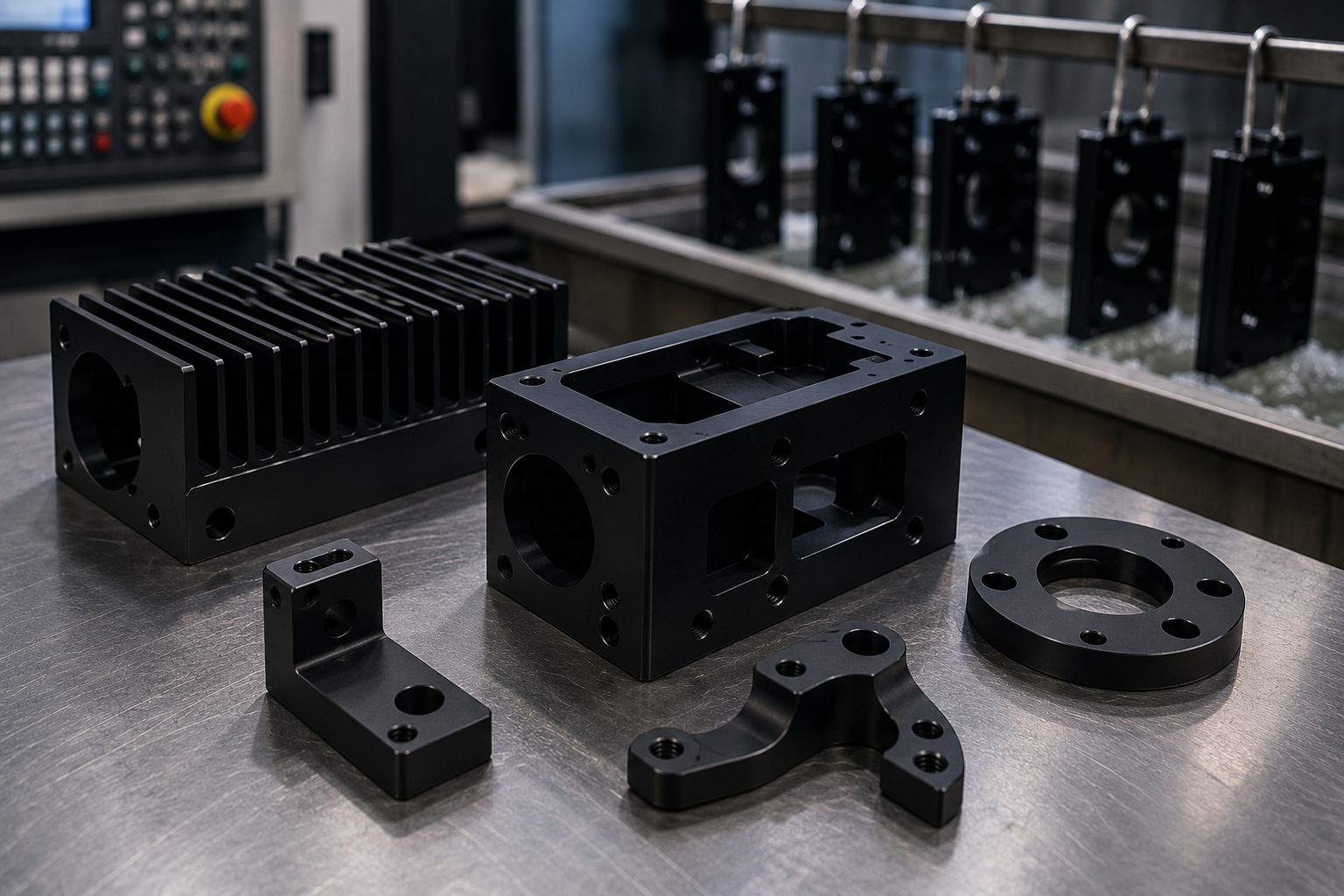
Die gewünschte Oberflächenbeschaffenheit und das Erscheinungsbild beeinflussen sowohl die Materialauswahl als auch die Nachbearbeitung. Für die Eloxierung – das gängigste Veredelungsverfahren für Aluminium – sind die Legierungen 6061, 6063 oder 7075 erforderlich, um vorhersehbare, qualitativ hochwertige Ergebnisse zu erzielen. Legierungen mit hohem Kupferanteil wie 2024 lassen sich nur schlecht eloxieren. Die Galvanisierung (Nickel, Chrom, Zink) ist mit den meisten Metallen kompatibel, erfordert jedoch eine sorgfältige Oberflächenvorbereitung. Die Pulverbeschichtung haftet gut auf Stahl und Aluminium.
Wenn das Bauteil im Einsatz sichtbar ist und bestimmte Anforderungen an Farbe oder Glanz gestellt werden, spielt die Oberflächenbeschaffenheit bereits ab dem ersten Bearbeitungsschritt eine Rolle. Die Bearbeitungsspuren sehen je nach Oberflächenbeschaffenheit auf Fotos unterschiedlich aus; Bauteile, die für Anwendungen mit hoher Sichtbarkeit vorgesehen sind, müssen in der Regel vor der Beschichtung poliert oder gestrahlt werden.
Die Materialfamilien
Aluminiumlegierungen
Aluminium ist das Standardmaterial für einen Großteil der CNC-bearbeiteten Teile. Es ist leicht (Dichte ca. 2,7 g/cm³), durch eine sich selbst bildende Oxidschicht von Natur aus korrosionsbeständig, sehr gut bearbeitbar und in einer Vielzahl von Legierungen mit gut bekannten Eigenschaften erhältlich. Die wichtigsten Legierungen für die CNC-Bearbeitung sind:
- 6061-T6: das Allround-Arbeitstier. Streckgrenze ca. 276 MPa, hervorragende Bearbeitbarkeit, schweißbar, lässt sich sauber eloxieren, in Stangen-, Platten- und Strangpressform leicht erhältlich. Die erste Wahl für Konstruktionsteile, Gehäuse, Kühlkörper, Halterungen und alle Anwendungen, bei denen Gewicht und Bearbeitungskosten Sache.
- 7075-T6: Eine hochfeste Legierung (Streckgrenze ca. 503 MPa), die für die Luft- und Raumfahrt entwickelt wurde. Lässt sich gut bearbeiten, ist jedoch schwieriger zu schweißen und teurer als 6061. Verwenden Sie 7075 dort, wo 6061 nicht über die erforderliche Festigkeitsreserve verfügt oder wo das Verhältnis von Festigkeit zu Gewicht entscheidend ist. Beachten Sie, dass 7075 in bestimmten Umgebungen anfälliger für Spannungsrisskorrosion ist.
- 5052-H32: Hervorragende Korrosionsbeständigkeit und Formbarkeit; wird vor allem für Blechanwendungen und weniger für bearbeitete Rohlinge verwendet. Eine gute Wahl für den Einsatz in maritimen Umgebungen.
- 2024-T3: hohe Festigkeit bei guten Ermüdungseigenschaften; wird in der Luft- und Raumfahrt eingesetzt, wenn 7075 nicht vorgeschrieben ist. Der hohe Kupfergehalt beeinträchtigt die Korrosionsbeständigkeit und die Qualität der Eloxierung; erfordert in korrosiven Umgebungen einen Schutz durch Plattierung oder Beschichtung.
Stahl und Edelstahl
Stahl ist die erste Wahl, wenn Festigkeit, Härte und Langlebigkeit im Vordergrund stehen und das Gewicht eine untergeordnete Rolle spielt. Die wichtigsten Stahlsorten für die CNC-Bearbeitung:
- Weichstahl A36 und A1018: kostengünstig, gute Zerspanbarkeit, ausreichende Festigkeit für die meisten Konstruktionsanwendungen, erfordert jedoch eine Beschichtung oder Galvanisierung zum Korrosionsschutz. Die Standardwahl für Konstruktionsbleche, Vorrichtungen und Bauteile, die nicht in korrosiven Umgebungen eingesetzt werden.
- Legierter Stahl 4140: höhere Festigkeit und Härte als Weichstahl; durch Wärmebehandlung auf einen breiten Härtebereich einstellbar. Wird für Wellen, Zahnräder und Werkzeuge verwendet. Die Zerspanbarkeit ist geringer als bei Weichstahl, insbesondere nach der Wärmebehandlung.
- Edelstahl 303: Die zerspanungsfreundliche Sorte des austenitischen Edelstahls. Gute Korrosionsbeständigkeit, lässt sich durch Zugabe von Schwefel als Zerspanungshilfsmittel gut bearbeiten. Die erste Wahl, wenn Edelstahl benötigt wird und die Zerspanbarkeit eine wichtige Rolle spielt.
- Edelstahl 304: Die am häufigsten verwendete Edelstahlsorte, die eine bessere Korrosionsbeständigkeit als 303 aufweist, jedoch weniger gut zerspanbar ist. Es kommt beim Zerspanen schnell zu einer Kaltverfestigung; daher sind scharfe Werkzeuge und geeignete Vorschübe erforderlich. Wird für Teile verwendet, die mit Lebensmitteln in Kontakt kommen, für medizinische Anwendungen sowie für allgemeine Anwendungen in korrosiven Umgebungen.
- Edelstahl 316: Durch den Zusatz von Molybdän wird eine hervorragende Beständigkeit gegen Chloridkorrosion erreicht. Die erste Wahl für Anwendungen in der Schifffahrt, der Pharmaindustrie und der chemischen Verfahrenstechnik. Lässt sich ähnlich wie 304 bearbeiten, ist jedoch etwas schwieriger zu bearbeiten.
Titan
Die Titanlegierung Ti-6Al-4V (Güteklasse 5) vereint eine Streckgrenze von etwa 880 MPa mit einer Dichte von nur 4,43 g/cm³ – eine spezifische Festigkeit, die die der meisten Stähle übertrifft – sowie eine hervorragende Korrosionsbeständigkeit und vollständige Biokompatibilität. Diese Eigenschaften machen sie zum führenden Werkstoff für Strukturbauteile in der Luft- und Raumfahrt sowie für orthopädische Implantate, bei denen diese Kombination von Eigenschaften von entscheidender Bedeutung ist.
Titan ist sowohl hinsichtlich der Material- als auch der Bearbeitungskosten teuer. Aufgrund seiner geringen Wärmeleitfähigkeit konzentriert sich die Wärme an der Schneidkante, was den Werkzeugverschleiß beschleunigt. Die Schnittgeschwindigkeiten betragen nur einen Bruchteil der bei Aluminium erreichbaren Werte. Titan sollte nur für Anwendungen eingesetzt werden, bei denen seine spezifische Kombination von Eigenschaften – insbesondere das Verhältnis von Festigkeit zu Gewicht, die Korrosionsbeständigkeit und die Biokompatibilität – von einer kostengünstigeren Alternative nicht übertroffen werden kann. Für Teile, bei denen lediglich Korrosionsbeständigkeit erforderlich ist, lässt sich Edelstahl deutlich kostengünstiger bearbeiten. Für Teile, bei denen es lediglich auf geringes Gewicht ankommt, bietet Aluminium 7075 ausreichende Festigkeit bei wesentlich geringeren Bearbeitungskosten.
Messing und Kupfer
Messinglegierungen, vor allem das leicht zerspanbare Messing C360, lassen sich schneller bearbeiten als jedes andere gängige Konstruktionsmetall – bei gleicher Oberflächengüte zwei- bis dreimal schneller als Weichstahl. Ihre Bearbeitbarkeit in Verbindung mit einer hervorragenden Korrosionsbeständigkeit macht sie zur Standardwahl für Fluidarmaturen, Ventilkörper, Verbindungsstücke, Instrumentengehäuse und Zierbeschläge. Die Einschränkungen liegen bei den Kosten (Messing ist teurer als Weichstahl) und dem Gewicht (Dichte ca. 8,5 g/cm³, höher als bei Aluminium).
Kupfer wird eingesetzt, wenn elektrische oder thermische Leitfähigkeit die Hauptanforderung ist. Sauerstofffreies Kupfer (C101) weist eine etwa 60-mal höhere elektrische Leitfähigkeit als Aluminium auf und wird für Sammelschienen, Kühlkörper-Schnittstellen und elektrische Kontakte verwendet. Kupfer lässt sich gut bearbeiten, führt jedoch leichter zu Spanansammlungen an den Schneidwerkzeugen als Messing.
Technische Kunststoffe
Technische Kunststoffe kommen dort zum Einsatz, wo Metalle ungeeignet sind – also dort, wo elektrische Isolierung, chemische Beständigkeit, geringe Reibung oder Gewichtsminimierung die Hauptanforderungen sind. Die gängigsten Typen in der CNC-Bearbeitung:
- POM (Delrin/Acetal): geringe Reibung, gute Dimensionsstabilität, hervorragende Bearbeitbarkeit, FDA-konforme Typen erhältlich. Standardwerkstoff für Buchsen, Zahnräder, Rollen und Teile mit Lebensmittelkontakt. Wird von starken Säuren und Oxidationsmitteln angegriffen.
- Nylon (PA6, PA66): gute Festigkeit und Zähigkeit, geringe Reibung, nimmt Feuchtigkeit auf (bis zu 2–3% des Gewichts), was bei Anwendungen mit engen Toleranzen die Maßhaltigkeit beeinträchtigen kann. Verwenden Sie in feuchten Umgebungen feuchtigkeitsstabilisierte Typen.
- PEEK: Der leistungsstärkste technische Kunststoff mit einer Dauerbetriebstemperatur von bis zu 250 Grad Celsius, ausgezeichneter chemischer Beständigkeit, hoher Festigkeit und geringer Ausgasung. Er wird in der Luft- und Raumfahrt, in der Medizintechnik sowie in Halbleiteranlagen eingesetzt, wo Metall zu schwer oder elektrisch leitfähig wäre. PEEK lässt sich gut bearbeiten, ist jedoch teuer.
- Polycarbonat (PC): optisch transparent, schlagfest und formstabil. Wird für Sichtfenster, optische Komponenten und den Prototypenbau verwendet. UV-stabilisierte Typen für Anwendungen im Außenbereich.
- ABS: kostengünstig, gute Bearbeitbarkeit, ausreichende mechanische Eigenschaften für nichttragende Anwendungen. Der Standard für Prototypen, Gehäuse und Einfassungen, bei denen keine hohe Festigkeit oder chemische Beständigkeit erforderlich ist.
Auswahltabelle als Kurzübersicht
| Anforderung | Erste Wahl | Alternative | Vermeiden |
| Leicht, universell einsetzbar | Aluminium 6061-T6 | Aluminium 5052 | Stahl, Titan – sofern nicht erforderlich |
| Hohe Festigkeit, geringes Gewicht | Aluminium 7075-T6 | Titan Ti-6Al-4V | 6061, falls die Festigkeitsreserve nicht ausreicht |
| Maximale Festigkeit | Legierter Stahl 4140 (HT) | Edelstahl 17-4 PH | Aluminium, ausgenommen Luft- und Raumfahrt-Spezifikationen |
| Korrosionsbeständigkeit – Allgemeines | Edelstahl 304, 316 | Eloxiertes Aluminium 6061 | Unbeschichteter Weichstahl |
| Meeresumgebung / chloridhaltige Umgebung | Edelstahl 316 | Aluminium 5052 (eloxiert) | Edelstahl 304 (Gefahr von Lochfraß) |
| Elektrische Leitfähigkeit | Kupfer C101 | Aluminium 6061 (eingeschränkt) | Stahl, Kunststoffe |
| Niedrigste Bearbeitungskosten | Aluminium 6061 | Messing C360 | Titan, Edelstahl 316 |
| Einsatz bei hohen Temperaturen | Edelstahl 316 | Titan Ti-6Al-4V | Aluminium (erweicht bei Temperaturen über 150 °C) |
| Elektrische Isolierung | PEEK | POM (Delrin) | Jedes Metall |
| Chemikalienbeständigkeit | PEEK | PTFE (nicht bearbeitbares Material in loser Form) | ABS, Nylon in Säuren |
Ein praxisorientiertes Auswahlverfahren
Notieren Sie zunächst die zwingenden Anforderungen an das Bauteil: die Mindeststreckgrenze unter maximaler Belastung, den Betriebstemperaturbereich, die korrosiven Stoffe, mit denen es in Kontakt kommt, das Gewichtsbudget, falls dieses begrenzt ist, sowie etwaige Anforderungen an die Oberflächenbeschaffenheit oder die Einhaltung von Vorschriften (FDA, RoHS, Biokompatibilität). Schließen Sie jedes Material aus, das eine der zwingenden Anforderungen nicht erfüllt. Identifizieren Sie unter den verbleibenden Materialien die am besten bearbeitbare Option – diese führt in der Regel zu den niedrigsten Gesamtkosten. Wenn zwei oder drei Kandidaten ähnlich gut abschneiden, fertigen Sie einen Prototyp aus dem kostengünstigsten Material an und wechseln Sie nur dann zur Premium-Option, wenn bei Tests ein spezifischer Mangel festgestellt wird.
Wenn Sie ein neues Material für ein neues Bauteil festlegen, vergewissern Sie sich, dass Ihr Lieferant dieses Material in der von Ihnen benötigten Form – Stange, Platte, Rohr, Blech – vorrätig hat, bevor Sie es in der Konstruktion festlegen. Nach Spezifikation bestellte Spezialwerkstoffe verlängern die Lieferzeit und erhöhen die Kosten.
Häufig gestellte Fragen
Was ist das am häufigsten verwendete Material für die CNC-Bearbeitung?
Aluminium 6061-T6 ist in den meisten Lohnfertigungsbetrieben das volumenmäßig am häufigsten verwendete Material für die CNC-Bearbeitung. Es vereint hervorragende Bearbeitbarkeit, gute Festigkeit (Streckgrenze ca. 276 MPa), Korrosionsbeständigkeit, geringes Gewicht und die Möglichkeit zur Eloxierung bei angemessenen Materialkosten. Es ist der Standardausgangspunkt für einen Großteil der bearbeiteten Teile.
Wie entscheide ich mich zwischen Aluminium und Stahl?
Entscheiden Sie sich für Aluminium, wenn das Gewicht eine Rolle spielt, wenn Korrosionsbeständigkeit in allgemeinen Umgebungen ohne zusätzliche Beschichtung erforderlich ist und wenn die Bearbeitungskosten eine Rolle spielen – Aluminium lässt sich drei- bis viermal schneller bearbeiten als Stahl. Entscheiden Sie sich für Stahl oder Edelstahl, wenn eine höhere Festigkeit oder Härte erforderlich ist, wenn das Bauteil starkem Verschleiß oder starken Stößen ausgesetzt ist oder wenn die Anwendungstemperatur den praktischen Einsatzbereich von Aluminium von etwa 150 Grad Celsius überschreitet.
Welches Material eignet sich am besten hinsichtlich der Korrosionsbeständigkeit?
Edelstahl 316 bietet die beste Korrosionsbeständigkeit unter den üblicherweise bearbeiteten Metallen, insbesondere in maritimen und chloridreichen Umgebungen, in denen 304 anfällig für Lochfraß ist. Eloxiertes Aluminium 6061 zeigt gute Eigenschaften in atmosphärischen und milden chemischen Umgebungen. Bei extremen chemischen Belastungen übertreffen PEEK und andere technische Kunststoffe Metalle oft bei weitem. Die beste Wahl hängt immer von der jeweiligen korrosiven Umgebung ab.
Wann lohnt sich der Einsatz von Titan trotz der hohen Bearbeitungskosten?
Wenn die Anwendung tatsächlich diese spezifische Kombination von Eigenschaften erfordert: ein hohes Verhältnis von Festigkeit zu Gewicht und Biokompatibilität für orthopädische und zahnmedizinische Implantate; ein hohes Verhältnis von Festigkeit zu Gewicht und Korrosionsbeständigkeit für Strukturbauteile in der Luft- und Raumfahrt, bei denen Aluminium nicht fest genug ist; oder Korrosionsbeständigkeit in aggressiven Umgebungen, in denen Edelstahl zu schwer ist. Für Bauteile, bei denen lediglich Korrosionsbeständigkeit gefragt ist, lässt sich Edelstahl 316 deutlich kostengünstiger bearbeiten. Für Bauteile, bei denen es nur auf geringes Gewicht ankommt, bietet Aluminium 7075 für die meisten Anwendungen ausreichende Festigkeit zu einem Bruchteil der Bearbeitungskosten von Titan.