A fabricação de chapas metálicas é o conjunto de processos que transforma chapas metálicas planas em peças moldadas: corte a laser, puncionamento, dobra, soldagem e acabamento. As tolerâncias padrão são de ±0,1 mm nas bordas de corte e de ±0,3 mm nas dimensões das dobras, com espessura do material normalmente entre 0,5 e 6 mm. Um trabalho bem especificado é entregue em 5 a 10 dias e evita os três erros mais comuns de DFM: raio de dobra muito pequeno, furos muito próximos às dobras e distensão não considerada em abas longas.
Comparação de processos de usinagem de chapas metálicas
| Processo | Gama típica de materiais | Tolerância | Ideal para | Custo de instalação |
|---|---|---|---|---|
| Corte a laser de fibra | 0,5–25 mm de aço, 0,5–12 mm de aço inoxidável, 0,5–10 mm de alumínio | ±0,1 mm | Contornos complexos, ranhuras, abas | Baixo |
| Corte a laser de CO₂ | 0,5–20 mm (mais lento que a fibra) | ±0,15 mm | Peças antigas e obsoletas | Baixo |
| Perfuração CNC | 0,5–6 mm de aço/aço inoxidável/alumínio | ±0,1 mm | Furos repetitivos em grande quantidade | Médio (ferramentas) |
| Dobradura em prensa dobradeira | 0,5–10 mm (normalmente) | ±0,3 mm de ângulo, ±0,5 mm de comprimento | Suportes de curva única, caixas de proteção | Baixo |
| Soldagem robótica | 1–10 mm de aço/aço inoxidável | posição de ±0,5 mm | Peças soldadas de produção | Médio |
| Manual TIG/MIG | 0,5–25 mm | posição de ±1,0 mm | Protótipos, reparos, peças soldadas complexas | Baixo |
| Acabamento com pintura a pó | Todos — pós-processamento | Revestimento de 60–120 µm | Acabamento durável e com variedade de cores | Médio |
Os cinco principais processos de usinagem de chapas metálicas
Fabricação de chapas metálicas funciona com cinco famílias de processos, utilizadas em combinação em quase todas as peças:
Corte a laser
Os lasers de fibra (ressonadores de 1,5 kW a 30 kW) dominam o corte moderno de chapas metálicas. Um laser de fibra de 6 kW corta aço macio de calibre 16 a 8.000 mm/min e alumínio de 6 mm a 3.500 mm/min, com precisão dimensional de ±0,1 mm. A qualidade da borda na superfície de corte é normalmente de Ra 3,2–6,3 µm — suficientemente limpa para a maioria das aplicações, sem a necessidade de retificação secundária.
Limites práticos: o diâmetro mínimo do orifício é aproximadamente igual a 1× a espessura do material (uma chapa com 3 mm de espessura deve ter orifícios com diâmetro não inferior a 3 mm); a largura mínima da ranhura é de 0,8× a espessura. Ficar abaixo desses limites exige mais passadas, maior apporto de calor e a formação de escória no verso.
Perfuração e recorte por CNC
As puncionadeiras de torre se destacam na produção de furos em grandes quantidades. Uma puncionadeira de torre moderna da Amada ou da Trumpf perfura uma ranhura de 50 mm em aço de calibre 16 em menos de 2 segundos e opera sem supervisão durante turnos de 4 a 8 horas. A tolerância é comparável à do laser, em ±0,1 mm, mas o custo das ferramentas (punções personalizadas) e a vantagem de tempo por peça se invertem a partir de quantidades entre 200 e 500.
Para quantidades superiores a 500 com padrões de furos repetitivos, A perfuração CNC é mais econômica do que a a laser. Abaixo de 200, o laser leva vantagem, pois não há custo com ferramentas.
Dobradura em prensa dobradeira
As prensas dobradoras realizam a dobra em chapas metálicas. Os dois métodos mais comuns são a dobra pneumática (a parte inferior da matriz em V não é apoiada, e o ângulo é controlado pela profundidade do êmbolo) e a dobra por pressão (a chapa é forçada a entrar na matriz, o que proporciona resultados mais consistentes, mas exige maior tonelagem).
As tolerâncias padrão para curvaturas são de ±0,3° no ângulo e ±0,5 mm no comprimento da flange. É possível obter tolerâncias mais restritas, mas isso requer atenção aos seguintes aspectos:
- Raio de curvatura — mínimo de 1× a espessura do material para aço carbono, 1,5× para aço inoxidável e 2× para tipos de alumínio mais duros (6061-T6).
- Distância entre o furo e a dobra — os furos localizados a uma distância inferior a 2,5 vezes a espessura da dobra se deformarão durante a conformação. Afaste-os ou aceite a deformação.
- Deformação por flexão e alongamento — as abas longas crescem 0,5–1,5% durante a conformação. O fator K é importante; o CAM calibrado (SolidWorks, Inventor, Fusion 360) lida com isso corretamente.
- Distância da borda até a dobra — no mínimo 4 vezes a espessura do material, da borda de corte até o centro da dobra, na maioria dos materiais.
Soldagem
Três métodos de soldagem predominam no trabalho com chapas metálicas. O TIG (GTAW) é o de maior qualidade, o mais lento e o mais caro, com custo de $80–$140 por hora. É ideal para aço inoxidável, alumínio e peças em que a aparência da solda é importante. O MIG (GMAW) é mais rápido, mais barato — custando entre $60 e $100 por hora — e é o método mais utilizado para soldagens em aço. O MIG robotizado é empregado em volumes de produção — com rendimento de 5 a 10 vezes maior do que a soldagem manual, com precisão de ±0,5 mm na posição da junta.
A soldagem por pontos é utilizada em chapas de espessura fina (menos de 2 mm), nos casos em que a aparência das bordas não é importante. Uma soldadora pneumática por pontos realiza uma solda em 0,3 a 0,8 segundos e é o padrão para dutos de climatização, caixas elétricas e chassis de produtos de consumo.
Acabamento
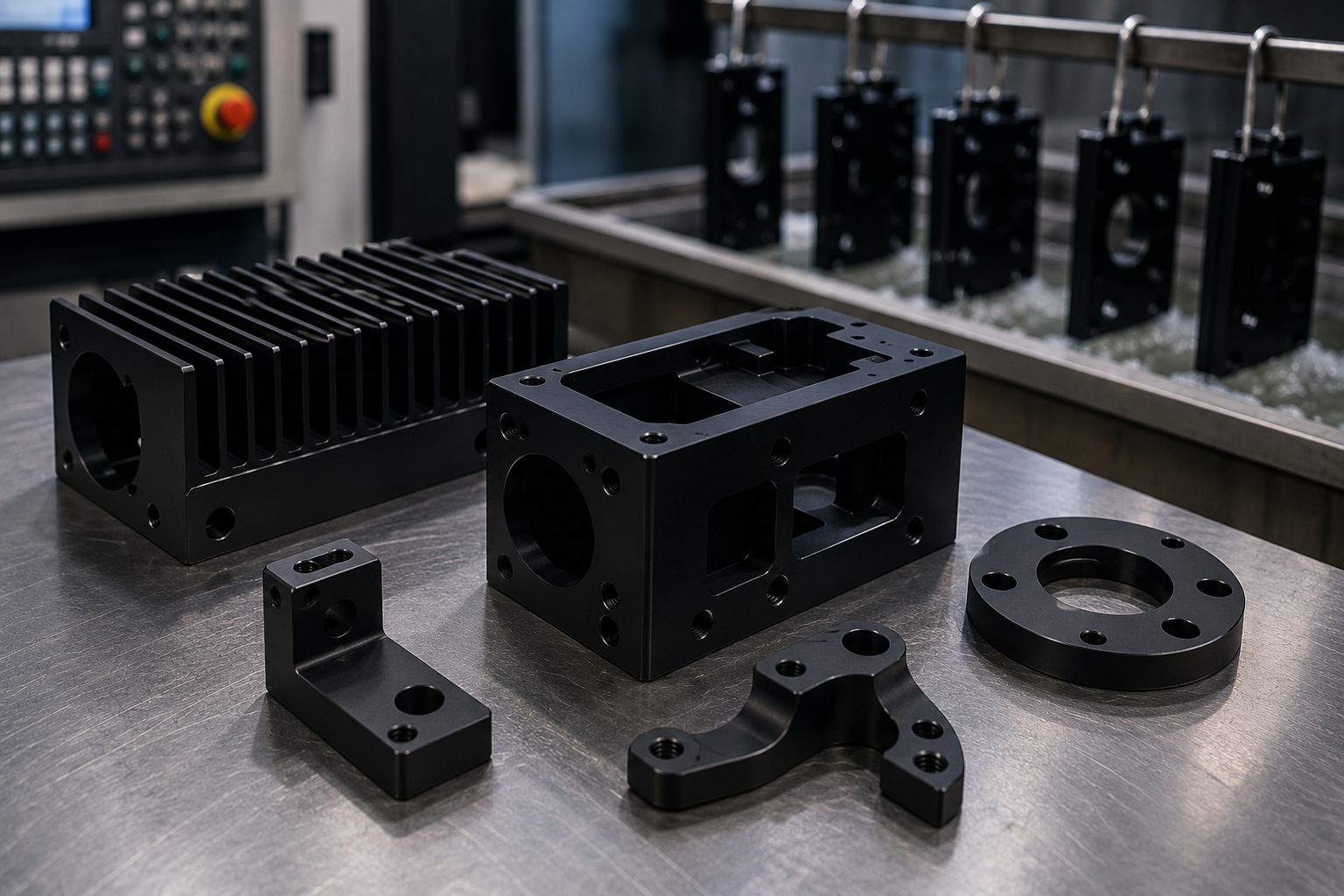
O revestimento em pó, a pintura a úmido, a anodização (para alumínio), a galvanização e a passivação atendem à maioria das necessidades de acabamento de chapas metálicas. O revestimento em pó é o mais utilizado: durável, com flexibilidade de cores e espessura de 60–120 µm. Acrescenta de 2 a 4 dias ao prazo de entrega e de $4 a $15 por peça em um suporte típico. A anodização (Tipo II transparente ou colorida, Tipo III com revestimento rígido) é preferida para o alumínio quando o acabamento precisa ser condutor nas roscas ou quando a resistência à corrosão é fundamental.
Seleção de materiais: além do ‘aço laminado a frio’
As três famílias de materiais que abrangem o 90% na fabricação de chapas metálicas:
- Aço macio (CRS, A1008): o mais barato, o mais fácil de soldar, magnético; deve ser revestido para resistir à corrosão. Espessuras comuns: de 22ga (0,76 mm) a 7ga (4,55 mm).
- Aço inoxidável (304, 316, 316L): resistente à corrosão, mais difícil de dobrar (raio mínimo mais apertado), mais caro — custa de 3 a 5 vezes mais que o aço carbono. O 316L é a opção padrão para aplicações alimentícias e químicas.
- Alumínio (5052-H32, 6061-T6, 3003-H14): leve, naturalmente resistente à corrosão e bom condutor térmico. O 5052 é o que melhor se dobra (mais dúctil); o 6061-T6 é mais resistente, mas racha em raios de curvatura pequenos.
Menos comuns, mas importantes: aço galvanizado para estruturas externas, cobre para barramentos elétricos, latão para trabalhos decorativos e titânio para as indústrias aeroespacial e médica.
Como elaborar as especificações de um trabalho em chapa metálica
Um desenho bem elaborado ou um arquivo CAD com as seguintes informações garantirá um orçamento rápido e uma peça que será enviada corretamente logo na primeira vez:
- Especificação do material com designação e condição (por exemplo, ‘alumínio 5052-H32, com 1,5 mm de espessura’) — e não apenas ‘alumínio’.
- O desenho em planta é útil, mas não é obrigatório se o seu CAD tiver as curvas modeladas corretamente.
- Notas sobre o raio de curvatura — se você concordar com o padrão da oficina (1× a espessura para aço macio), basta indicar. Caso contrário, especifique.
- Indicações de tolerância apenas nas dimensões críticas — desenhos com tolerâncias excessivas geram custos sem agregar valor.
- Notas sobre a instalação de peças de hardware (porcas PEM, pinos, espaçadores) com os números de peça.
- Especificações da solda — comprimento da perna do filete, solda em todo o perímetro ou apenas em bordas específicas, nível de inspeção da solda.
- Especifique o acabamento, incluindo instruções de mascaramento, caso haja roscas ou superfícies que devam permanecer sem revestimento.
A realidade dos custos e dos prazos de entrega
Para um típico caixa elétrica — 300 × 200 × 150 mm, aço laminado a frio de 1,5 mm, 12 dobras, 18 furos, 2 inserções para porcas PEM, pintura em pó preta:
- Quantidade: 1 protótipo: $85–$140, prazo de entrega de 5 a 7 dias.
- Quantidade 50: $32–$48 por unidade, prazo de entrega de 8 a 12 dias.
- Quantidade 500: $14–$22 por unidade, prazo de entrega de 15 a 22 dias.
- Quantidade igual ou superior a 5.000: $7–$11 por unidade, prazo de entrega de 25 a 35 dias; geralmente enviado por frete marítimo para reduzir o custo unitário.
Acrescente 35–50% a esses valores para o aço inoxidável 316 e subtraia 5–15% para o alumínio bruto sem anodização. A cor do revestimento em pó (padrão RAL) não altera o preço; cores personalizadas fora do padrão ou em pequenas quantidades acrescentam $200–$500 no custo de preparação.
Perguntas frequentes
Qual é o menor furo que posso fazer em uma chapa de metal de 1 mm?
Em um laser de fibra, o mínimo confiável é 0,8 mm. Qualquer medida menor apresenta risco de formação de resíduos, escória e inconsistência dimensional. Uma puncionadeira CNC com as ferramentas adequadas pode atingir 0,5 mm em material de 1 mm de espessura, mas o custo das ferramentas pode não justificar essa opção.
Como faço para evitar deformações ao soldar chapas finas de metal?
Sequencie as soldas (padrão de solda intercalada, não contínua do início ao fim), utilize a menor entrada de calor possível, fixe a peça em um dispositivo de fixação e deixe-a esfriar entre as passadas. O alumínio é especialmente propenso à distorção — a soldagem MIG robotizada com modo de transferência pulsada ajuda significativamente.
Posso fazer o anodizado depois da soldagem?
Sim, mas a zona de solda apresenta uma descoloração diferente da do material de base, pois a zona afetada pelo calor possui uma estrutura de grãos diferente. Para peças em que a aparência é fundamental, o revestimento Alodine ou o revestimento de conversão química proporcionam um acabamento mais uniforme do que a anodização.
Qual é a diferença entre o alumínio 5052 e o 6061 no que diz respeito à dobra?
O 5052 é mais dúctil — raio mínimo de curvatura em torno de 1× a espessura, muito tolerante. O 6061-T6 é mais resistente, mas racha em raios apertados — raio mínimo de 2× a espessura, e mesmo assim podem surgir microfissuras. Para suportes que precisam ser curvados com raio apertado, use o 5052. Para suportes que precisam de resistência após a curvatura, use o 6061-T6 com um raio generoso.
Como o Sistema de Gestão da Qualidade (SGQ) digital da Xinyang ajuda?
Cada peça passa por uma cadeia de inspeção sem papel: cartão de corte a laser, cartão de dobra, cartão de solda, cartão de acabamento. Cada estação aprova digitalmente com fotos e medições dimensionais. O cliente recebe um pacote de inspeção para download no momento do envio. O sistema detectou e corrigiu três dobras fora de tolerância em nosso último lote de 800 gabinetes antes que elas chegassem à montagem final.
Qual é o prazo de entrega típico para chapas metálicas na Xinyang?
Padrão: 7 a 10 dias úteis, de porta a porta, para protótipos e pequenos lotes com menos de 100 unidades. As séries de produção de 500 a 5.000 unidades são normalmente enviadas em 18 a 28 dias. O serviço expresso reduz o prazo de entrega dos protótipos para 4 a 5 dias para peças de complexidade moderada.
Conclusão
A fabricação de chapas metálicas é a maneira mais econômica de produzir caixas estruturais, suportes, painéis e componentes de chassi em quantidades que variam de 1 a mais de 100.000 unidades. O processo é bem conhecido e as tolerâncias são previsíveis quando o desenho é especificado corretamente. O principal fator de custo é o DFM — definir corretamente os raios de dobra, as distâncias entre furos e dobras e as espessuras do material antes da cotação economiza 15–40% no preço por peça.