A robot is only as accurate as the parts it’s built from. When an arm repeats a pick-and-place move to within a fraction of a millimeter, thousands of times a day, that precision doesn’t come from the software alone. It’s machined into the joints, the bearings, the structural members. Put a little slack in a gearbox, let a bearing bore drift a few microns, let a bracket flex under load — and the whole arm loses accuracy at the tool. That’s why robotics leans so hard on CNC machining. It’s the process that turns a design for a precise machine into parts that are actually precise.
Here I’ll lay out why machining is the backbone of robotics manufacturing, which parts depend on it most, and what makes robotic hardware so demanding to build. It’s drawn from what we see every day in our robotics machining work, where accuracy, weight, and repeatability all have to be satisfied at once not one at a time.
Resposta rápida: CNC machining is essential for robotics because these machines live or die on tight tolerances, part-to-part repeatability, and specific material properties — and machining delivers all three. Robotic joints, gearbox housings, actuator parts, and end effectors need micron-level accuracy to position reliably, low weight to move quickly, and identical quality across every unit. Multi-axis CNC machining hits that combination across metals and engineering plastics in a way casting and 3D printing can’t match.
The Four Demands Robotics Places on Every Part
Robotic components get pulled in several directions at the same time. Understand those competing demands and you understand why machining, not casting or molding, owns this field.
- Precision — positioning accuracy rides on tight dimensional and geometric tolerances in every joint and bore.
- Repeatability — every unit off the line has to be identical, because automation can’t compensate for part-to-part drift.
- Low weight — lighter moving parts mean faster motion, lower inertia, and smaller, cheaper motors.
- Durability — parts endure millions of cycles, so material strength and surface quality aren’t optional.
None of those is unique to robotics on its own. The combination is. A part has to be light and strong and precise and reproducible, all four at once. CNC machining is one of the few processes that can hit every target in the same piece.
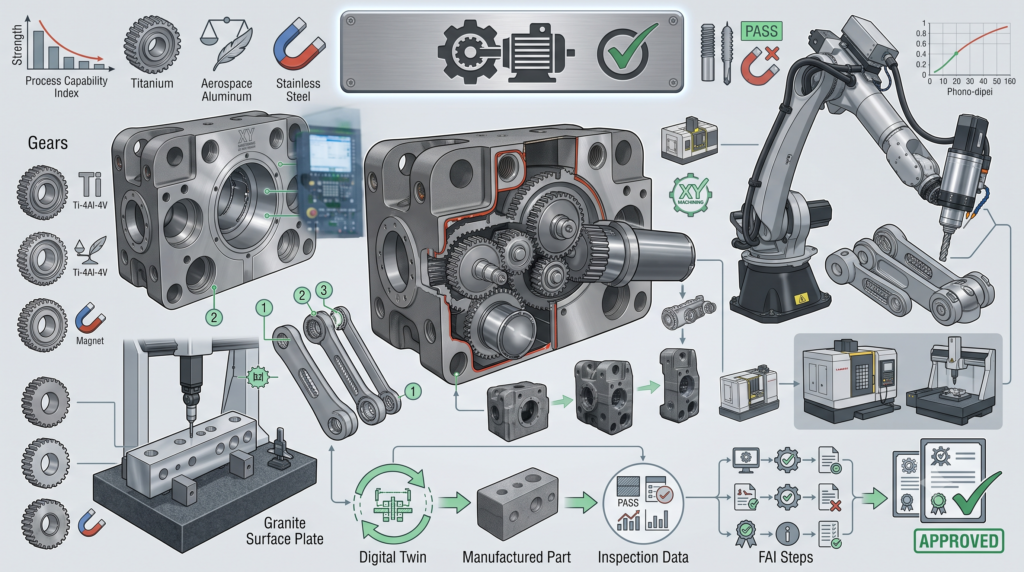
Key Robotics Components Made by CNC Machining
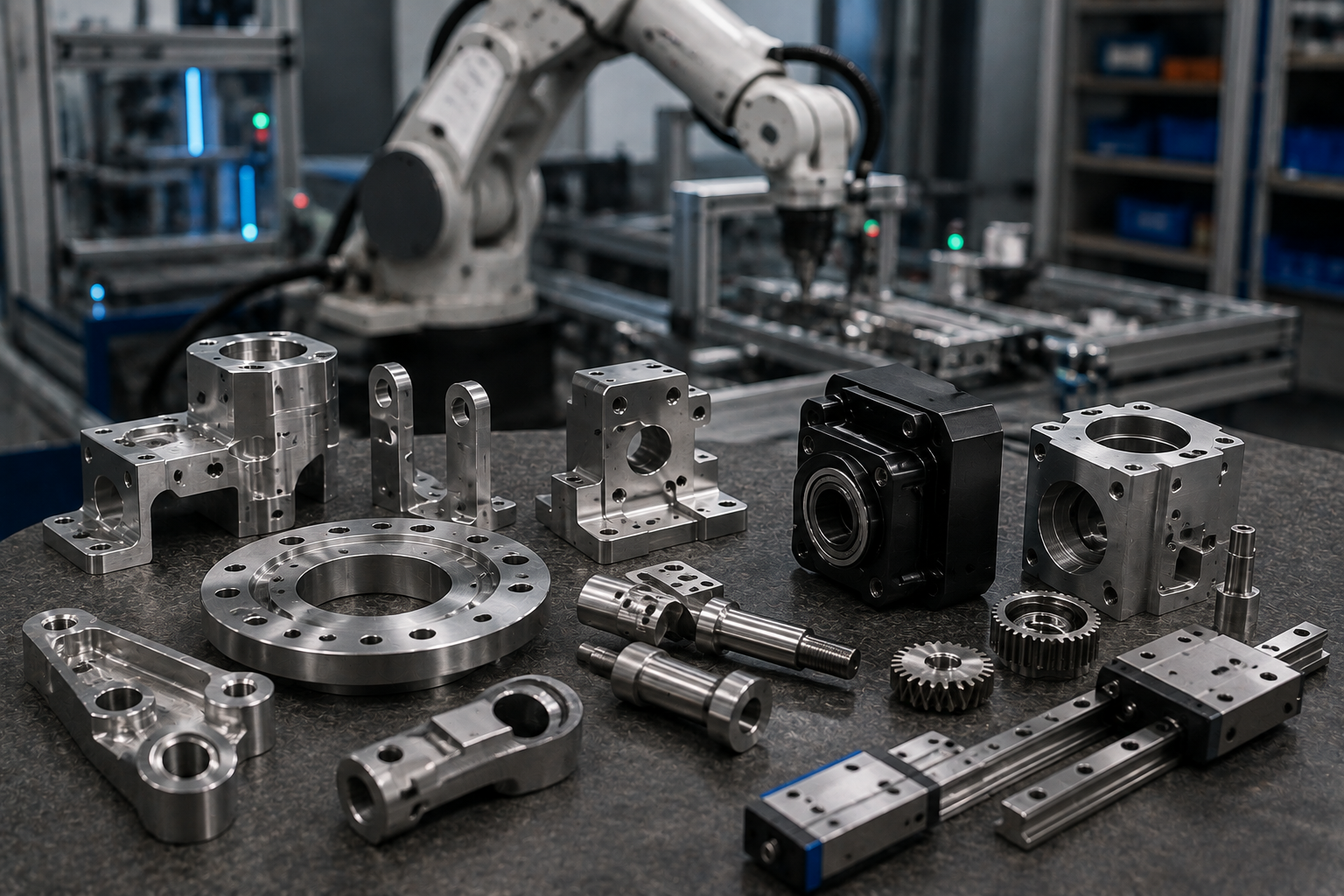
Joints and structural members
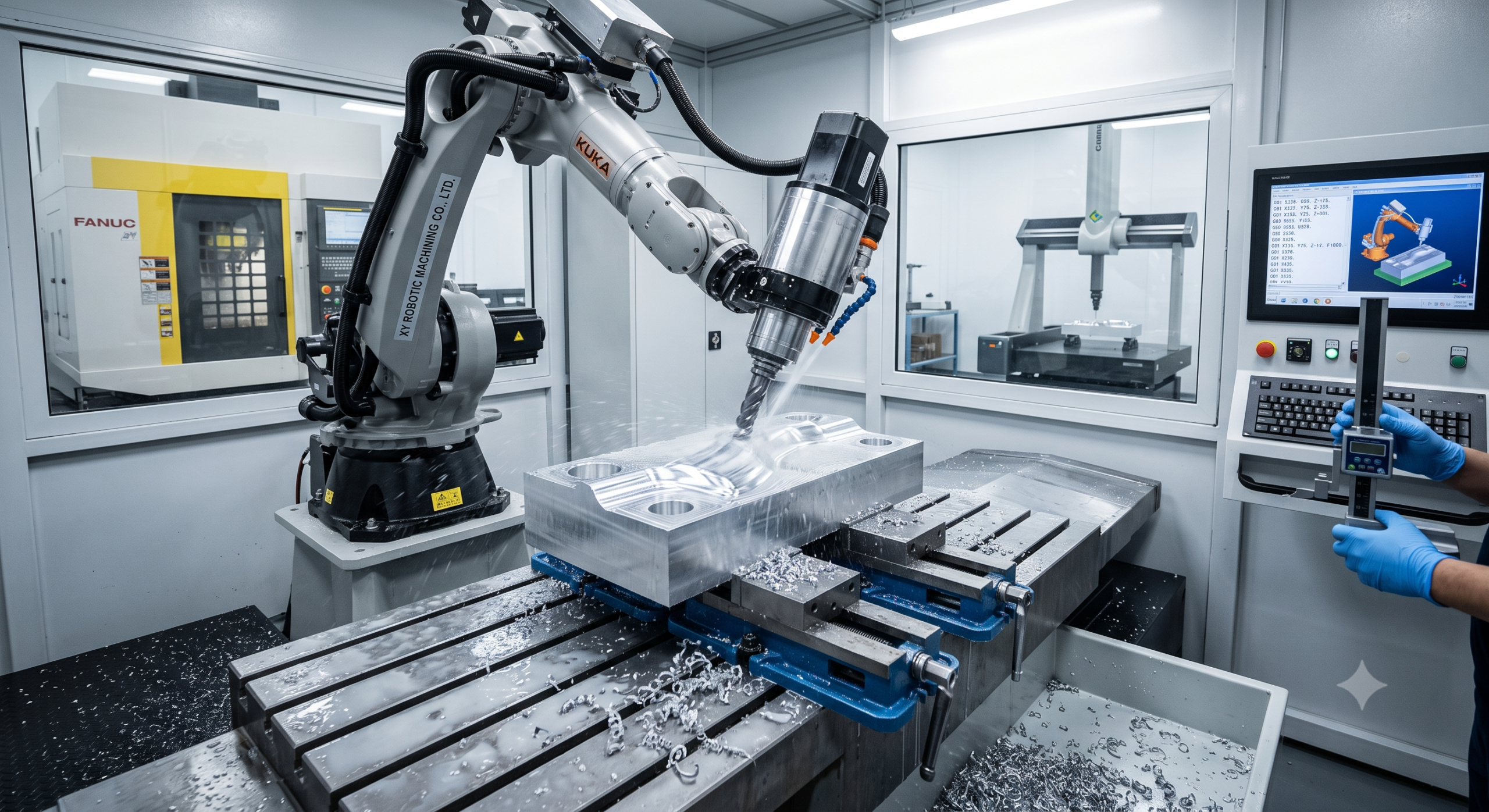
The arms and joints that give a robot its reach usually get machined from aluminum for the strength-to-weight. These parts carry complex geometry — mounting faces at odd angles, internal cable routing, weight-saving pockets — which is a natural fit for Usinagem CNC de 5 eixos. It cuts all those features in one setup and holds the relationships between them tight.
Gearbox and actuator housings
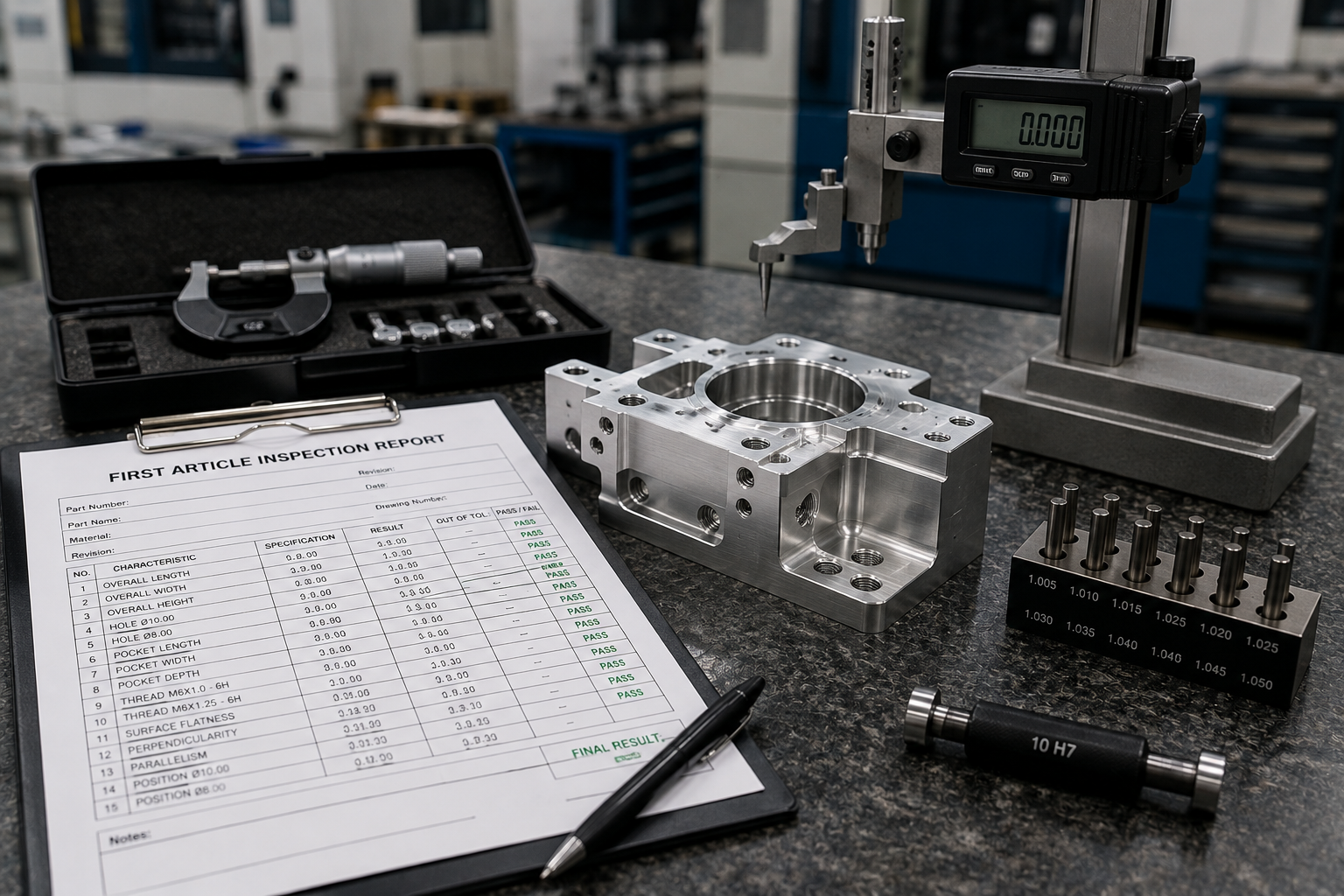
The housings that carry gears, bearings, and harmonic drives are the most tolerance-critical parts in the whole robot. Bearing bores have to be round, concentric, and dead-on for size, so gears mesh without backlash and shafts spin without runout. A few microns of error here shows up as visible slop at the end of a meter-long arm. So these get machined and inspected to the tightest tolerances in the build.
End effectors and grippers
The hands of automation — grippers, tool changers, custom end effectors — tend to be low-volume, one-application parts. That’s machining’s sweet spot: no tooling to build, and a handful of custom effectors costs about what a prototype does. Turned bits like shafts and pins for these mechanisms come off our Serviço de torneamento CNC with the concentricity that rotating assemblies need.
Motion and linear components
Lead-screw nuts, linear-rail carriages, cam followers, couplings — they all depend on machined precision to move smoothly and locate the same way every time. Any roughness or dimensional slip in these shows up straight away as vibration, wear, and lost accuracy in the finished machine.
Table 1: Common robotics components and how CNC machining produces them.
| Componente | Key requirement | Common material | Typical process |
| Robotic arm / joint | Light + rigid, complex geometry | Aluminum 6061/7075 | 5-axis milling |
| Gearbox housing | Tight bore tolerance, concentricity | Aluminum, steel | Milling + boring |
| Actuator shaft | Concentricity, surface finish | Steel, stainless | Torneamento CNC |
| End effector / gripper | Custom, low volume | Aluminum, plastics | Milling |
| Bearing mount | Roundness, precise diameter | Aluminum, steel | Boring / reaming |
| Sensor bracket | Repeatable location, light | Alumínio | 3-axis milling |
Why Not Casting or 3D Printing?
Robotics engineers do use casting and 3D printing — just rarely on the precision-critical interfaces. Casting can’t hold tight tolerances and needs machining on any mating face anyway. 3D printing is great for complex, low-stress brackets and fast iteration, but printed parts generally fall short on the dimensional accuracy, surface finish, and strength that a loaded joint demands. Machining bridges that gap, which is why it stays the default for the parts that actually set a robot’s accuracy. A lot of it comes down to material, and our materials guide lays out the metal and plastic options robotics designers weigh.
Table 2: Why CNC machining leads for precision robotics components.
| Processo | Tolerância | Strength | Best robotics use |
| Usinagem CNC | Excellent (±0.01 mm) | Full material strength | Joints, bores, load-bearing parts |
| Metal casting | Moderado | Ótimo | Bulk housings (then machined) |
| Impressão 3D | Fair | Lower (anisotropic) | Prototypes, non-critical brackets |
| Moldagem por injeção | Good (plastics) | Plastic-limited | High-volume covers, guards |
Materials That Move Robots
Material choice in robotics is a constant tug-of-war between weight and strength. Aluminum — 6061 and 7075 especially — owns the moving structures because it’s light, machinable, and strong enough for most loads; our Guia de usinagem CNC de alumínio goes deep on the grades. Steel and stainless step in where wear and load run highest — gears, shafts, high-stress joints. Engineering plastics like POM and PEEK get machined for parts that need to be light, self-lubricating, or electrically isolating. Getting the fits right across all of these comes back to realistic tolerancing, which our Guia de tolerâncias CNC covers.
Precision and Repeatability at Scale
Here’s the real payoff. Machining doesn’t just make one accurate part — it makes the thousandth part identical to the first. Because the geometry lives in a program and gets cut by a controlled machine, part-to-part variation stays tiny and predictable. For automated assembly, where robots handle parts with no human tweaking, that consistency is everything. A gripper set up for one part works for every part. A joint that fits on unit one fits on unit one thousand. That repeatability is what lets a robotics program scale from prototype to production without re-engineering the fits along the way.
Perguntas frequentes
What tolerances do robotic parts require?
Depends on the job. Structural brackets might live happily at ±0.1 mm, while bearing bores and gear-mesh features often want ±0.01 mm or tighter, with geometric controls on concentricity and roundness. The tightest numbers go on the interfaces that set positioning accuracy.
Why is aluminum so common in robotics?
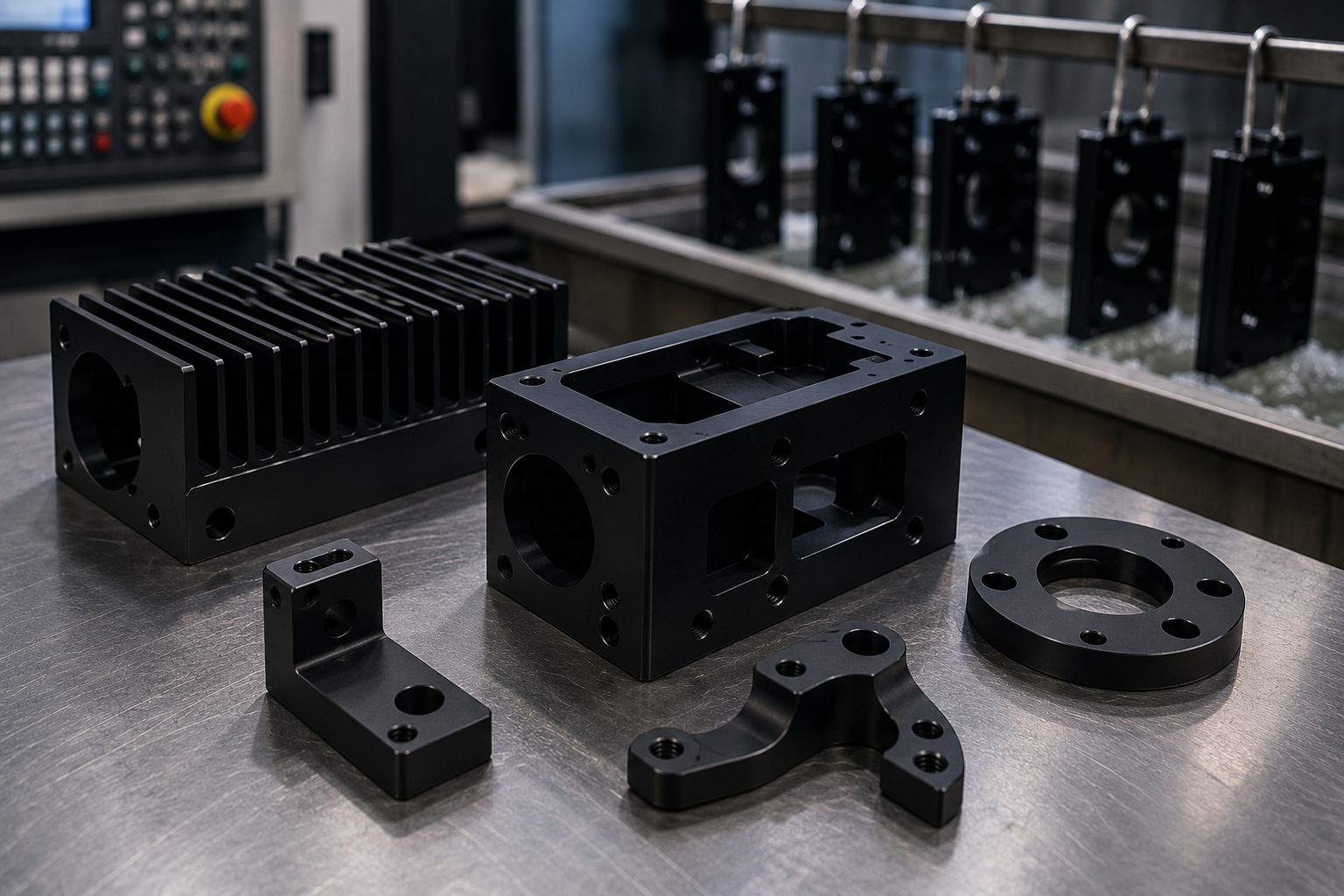
Great strength-to-weight, quick to machine, and it anodizes for wear and corrosion resistance. Lighter moving parts also cut inertia, which means faster motion and smaller motors — a real edge in a robotic arm.
Can CNC machining keep up with automation volumes?
Yes. With pallet changers, bar feeders, and lights-out running, machining turns out robotics parts at production volumes while still holding tight tolerances. For very high volumes of simple covers, molding can pitch in alongside it.
Which robotic parts are most critical to machine precisely?
Gearbox housings, bearing bores, and joint interfaces. Errors there multiply down the length of the arm into big positioning errors at the tool point, so that’s where the precision has to be.
Conclusão
Robotics and automation live on precision, repeatability, and the right balance of weight and strength — and CNC machining is the process built to deliver all three in one part. From load-bearing joints to tolerance-critical gearbox housings, the parts that set a robot’s accuracy get machined for a reason. To see the sectors we support, browse our industries served, check our precision CNC machining services, ou entre em contato conosco to talk through your robotics and automation components.
Sobre o autor Patrick Chen — Engenheiro de Aplicações, XY Machining Patrick analisa projetos de peças com paredes finas para equipes de engenharia dos EUA na XY Machining e trabalha em conjunto com a equipe de produção na definição de dispositivos de fixação e trajetórias de usinagem que garantam que peças delicadas permaneçam dentro das tolerâncias. Para realizar um teste de pressão em uma peça com paredes finas antes de elaborar o orçamento, Envie seu modelo para nossa equipe.