By Patrick Chen | Applications Engineer, XY Machining
Published July 2, 2026 | Reviewed for accuracy by the XY加工 team
| Quick answer Bead blasting propels round glass beads to create a uniform, smooth, matte finish with almost no material removal. It is the go-to cosmetic finish for machined aluminum.Sand blasting, or abrasive grit blasting, uses angular media to aggressively clean, strip, and texture a surface. It removes material and leaves a rougher profile.The difference is media shape: round beads peen a smooth satin surface, angular grit cuts an aggressive texture.Choose bead blasting for a clean cosmetic look and anodizing prep. Choose grit blasting to strip, clean, or roughen. Confirm the finish with your 表面处理 supplier before machining. |
Blast finishing sounds like one process, but bead blasting and sand blasting produce very different results and serve different goals. One gives a part a clean, uniform, matte appearance. The other aggressively cleans, strips, or textures a surface. Choosing the wrong one leaves you with a part that is either not cosmetic enough or too rough for its purpose. This guide explains how each works, when to use each, and how the choice affects your machined or fabricated parts.
It is written for engineers and buyers specifying a finish who want the right surface, not just any blast.
A note on the word sand blasting
Actual sand is rarely used for blasting today because fine silica dust is a serious health hazard. In practice, sand blasting is a general term for abrasive grit blasting using angular media such as aluminum oxide, garnet, or crushed glass. When people say sand blasting, they almost always mean aggressive grit blasting, and that is how the term is used here. The important distinction is not the historic material but the shape of the media, which is what determines the finish.
How bead blasting works
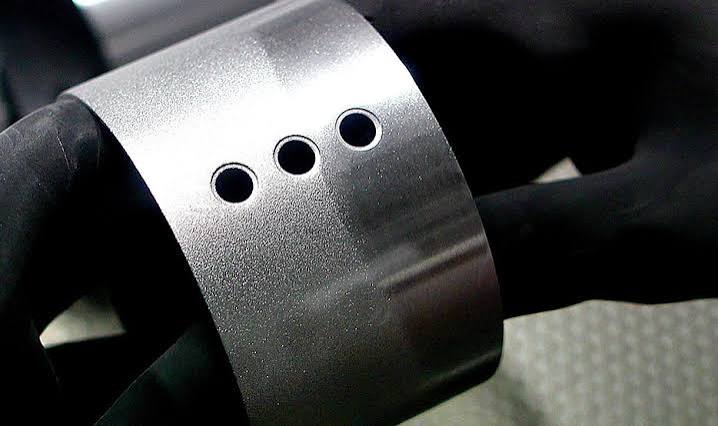
Bead blasting propels small spherical glass beads at the surface under air pressure. Because the media is round, it peens the surface rather than cutting it, producing a uniform, smooth, matte or satin finish with a soft, even appearance. It removes very little material, which means it does not meaningfully change part dimensions, and it leaves no directional pattern. That combination makes bead blasting the standard cosmetic finish for machined aluminum: it hides tool marks, evens out the surface, and gives parts a clean, professional look. It is also the common preparation step before anodizing, because anodizing over a bead-blasted surface produces a consistent, attractive result.
How grit (sand) blasting works
Grit blasting propels angular abrasive media at the surface. Because the media has sharp edges, it cuts into the surface, removing material along with rust, scale, old coatings, and contamination, and leaving a rougher, more textured profile. That aggressiveness is the point. Grit blasting is used to strip and clean surfaces, to prepare a part for painting or coating by creating a rough profile that coatings grip well, and to deliberately texture a surface. It removes more material than bead blasting, so it can affect fine dimensions and is less suited to purely cosmetic parts where a smooth even look is the goal.
The core difference in one idea
The whole distinction comes down to media shape. Round beads peen the surface, smoothing it into a uniform satin finish without removing much material. Angular grit cuts the surface, removing material and leaving an aggressive texture. Once you know whether you want to smooth and finish a part or to strip and roughen it, the choice is made.
Side by side
| 因子 | Bead blasting | Grit (sand) blasting |
| Media shape | Round glass beads | Angular abrasive grit |
| Action | Peens, smooths | Cuts, removes material |
| Finish | Uniform matte or satin | Rough, textured |
| Material removal | 极简 | Significant |
| Main use | Cosmetic finish, anodizing prep | Cleaning, stripping, coating prep |
| Effect on tolerance | 可忽略不计 | Can affect fine dimensions |
| 最适合 | Machined aluminum parts | Rust, scale, paint prep, texture |
How to choose
Name the goal and the answer follows.
- Do you want a clean, uniform, cosmetic matte surface? Choose bead blasting.
- Are you preparing an aluminum part for anodizing? Bead blasting gives the most consistent result.
- Do you need to strip rust, scale, old paint, or contamination? Choose grit blasting.
- Are you preparing a surface for a coating that needs a rough profile to adhere? Grit blasting.
- Do you need a deliberately rough or textured surface? Grit blasting, with the media matched to the texture you want.
What both processes have in common
Both are line-of-sight processes, meaning the media only reaches surfaces it can hit directly, so deep bores and hidden internal features may not finish evenly. Both also affect the surface, so any feature that must stay at a precise dimension or keep a specific finish should be masked. Threaded holes, sealing surfaces, bearing bores, and datum faces are typically masked before blasting. Because blasting can slightly alter fine dimensions, especially grit blasting, tell the shop which features are critical so they are protected. A 表面处理 partner will mask correctly and match the blast to your intent.
Blasting as a step, not the whole finish
It helps to think of blasting as part of a finish sequence rather than the end state. On machined aluminum, bead blasting is frequently the step before anodizing, producing the even base that gives anodized parts their clean look. On fabricated or coated parts, grit blasting is the step before painting or powder coating, creating the profile the coating needs to hold. Deciding the full sequence up front, from machining through blasting to the final coating, is what produces a part that looks and performs the way you intended. This matters on both machined parts and 钣金 work.
The bottom line
Bead blasting and grit blasting are two different tools with one thing in common: they both use media under pressure to change a surface. Round beads smooth a part into a clean, uniform matte finish and prep aluminum for anodizing. Angular grit strips, cleans, and roughens, preparing surfaces for coating or texturing them on purpose. Decide whether you want to finish a part or to strip and prep it, mask the features that must be protected, and plan blasting as one step in the full finish sequence.
Not sure which blast your part needs? Tell us the look and function you are after and we will match the finish. Ask our finishing team, or see our full 数控加工服务.
常见问题
What is the difference between bead blasting and sand blasting?
The difference is media shape. Bead blasting uses round glass beads that peen the surface into a smooth, uniform matte finish with minimal material removal. Sand blasting, more accurately grit blasting, uses angular abrasive media that cuts the surface, removing material and leaving a rougher texture. Beads finish a part cosmetically, grit strips and roughens it.
Which is better for machined aluminum parts?
Bead blasting is usually better for machined aluminum. It hides tool marks and gives a clean, uniform matte finish without meaningfully changing part dimensions, and it is the standard preparation before anodizing because it produces a consistent anodized result. Grit blasting is more aggressive and better suited to cleaning, stripping, or texturing than to a cosmetic finish.
Does blasting change the dimensions of a part?
Bead blasting removes very little material, so its effect on dimensions is negligible. Grit blasting removes more material and can affect fine dimensions and finishes. For that reason, mask any feature that must stay at a precise size or keep a specific finish, such as threaded holes, sealing surfaces, and bearing bores, and tell the shop which features are critical.
Is sand blasting still done with real sand?
Rarely. Actual sand is largely avoided because fine silica dust is a serious health hazard. Sand blasting is now a general term for abrasive grit blasting using angular media such as aluminum oxide or garnet. What matters is that the media is angular and aggressive, which is what distinguishes it from round bead blasting.
When should I use grit blasting instead of bead blasting?
Use grit blasting when you need to strip rust, scale, old paint, or contamination, when you are preparing a surface for a coating that needs a rough profile to adhere, or when you want a deliberately rough or textured surface. Its aggressive, material-removing action is exactly what those jobs require, whereas bead blasting is for a smooth cosmetic finish.
| About the author Patrick Chen — Applications Engineer, XY MachiningPatrick specifies surface finishes for US engineering teams at XY Machining, matching the blast media to the look and function each part needs. To pick the right finish for your parts, talk to our finishing team. |