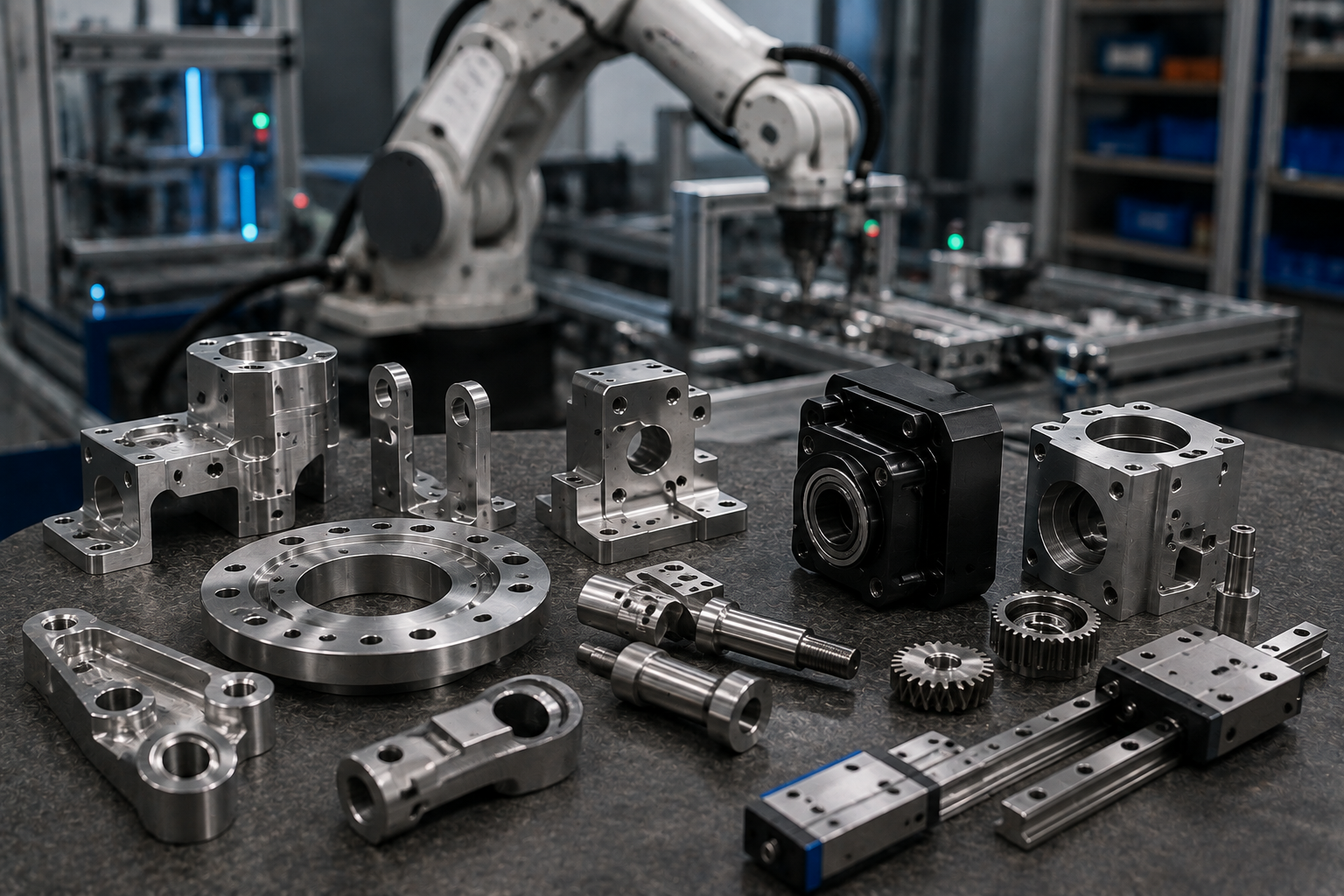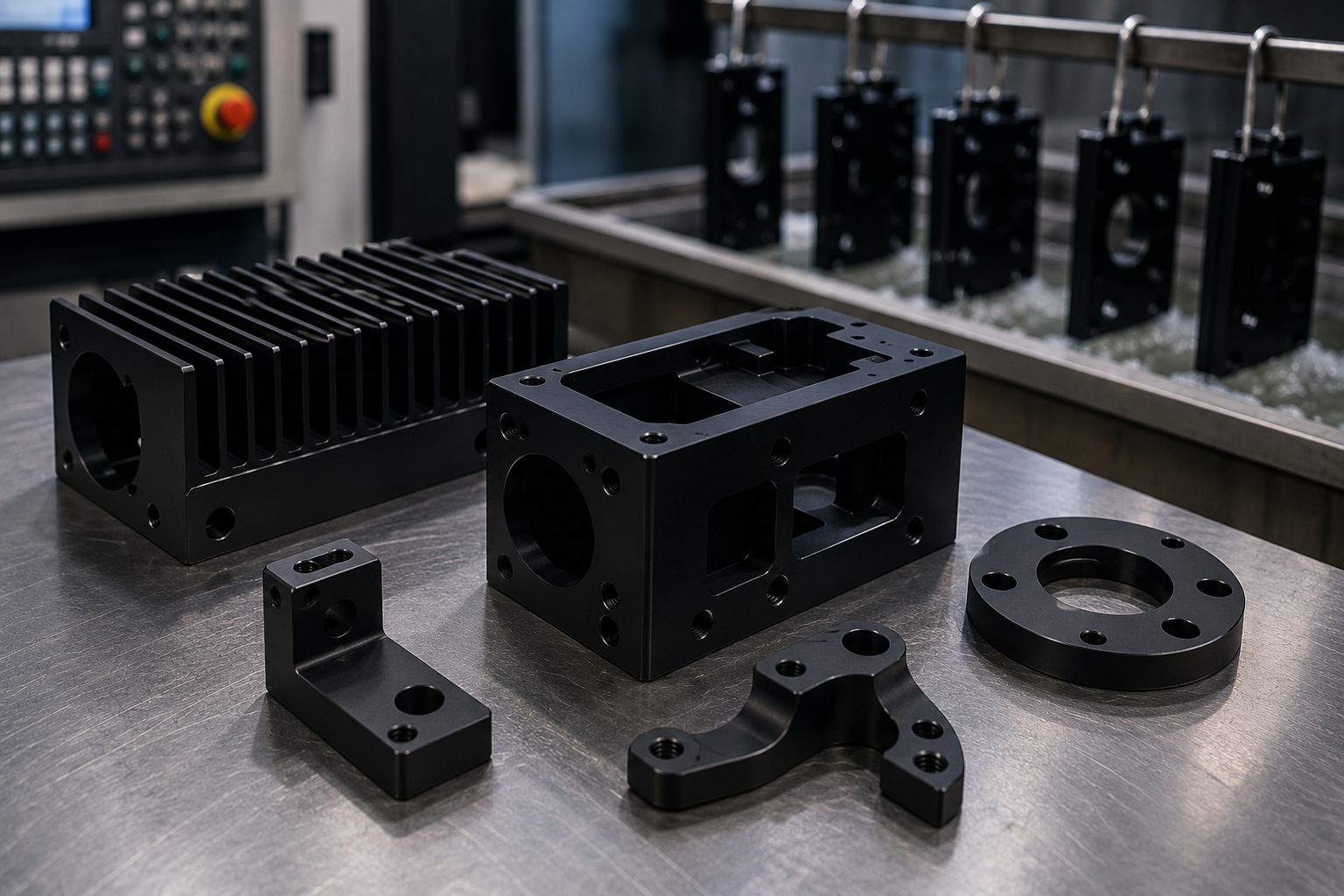
Sourcing CNC machined parts for a US engineering program in 2026 is a more complex procurement decision than it was two or three years ago. The tariff landscape has changed substantially, the standards and documentation requirements for regulated industries have not relaxed, and the domestic versus offshore calculus now turns on a landed-cost calculation that looks very different from the factory unit price.
This guide is written for US engineers and procurement teams who need to make that decision clearly. It covers four areas: the quality standards and certifications your industry requires and how to specify them; the 2026 tariff and duty picture for imported machined components, including the layers that can stack on Chinese-origin parts; the industries with the tightest compliance requirements; and a practical checklist for vetting any CNC machining supplier, domestic or offshore.
XY Machining provides CNC machining, injection molding, sheet metal fabrication, and 3D printing to US engineering teams. This guide is written to be useful regardless of which supplier you ultimately choose. All tariff information references official US government sources — the Office of the United States Trade Representative (USTR) for Section 301 measures, US Customs and Border Protection (CBP) for HTS classification and duty rates, and the Federal Register for Section 232 and Section 122 developments. Verify current rates with a licensed customs broker before making cost commitments.
Standards and Certifications to Specify
The standards framework for US precision machining is well-established and scales from general commercial work to the most demanding regulated applications. Specifying the right standards upfront ensures that quotes are genuinely comparable and that compliance is built into the supplier selection rather than negotiated after the fact.
Geometric Dimensioning and Tolerancing
US engineering drawings typically use ASME Y14.5 — the American Society of Mechanical Engineers standard for geometric dimensioning and tolerancing — as the GD&T reference. ASME Y14.5-2018 is the current revision. Drawings should call out the GD&T standard in the title block so that any supplier, domestic or offshore, interprets tolerance callouts consistently. Most competent precision machining suppliers work in both inch and metric units; specify the unit system in the title block and confirm the supplier can work to it. Reserve tight tolerances — plus or minus 0.001 inch or tighter — for features where functional requirements actually demand them. Over-tolerancing is one of the most reliable ways to inflate a machining quote unnecessarily.
Quality Management Systems
ISO 9001:2015 is the baseline quality management system for general commercial machining. It establishes documented and auditable processes for order management, production planning, inspection, nonconformance handling, and corrective action. For most commercial work outside regulated industries, ISO 9001 is the minimum acceptable quality system. Verify the certificate is current by checking the issuing body’s registry — an expired or suspended certificate is meaningless.
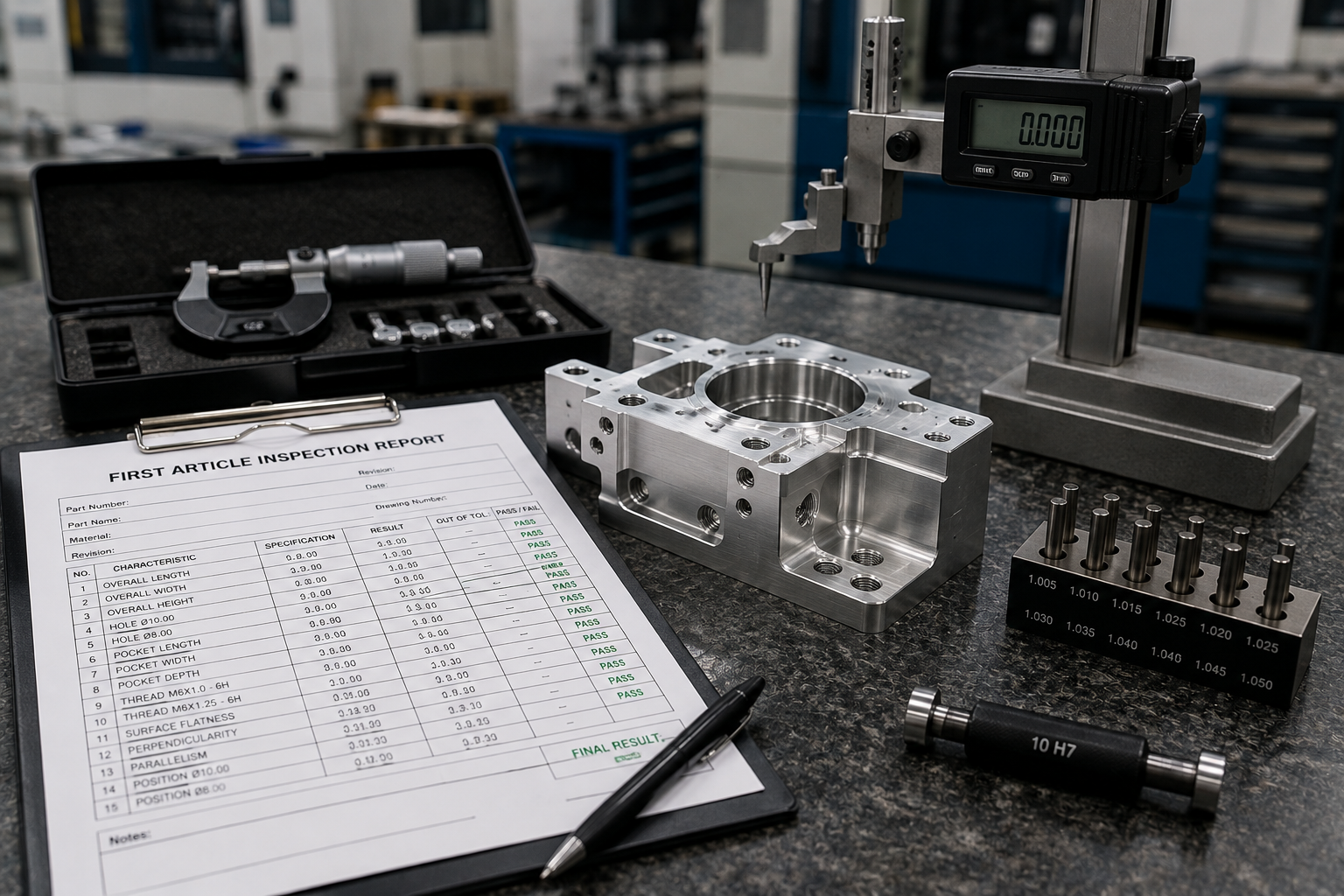
AS9100 Revision D is the aerospace quality management standard. Built on ISO 9001, it adds requirements specific to aviation, space, and defence: configuration management, first article inspection (FAI) per AS9102, counterfeit parts prevention, risk management, and design authority controls. US aerospace primes and their Tier 1 and Tier 2 suppliers universally require AS9100. The OASIS database maintained by the International Aerospace Quality Group (IAQG) is the authoritative registry for AS9100 certificates; use it to verify supplier claims independently.
NADCAP (National Aerospace and Defense Contractors Accreditation Program) accredits special processes that have an outsized effect on airworthiness: heat treatment, welding, non-destructive testing, chemical processing, coatings, and others. For parts requiring any of these special processes, confirm NADCAP accreditation for the specific commodity. NADCAP accreditation is in the Performance Review Institute (PRI) database.
ISO 13485:2016 governs quality management systems for medical device manufacturers and their suppliers. Its requirements for design control, device history records, risk management under ISO 14971, sterilisation validation, and post-market surveillance go substantially beyond ISO 9001. For machined components entering a regulated medical device, ISO 13485 certification is the baseline requirement; confirm it for the specific scope that covers your component type.
IATF 16949:2016 applies to automotive production and service parts. It adds requirements for statistical process control, measurement system analysis (MSA), the production part approval process (PPAP), and customer-specific requirements from the major automotive OEMs. For CNC machined parts entering an automotive supply chain, IATF 16949 is generally required from Tier 1 and often Tier 2 suppliers.
ITAR: A Hard Boundary for Defense Work
The International Traffic in Arms Regulations (ITAR) is not a quality standard — it is a US export control law administered by the State Department’s Directorate of Defense Trade Controls (DDTC). Any part, technology, or service that falls under the US Munitions List (USML) requires the manufacturer, supplier, and any subcontractor with access to the technical data to be registered with DDTC and to comply with ITAR. This is a legal requirement, not a procurement preference, and it creates a hard boundary: ITAR-controlled work must remain with US-based, ITAR-registered entities. Offshore manufacturing of ITAR-controlled parts or sharing of ITAR-controlled technical data with a foreign supplier requires a specific export license and is not a standard commercial transaction. If your parts or technical data fall under the USML, consult your organisation’s export compliance counsel before approaching any offshore supplier.
The 2026 Tariff and Landed-Cost Picture
For US engineering teams evaluating offshore machining, the tariff environment in 2026 is the most consequential factor in the landed-cost calculation, and it is also the most volatile. The rates below are accurate as of mid-2026 based on published US government sources; however, several measures are under legal review or are time-limited. Verify current rates for your specific HTS code with a licensed customs broker before building a cost model.
Base MFN Duty
All goods imported into the United States are assessed a duty rate based on their Harmonized Tariff Schedule (HTS) classification under the most-favored-nation (MFN) rate. For precision machined components, MFN rates are typically in the low single digits — zero to four percent depending on the specific HTS code. The HTS is administered by the US International Trade Commission; the current schedule is publicly searchable at usitc.gov. Correct HTS classification is the foundation of any landed-cost calculation and is also a legal obligation; misclassification carries penalties.
Section 301 Tariffs on Chinese-Origin Goods
Section 301 of the Trade Act of 1974 authorises the USTR to impose tariffs in response to unfair trade practices. The Section 301 tariffs on Chinese-origin goods, originally imposed in 2018 and expanded since, apply a 25 percent additional duty to most industrial machinery and machined components under HTS chapters 84 and 85, and to many other categories. These tariffs are layered on top of the base MFN duty. For a machined aluminium component under a chapter 84 heading with a 2 percent MFN rate and a 25 percent Section 301 tariff, the combined rate is approximately 27 percent before freight. The USTR maintains the current list of Section 301 product exclusions and rates at ustr.gov.
Section 122 Reciprocal Surcharge
A 10 percent reciprocal surcharge under Section 122 of the Trade Act of 1974 took effect in late February 2026 on a broad range of goods from multiple countries, including China. For Chinese-origin goods already subject to Section 301 tariffs, this surcharge stacks on top of the existing duties. As of mid-2026, this measure is time-limited and under active review; its continuation, modification, or expiration should be verified with current CBP guidance before inclusion in a multi-month cost model.
Section 232 Duties on Steel and Aluminum
Section 232 of the Trade Expansion Act of 1962 authorises tariffs on imports that threaten national security. Steel imports are subject to a 25 percent Section 232 duty; aluminum imports are subject to a 50 percent duty as of early 2026 (raised from 10 percent). These duties apply to steel and aluminum mill products and, depending on classification, may apply to manufactured parts with significant steel or aluminum content. If your machined components are classified under a steel or aluminum HTS heading rather than a machinery heading, Section 232 duties may be the applicable measure rather than Section 301. Classification is the determinative factor — confirm with a customs broker.
The Stacking Effect and Practical Implications
The critical point for US buyers is that these duty layers can combine. A Chinese-origin machined steel component might attract a base MFN duty, a Section 301 additional duty, and a Section 232 duty, with the Section 122 surcharge layered on top of some or all of these. The effective duty rate on a single shipment can substantially exceed the highest single rate, and the calculation depends on the specific HTS classification of the part.
Two practical disciplines follow from this reality. First, never model cost on the factory unit price or even a single duty rate estimate. Build a complete landed-cost model: factory price plus ocean or air freight plus import duty at the correct stacked rate plus customs broker fees plus inland freight. Compare this total against a domestic quote for the same part. Second, the landed-cost picture for Chinese-origin goods into the US is materially different from the picture in the UK (low single-digit MFN duties, no China-specific surcharges) or the UAE (five percent flat duty, no surcharges). If your organisation sources across markets, the tariff arithmetic favours offshore sourcing far more strongly in the UK and UAE than in the US in 2026.
Split Sourcing Strategies
Many US engineering teams have moved to a split sourcing approach in response to the 2026 tariff environment. Tariff-sensitive or ITAR-controlled high-volume work is sourced domestically. Complex, low-volume, prototype, or non-tariff-exposed parts are sourced more broadly. Some teams use geographic diversification — qualifying suppliers in Vietnam, Mexico (under USMCA), or other countries where Section 301 and Section 232 do not apply — to manage tariff exposure on specific commodity codes. The right strategy depends on the specific part geometry and volume, the HTS classification, and the compliance requirements of the programme.
Industries With the Most Demanding Requirements
US precision machining demand is concentrated in several sectors, each with a distinct compliance profile. Knowing which sector your programme falls into determines which certifications and documentation to require from day one.
Aerospace and Defense
Aerospace and defense is the most demanding sector for precision machined components. The quality system baseline is AS9100 Revision D. Special processes require NADCAP accreditation for the specific commodity. ITAR applies to parts on the US Munitions List, creating the hard domestic boundary discussed above. First article inspection per AS9102 is standard for new part numbers. Full material traceability from mill certificate to finished part is expected. For parts on airworthiness certification documents, the paper trail is audited by the FAA and DoD; missing documentation results in quarantine or scrapped parts.
US aerospace primes — Boeing, Lockheed Martin, Raytheon Technologies, Northrop Grumman, and others — flow their quality requirements down through purchase orders and supplier quality agreements. Tier 2 and Tier 3 suppliers are held to the same documentation standards as Tier 1. If you are a Tier 2 buying machined components from a further-tier supplier, your purchase order must flow down the applicable AS9100, NADCAP, and material traceability requirements to that supplier.
Medical Devices
Medical device machined components require ISO 13485 from the supplier, full material certification with traceability to the heat or lot, surface finish measurement records (Ra callouts are common for implant and instrument components), and process validation records for any special process. Biocompatibility per ISO 10993 applies at the finished device level, but material selection at the machined component level must be consistent with the biocompatibility rationale in the device technical file. Implant-grade materials — ASTM F136 titanium, ASTM F138 stainless 316L, ASTM F648 UHMWPE, PEEK — must be procured to the applicable ASTM or ISO material standard and certified accordingly.
FDA 21 CFR Part 820 (Quality System Regulation, now being harmonised with ISO 13485) places the design history file, device master record, and device history record obligations on the finished device manufacturer, but the inspection and traceability records from component suppliers are incorporated by reference into the device history record. A missing or incomplete inspection certificate from a machined-component supplier can hold up a batch release.
Automotive and Electric Vehicles
Automotive machined components entering a production supply chain require IATF 16949 and typically a PPAP submission at the appropriate level (Level 1 through 5) as defined by the customer. The PPAP package documents that the production process is capable of consistently producing parts to drawing requirements. Statistical process control (SPC) data, gauge R&R studies, and measurement system analysis are components of the full PPAP package. EV and battery manufacturing adds requirements around electro-sensitive component handling, thermal management material specifications, and, in some cases, traceability requirements specific to battery regulatory frameworks.
Robotics, Semiconductor Equipment, and Industrial
These sectors generally operate under ISO 9001 with customer-specific additions. Tight tolerances — plus or minus 0.005 mm or better on critical features — are common in semiconductor equipment and precision robotics. Cleanliness requirements (particle counts, surface contamination levels) apply to parts entering cleanroom or ultra-high-vacuum environments. These requirements are typically specified on the engineering drawing or in a customer specification document rather than through a third-party certification scheme. Confirm the supplier’s capability and inspection equipment before committing a tolerance-critical part.
How to Vet a CNC Machining Partner
Whether you are evaluating a domestic shop or an offshore supplier, the qualification checklist is the same. The depth of scrutiny should scale with the criticality of the application.
- Capability confirmation: verify that the supplier operates the machines and processes your part requires — multi-axis milling and turning, specific materials, surface finish capabilities — and that their equipment is calibrated. Request a capability statement or shop list.
- Quality system verification: check certificates against the issuing body’s public registry, not just the supplier’s claim. For AS9100, use the IAQG OASIS database. For NADCAP, use the PRI database. For ISO 13485 and ISO 9001, use the issuing certification body’s registry.
- Documentation samples: before committing a new part, request sample first article inspection reports, material test certificates, and dimensional inspection reports from a comparable previous job. The quality of documentation tells you far more than the certificate alone.
- Landed-cost calculation: model the full delivered cost — factory price plus stacked duties at the correct HTS rate plus freight plus broker fees — not just the unit price. For domestic suppliers, confirm lead time, minimum order quantities, and expedite fees.
- DFM feedback process: a supplier who reviews your design for manufacturability before issuing a quote, and flags issues proactively, saves you revision cycles and cost. Ask what their DFM process looks like and how they communicate issues.
- Lead time and communication: a responsive project contact who understands your programme timeline and communicates proactively on schedule risks is worth more than a marginally lower price. Assess communication quality during the quoting process — it is the best predictor of behaviour during production.
- Reference or sample parts: for new or complex parts, a first article or sample run before committing to production quantities is standard practice. Confirm the supplier supports this and understand their first article inspection process.
Where XY Machining Fits for US Buyers
XY Machining serves US engineering teams with CNC machining, injection molding, sheet metal fabrication, and 3D printing — from single prototypes through production runs. Every engagement begins with a drawing review and DFM feedback, and every shipment includes dimensional inspection documentation and material certifications. We are transparent about the landed-cost picture for US buyers, including the tariff considerations that affect offshore sourcing in 2026, so you can make an informed comparison rather than discovering costs after the fact.
For US programmes that are not ITAR-controlled and where the landed-cost analysis supports offshore sourcing, we are a capable partner. For ITAR-controlled work, the work must remain with a US-based, ITAR-registered supplier — this is not a competitive consideration, it is a legal requirement, and we will tell you so directly. Upload your design for instant pricing and DFM feedback via our CNC machining services, page, or start a quote. We also publish sourcing guides for the UK and UAE markets.
Frequently Asked Questions
What standards should I specify for CNC machined parts in the US?
Use ASME Y14.5-2018 for GD&T and specify the general tolerance scheme in the drawing title block. ISO 9001:2015 is the minimum quality management baseline for commercial work. Add AS9100 Rev D and NADCAP (for special processes) for aerospace and defense. Require ISO 13485:2016 for medical device components. Require IATF 16949 for automotive production parts. For any work touching the US Munitions List, confirm ITAR registration with a US-based, DDTC-registered supplier.
How do the 2026 tariffs affect the cost of CNC machining from overseas?
Significantly, for Chinese-origin parts in particular. The layers that can stack on a single shipment include a base MFN duty (typically 0 to 4 percent for machined components), a Section 301 additional duty of 25 percent on most industrial machinery and components, a Section 122 reciprocal surcharge of 10 percent (time-limited as of mid-2026), and Section 232 duties on steel (25 percent) and aluminum (50 percent) content where applicable. The combined effective rate can be substantially higher than any single figure. Always calculate the full landed cost using the correct HTS classification, verified with a licensed customs broker, before committing to offshore sourcing.
Should US companies source CNC machining domestically or offshore in 2026?
It depends on the specific part, its HTS classification, and its compliance requirements. ITAR-controlled work must remain domestic. High-volume tariff-sensitive work often pencils out better domestically in 2026 given stacked duties. Complex, low-volume, prototype, or tight-tolerance work where the tariff impact is manageable may still be sourced offshore competitively, particularly from suppliers in USMCA countries (Mexico, Canada) or countries not subject to Section 301. Run the landed-cost model on your specific HTS code and compare against domestic quotes on the same specification.
What certifications are required for US aerospace machining?
AS9100 Revision D is the baseline quality management system. NADCAP accreditation is required for special processes including heat treatment, welding, non-destructive testing, chemical processing, and coatings. ITAR registration with DDTC is required for parts or technical data on the US Munitions List — this work must remain with US-based, ITAR-registered entities. First article inspection per AS9102 is standard for new part numbers. All certificate claims should be verified in the authoritative registries: OASIS for AS9100, PRI database for NADCAP, DDTC for ITAR registration.
How do I compare CNC machining quotes fairly across domestic and offshore suppliers?
Compare on full landed cost, not factory unit price. For offshore quotes, add the stacked duty rate at the correct HTS classification, ocean or air freight, customs broker fees, and any handling or inland freight costs. For domestic quotes, add freight and any applicable state taxes. Ensure both quotes cover identical specifications: the same tolerances, materials, surface finishes, inspection documentation, and delivery terms. Factor in lead time — a 10-week offshore lead time has a real carrying cost that a 3-week domestic lead time does not. DFM support, responsiveness, and documentation quality are real cost drivers over the life of a programme and should be weighted accordingly.