
Die Beschaffung von CNC-gefertigten Bauteilen für ein US-amerikanisches Ingenieurprogramm im Jahr 2026 ist eine komplexere Beschaffungsentscheidung als noch vor zwei oder drei Jahren. Die Zolllandschaft hat sich erheblich verändert, die Normen und Dokumentationsanforderungen für regulierte Branchen wurden nicht gelockert, und die Abwägung zwischen Inlands- und Auslandsbeschaffung hängt nun von einer Berechnung der Gesamtkosten ab, die sich deutlich vom Stückpreis ab Werk unterscheidet.
Dieser Leitfaden richtet sich an US-amerikanische Ingenieure und Beschaffungsteams, die diese Entscheidung fundiert treffen müssen. Er deckt vier Bereiche ab: die in Ihrer Branche erforderlichen Qualitätsstandards und Zertifizierungen sowie deren Spezifizierung; die Zoll- und Abgabenlage für importierte bearbeitete Bauteile im Jahr 2026, einschließlich der Zollstufen, die auf Teile chinesischer Herkunft aufgeschlagen werden können; die Branchen mit den strengsten Compliance-Anforderungen; sowie eine praktische Checkliste zur Überprüfung von CNC-Bearbeitungsanbietern im In- und Ausland.
XY-Bearbeitung bietet US-amerikanischen Ingenieurteams Dienstleistungen in den Bereichen CNC-Bearbeitung, Spritzguss, Blechbearbeitung und 3D-Druck an. Dieser Leitfaden soll Ihnen unabhängig davon, für welchen Anbieter Sie sich letztendlich entscheiden, als nützliche Hilfe dienen. Alle Zollinformationen beziehen sich auf offizielle Quellen der US-Regierung – das Büro des Handelsbeauftragten der Vereinigten Staaten (USTR) für Maßnahmen gemäß Section 301, die US-Zoll- und Grenzschutzbehörde (CBP) für die HTS-Klassifizierung und Zollsätze sowie das Federal Register für Entwicklungen im Zusammenhang mit Section 232 und Section 122. Erkundigen Sie sich bei einem zugelassenen Zollagenten nach den aktuellen Sätzen, bevor Sie Kostenverpflichtungen eingehen.
Anzugebende Normen und Zertifizierungen
Das Normenwerk für die Präzisionsbearbeitung in den USA ist gut etabliert und reicht von allgemeinen gewerblichen Arbeiten bis hin zu den anspruchsvollsten, regulierten Anwendungen. Die frühzeitige Festlegung der richtigen Normen stellt sicher, dass Angebote wirklich vergleichbar sind und dass die Einhaltung der Normen bereits bei der Lieferantenauswahl berücksichtigt wird, anstatt erst im Nachhinein ausgehandelt zu werden.
Geometrische Bemaßung und Tolerierung
In US-amerikanischen Konstruktionszeichnungen wird in der Regel ASME Y14.5 – die Norm der American Society of Mechanical Engineers für geometrische Bemaßung und Tolerierung – als GD&T-Referenz verwendet. ASME Y14.5-2018 ist die aktuelle Fassung. In den Zeichnungen sollte der GD&T-Standard im Titelblock angegeben werden, damit alle Lieferanten – ob im Inland oder im Ausland – die Toleranzangaben einheitlich auslegen. Die meisten kompetenten Anbieter von Präzisionsbearbeitung arbeiten sowohl mit Zoll- als auch mit metrischen Einheiten; geben Sie das Einheitensystem im Titelblock an und vergewissern Sie sich, dass der Lieferant damit arbeiten kann. Behalten Sie enge Toleranzen – plus oder minus 0,001 Zoll oder enger – für Merkmale vor, bei denen die funktionalen Anforderungen dies tatsächlich erfordern. Überdimensionierte Toleranzen sind eine der zuverlässigsten Methoden, um ein Angebot für die Bearbeitung unnötig in die Höhe zu treiben.
Qualitätsmanagementsysteme
ISO 9001:2015 ist das grundlegende Qualitätsmanagementsystem für die allgemeine gewerbliche Zerspanung. Es legt dokumentierte und überprüfbare Prozesse für das Auftragsmanagement, die Produktionsplanung, die Prüfung, den Umgang mit Abweichungen und Korrekturmaßnahmen fest. Für die meisten gewerblichen Tätigkeiten außerhalb regulierter Branchen ist ISO 9001 das akzeptable Mindestqualitätssystem. Überprüfen Sie anhand des Registers der ausstellenden Stelle, ob das Zertifikat noch gültig ist – ein abgelaufenes oder ausgesetztes Zertifikat ist bedeutungslos.
AS9100 Revision D ist die Qualitätsmanagementnorm für die Luft- und Raumfahrt. Sie baut auf ISO 9001 auf und ergänzt diese um spezifische Anforderungen für die Luftfahrt, die Raumfahrt und die Verteidigungsindustrie: Konfigurationsmanagement, Erstmusterprüfung (FAI) gemäß AS9102, Verhinderung von gefälschten Bauteilen, Risikomanagement und Kontrollen durch die Konstruktionsbehörde. US-amerikanische Hauptunternehmen der Luft- und Raumfahrt sowie deren Tier-1- und Tier-2-Zulieferer verlangen ausnahmslos die Einhaltung von AS9100. Die von der International Aerospace Quality Group (IAQG) gepflegte OASIS-Datenbank ist das maßgebliche Register für AS9100-Zertifikate; nutzen Sie sie, um die Angaben von Zulieferern unabhängig zu überprüfen.
NADCAP (National Aerospace and Defense Contractors Accreditation Program) akkreditiert spezielle Verfahren, die einen überproportionalen Einfluss auf die Lufttüchtigkeit haben: Wärmebehandlung, Schweißen, zerstörungsfreie Prüfung, chemische Behandlung, Beschichtungen und andere. Bei Bauteilen, für die einer dieser speziellen Prozesse erforderlich ist, ist die NADCAP-Akkreditierung für das jeweilige Produkt zu überprüfen. Die NADCAP-Akkreditierung ist in der Datenbank des Performance Review Institute (PRI) zu finden.
Die Norm ISO 13485:2016 regelt Qualitätsmanagementsysteme für Hersteller von Medizinprodukten und deren Zulieferer. Ihre Anforderungen an die Konstruktionskontrolle, die Produktgeschichte, das Risikomanagement gemäß ISO 14971, die Sterilisationsvalidierung und die Überwachung nach dem Inverkehrbringen gehen deutlich über die Anforderungen der ISO 9001 hinaus. Für bearbeitete Bauteile, die in ein reguliertes Medizinprodukt eingebaut werden, ist die Zertifizierung nach ISO 13485 die Grundvoraussetzung; vergewissern Sie sich, dass diese für den spezifischen Geltungsbereich gilt, der Ihren Bauteiltyp abdeckt.
IATF 16949:2016 gilt für die Fertigung von Automobil-Serien- und Ersatzteilen. Die Norm enthält zusätzliche Anforderungen an die statistische Prozesskontrolle, die Messsystemanalyse (MSA), das Verfahren zur Freigabe von Fertigungsteilen (PPAP) sowie kundenspezifische Anforderungen der großen Automobilhersteller. Für CNC-bearbeitete Teile, die in die Automobil-Lieferkette gelangen, wird IATF 16949 in der Regel von Tier-1- und häufig auch von Tier-2-Zulieferern verlangt.
ITAR: Eine strenge Grenze für die Arbeit im Verteidigungsbereich
Die „International Traffic in Arms Regulations“ (ITAR) sind kein Qualitätsstandard – es handelt sich um ein US-amerikanisches Exportkontrollgesetz, das von der Direktion für Rüstungshandelskontrolle (DDTC) des Außenministeriums verwaltet wird. Für jedes Bauteil, jede Technologie oder jede Dienstleistung, die unter die US-Rüstungsgüterliste (USML) fällt, müssen der Hersteller, der Lieferant und alle Subunternehmer, die Zugang zu den technischen Daten haben, bei der DDTC registriert sein und die ITAR-Vorschriften einhalten. Dies ist eine gesetzliche Vorschrift, keine Präferenz bei der Beschaffung, und sie schafft eine klare Grenze: ITAR-kontrollierte Arbeiten müssen bei in den USA ansässigen, bei der DDTC registrierten Unternehmen verbleiben. Die Fertigung von ITAR-kontrollierten Teilen im Ausland oder die Weitergabe von ITAR-kontrollierten technischen Daten an einen ausländischen Lieferanten erfordert eine spezielle Ausfuhrgenehmigung und stellt keine gewöhnliche geschäftliche Transaktion dar. Falls Ihre Teile oder technischen Daten unter die USML fallen, wenden Sie sich bitte an den für Export-Compliance zuständigen Rechtsberater Ihres Unternehmens, bevor Sie Kontakt zu einem ausländischen Lieferanten aufnehmen.
Die Zoll- und Gesamtkostenprognose für 2026
Für US-amerikanische Ingenieurteams, die die Auslagerung der Zerspanung ins Ausland prüfen, ist das Zollumfeld im Jahr 2026 der entscheidende Faktor bei der Berechnung der Gesamtkosten und zugleich derjenige mit den größten Schwankungen. Die unten aufgeführten Sätze sind gemäß veröffentlichten Quellen der US-Regierung Stand Mitte 2026 korrekt; allerdings befinden sich mehrere Maßnahmen derzeit in der rechtlichen Prüfung oder sind befristet. Überprüfen Sie die aktuellen Sätze für Ihren spezifischen HTS-Code bei einem zugelassenen Zollagenten, bevor Sie ein Kostenmodell erstellen.
MFN-Grundzollsatz
Für alle in die Vereinigten Staaten importierten Waren wird ein Zollsatz auf der Grundlage ihrer Einstufung im Harmonisierten Zolltarif (HTS) nach dem Meistbegünstigungssatz (MFN) festgesetzt. Bei präzisionsgefertigten Bauteilen liegen die MFN-Sätze in der Regel im niedrigen einstelligen Bereich – je nach HTS-Code zwischen null und vier Prozent. Der HTS wird von der US-amerikanischen International Trade Commission verwaltet; das aktuelle Verzeichnis ist unter usitc.gov öffentlich einsehbar. Die korrekte HTS-Einstufung bildet die Grundlage jeder Berechnung der Gesamtkosten bis zum Bestimmungsort und ist zudem eine gesetzliche Verpflichtung; eine falsche Einstufung zieht Strafen nach sich.
Zölle gemäß Abschnitt 301 auf Waren chinesischen Ursprungs
Abschnitt 301 des Handelsgesetzes von 1974 ermächtigt den US-Handelsbeauftragten (USTR), als Reaktion auf unlautere Handelspraktiken Zölle zu erheben. Die ursprünglich 2018 verhängten und seitdem ausgeweiteten Zölle gemäß Abschnitt 301 auf Waren chinesischen Ursprungs sehen einen zusätzlichen Zollsatz von 25 Prozent für die meisten Industriemaschinen und bearbeiteten Bauteile der HTS-Kapitel 84 und 85 sowie für viele andere Kategorien vor. Diese Zölle kommen zum MFN-Basiszollsatz hinzu. Für ein bearbeitetes Aluminiumbauteil unter einer Position des Kapitels 84 mit einem Meistbegünstigungssatz von 2 Prozent und einem Section-301-Zollsatz von 25 Prozent beträgt der kombinierte Satz vor Frachtkosten etwa 27 Prozent. Der US-Handelsbeauftragte (USTR) veröffentlicht die aktuelle Liste der Section-301-Ausnahmen und -Sätze auf ustr.gov.
§ 122 Gegenseitiger Zuschlag
Ende Februar 2026 trat gemäß Abschnitt 122 des Handelsgesetzes von 1974 ein gegenseitiger Aufschlag in Höhe von 10 Prozent für eine breite Palette von Waren aus verschiedenen Ländern, darunter China, in Kraft. Für Waren chinesischen Ursprungs, die bereits den Zöllen gemäß Abschnitt 301 unterliegen, kommt dieser Aufschlag zu den bestehenden Zöllen hinzu. Stand Mitte 2026 ist diese Maßnahme befristet und wird derzeit aktiv überprüft; ihre Fortführung, Änderung oder ihr Auslaufen sollte anhand der aktuellen CBP-Leitlinien überprüft werden, bevor sie in ein mehrmonatiges Kostenmodell einbezogen wird.
§ 232 Zölle auf Stahl und Aluminium
Abschnitt 232 des Trade Expansion Act von 1962 ermächtigt zur Erhebung von Zöllen auf Einfuhren, die die nationale Sicherheit gefährden. Stahleinfuhren unterliegen einem Zoll gemäß Abschnitt 232 in Höhe von 25 Prozent; Aluminiumeinfuhren unterliegen ab Anfang 2026 einem Zoll in Höhe von 50 Prozent (erhöht von 10 Prozent). Diese Zölle gelten für Walzprodukte aus Stahl und Aluminium und können je nach Einstufung auch für Fertigteile mit einem erheblichen Stahl- oder Aluminiumanteil gelten. Wenn Ihre bearbeiteten Bauteile unter einer HTS-Position für Stahl oder Aluminium und nicht unter einer Position für Maschinen eingereiht werden, gelten möglicherweise die Zölle gemäß Abschnitt 232 anstelle der Maßnahmen gemäß Abschnitt 301. Die Einreihung ist der entscheidende Faktor – lassen Sie sich dies von einem Zollagenten bestätigen.
Der Stapeleffekt und seine praktischen Auswirkungen
Entscheidend für US-Käufer ist, dass sich diese Zollstufen addieren können. Für ein bearbeitetes Stahlbauteil chinesischen Ursprungs können ein MFN-Grundzoll, ein Zusatzzoll gemäß Section 301 und ein Zoll gemäß Section 232 anfallen, wobei der Aufschlag gemäß Section 122 auf einige oder alle dieser Zölle aufgeschlagen wird. Der effektive Zollsatz für eine einzelne Sendung kann den höchsten Einzelsatz erheblich übersteigen, und die Berechnung hängt von der spezifischen HTS-Klassifizierung des Teils ab.
Aus dieser Tatsache ergeben sich zwei praktische Vorgehensweisen. Erstens: Berechnen Sie die Kosten niemals auf der Grundlage des Werkspreises oder gar einer einzelnen Zollsatzschätzung. Erstellen Sie ein vollständiges Modell der Gesamtkosten: Werkspreis zuzüglich See- oder Luftfracht zuzüglich Einfuhrzoll zum korrekten gestaffelten Satz zuzüglich Zollabfertigungsgebühren zuzüglich Inlandfracht. Vergleichen Sie diese Gesamtsumme mit einem inländischen Angebot für dasselbe Teil. Zweitens unterscheidet sich das Gesamtkostenbild für Waren chinesischer Herkunft bei der Einfuhr in die USA erheblich von dem im Vereinigten Königreich (niedrige einstellige MFN-Zölle, keine china-spezifischen Zuschläge) oder in den Vereinigten Arabischen Emiraten (fünf Prozent Pauschalzoll, keine Zuschläge). Wenn Ihr Unternehmen in verschiedenen Märkten einkauft, spricht die Zollkalkulation im Jahr 2026 im Vereinigten Königreich und in den Vereinigten Arabischen Emiraten weitaus stärker für eine Beschaffung im Ausland als in den USA.
Strategien zur geteilten Beschaffung
Viele US-amerikanische Entwicklungsteams sind als Reaktion auf das Zollumfeld im Jahr 2026 zu einem „Split-Sourcing“-Ansatz übergegangen. Zollempfindliche oder ITAR-kontrollierte Großserienaufträge werden im Inland beschafft. Komplexe Teile, Kleinserien, Prototypen oder Teile, die keinen Zöllen unterliegen, werden breiter gestreut beschafft. Einige Teams nutzen geografische Diversifizierung – indem sie Lieferanten in Vietnam, Mexiko (im Rahmen des USMCA) oder anderen Ländern qualifizieren, in denen die Bestimmungen der Section 301 und Section 232 keine Anwendung finden –, um das Zollrisiko bei bestimmten Warencodes zu steuern. Die richtige Strategie hängt von der spezifischen Geometrie und dem Volumen des Bauteils, der HTS-Klassifizierung sowie den Compliance-Anforderungen des Programms ab.
Branchen mit den höchsten Anforderungen
Die Nachfrage nach Präzisionsbearbeitung in den USA konzentriert sich auf mehrere Branchen, die jeweils unterschiedliche Compliance-Anforderungen aufweisen. Je nachdem, zu welcher Branche Ihr Programm gehört, hängt es ab, welche Zertifizierungen und Unterlagen Sie von Anfang an benötigen.
Luft- und Raumfahrt sowie Verteidigung
Die Luft- und Raumfahrt sowie die Verteidigungsindustrie sind die anspruchsvollsten Branchen für präzisionsgefertigte Bauteile. Die Grundlage für das Qualitätsmanagementsystem bildet die Norm AS9100, Revision D. Spezielle Verfahren erfordern eine NADCAP-Akkreditierung für das jeweilige Produkt. Die ITAR-Bestimmungen gelten für Teile, die auf der US-Munitionsliste aufgeführt sind, wodurch die oben erwähnte strenge innerstaatliche Grenze entsteht. Die Erstmusterprüfung gemäß AS9102 ist Standard für neue Teilenummern. Eine lückenlose Rückverfolgbarkeit des Materials vom Werkszeugnis bis zum fertigen Bauteil wird erwartet. Bei Bauteilen, die in Lufttüchtigkeitszertifikaten aufgeführt sind, wird die Dokumentenkette von der FAA und dem DoD geprüft; fehlende Unterlagen führen zur Quarantäne oder zur Verschrottung der Bauteile.
Die führenden US-Luft- und Raumfahrtunternehmen – Boeing, Lockheed Martin, Raytheon Technologies, Northrop Grumman und andere – geben ihre Qualitätsanforderungen über Bestellungen und Lieferantenqualitätsvereinbarungen an ihre Zulieferer weiter. Zulieferer der Stufen 2 und 3 unterliegen denselben Dokumentationsstandards wie Tier-1-Zulieferer. Wenn Sie als Tier-2-Zulieferer bearbeitete Bauteile von einem Zulieferer einer weiteren Stufe beziehen, müssen in Ihrer Bestellung die geltenden Anforderungen gemäß AS9100, NADCAP und zur Materialrückverfolgbarkeit an diesen Zulieferer weitergegeben werden.
Medizinprodukte
Für bearbeitete Komponenten von Medizinprodukten muss der Lieferant die Norm ISO 13485 erfüllen; außerdem sind eine vollständige Materialzertifizierung mit Rückverfolgbarkeit bis zur Schmelze oder Charge, Messprotokolle zur Oberflächenrauheit (Ra-Angaben sind bei Implantat- und Instrumentenkomponenten üblich) sowie Prozessvalidierungsprotokolle für alle Sonderverfahren erforderlich. Die Biokompatibilität gemäß ISO 10993 gilt auf der Ebene des fertigen Produkts, doch die Materialauswahl auf der Ebene der bearbeiteten Bauteile muss mit den in den technischen Unterlagen des Produkts dargelegten Gründen für die Biokompatibilität übereinstimmen. Materialien in Implantatqualität – Titan nach ASTM F136, Edelstahl 316L nach ASTM F138, UHMWPE nach ASTM F648, PEEK – müssen gemäß der geltenden ASTM- oder ISO-Materialnorm beschafft und entsprechend zertifiziert sein.
FDA 21 CFR Teil 820 (Qualitätssystemverordnung, die derzeit an die Norm ISO 13485 angepasst wird) legt die Verpflichtungen hinsichtlich der Konstruktionshistorie, der Produktstammdaten und der Produktgeschichte dem Hersteller des fertigen Produkts auf, wobei jedoch die Prüf- und Rückverfolgbarkeitsunterlagen der Zulieferer von Komponenten durch Verweis in die Produktgeschichte aufgenommen werden. Ein fehlendes oder unvollständiges Prüfzertifikat eines Lieferanten für bearbeitete Bauteile kann die Freigabe einer Charge verzögern.
Automobilindustrie und Elektrofahrzeuge
Bearbeitete Automobilkomponenten, die in eine Produktionslieferkette gelangen, müssen den Anforderungen der IATF 16949 entsprechen und in der Regel eine PPAP-Einreichung auf der vom Kunden festgelegten Stufe (Stufe 1 bis 5) vorweisen. Das PPAP-Paket dokumentiert, dass der Produktionsprozess in der Lage ist, Teile konsistent gemäß den Anforderungen der Zeichnung herzustellen. Daten zur statistischen Prozesskontrolle (SPC), R&R-Studien (Repeatability and Reproducibility) sowie Messsystemanalysen sind Bestandteile des vollständigen PPAP-Pakets. Bei der Herstellung von Elektrofahrzeugen und Batterien kommen zusätzliche Anforderungen hinsichtlich des Umgangs mit elektrosensitiven Bauteilen, der Materialspezifikationen für das Wärmemanagement und in einigen Fällen spezifische Rückverfolgbarkeitsanforderungen gemäß den regulatorischen Rahmenbedingungen für Batterien hinzu.
Robotik, Halbleiterausrüstung und Industrie
Diese Branchen arbeiten in der Regel nach ISO 9001 mit kundenspezifischen Ergänzungen. Enge Toleranzen – plus oder minus 0,005 mm oder besser bei kritischen Merkmalen – sind in der Halbleiterausrüstung und der Präzisionsrobotik üblich. Reinheitsanforderungen (Partikelzahlen, Oberflächenverunreinigungsgrade) gelten für Teile, die in Reinraum- oder Ultrahochvakuum-Umgebungen gelangen. Diese Anforderungen werden in der Regel in der Konstruktionszeichnung oder in einem kundenspezifischen Spezifikationsdokument festgelegt und nicht im Rahmen eines Zertifizierungsverfahrens durch eine unabhängige Stelle. Überprüfen Sie die Leistungsfähigkeit des Lieferanten und dessen Prüfausrüstung, bevor Sie ein toleranzkritisches Teil in Auftrag geben.
So wählen Sie einen Partner für die CNC-Bearbeitung aus
Unabhängig davon, ob Sie einen inländischen Anbieter oder einen ausländischen Lieferanten prüfen, ist die Qualifizierungscheckliste dieselbe. Der Umfang der Prüfung sollte sich nach der Kritikalität der Anwendung richten.
- Überprüfung der Leistungsfähigkeit: Vergewissern Sie sich, dass der Lieferant über die für Ihr Bauteil erforderlichen Maschinen und Verfahren verfügt – mehrachsiges Fräsen und Drehen, bestimmte Werkstoffe, Oberflächenbearbeitung – und dass seine Anlagen kalibriert sind. Fordern Sie eine Leistungsbeschreibung oder eine Betriebsliste an.
- Überprüfung des Qualitätsmanagementsystems: Vergleichen Sie die Zertifikate mit dem öffentlichen Register der ausstellenden Stelle und verlassen Sie sich nicht nur auf die Angaben des Lieferanten. Für AS9100 nutzen Sie die IAQG-OASIS-Datenbank. Für NADCAP nutzen Sie die PRI-Datenbank. Für ISO 13485 und ISO 9001 nutzen Sie das Register der ausstellenden Zertifizierungsstelle.
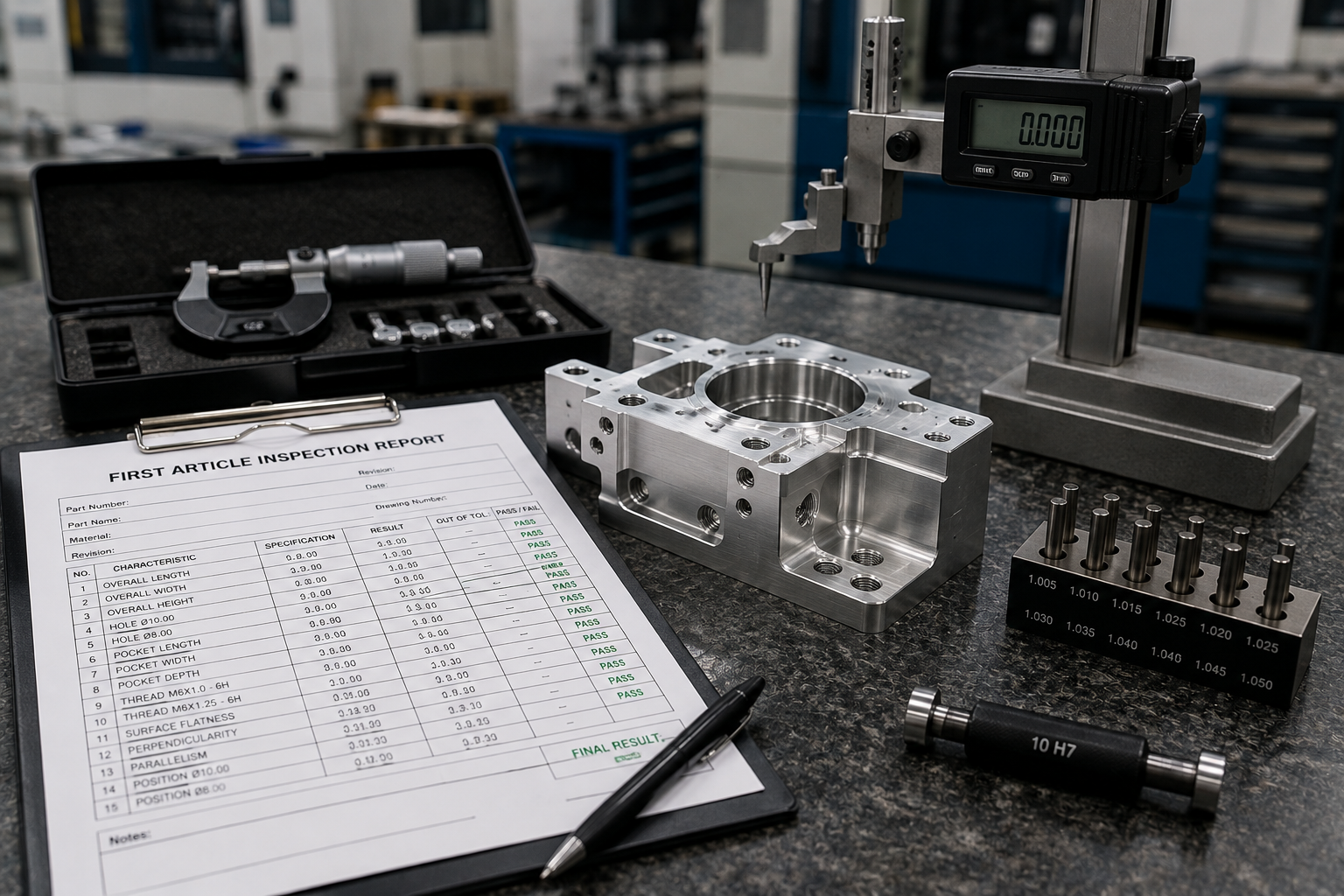
- Beispiele für Unterlagen: Bevor Sie ein neues Bauteil freigeben, fordern Sie Musterberichte zur Erstmusterprüfung, Materialprüfzeugnisse und Maßprüfberichte aus einem vergleichbaren früheren Auftrag an. Die Qualität der Unterlagen sagt weit mehr aus als das Zertifikat allein.
- Berechnung der Gesamtkosten: Ermitteln Sie die gesamten Lieferkosten – Fabrikpreis zuzüglich der anfallenden Zölle zum korrekten HTS-Satz zuzüglich Frachtkosten und Maklergebühren – und nicht nur den Stückpreis. Klären Sie bei inländischen Lieferanten die Lieferzeit, Mindestbestellmengen und Eilzuschläge.
- DFM-Feedback-Prozess: Ein Lieferant, der Ihren Entwurf vor der Angebotserstellung auf Fertigungsfähigkeit prüft und Probleme proaktiv aufzeigt, erspart Ihnen Überarbeitungszyklen und Kosten. Fragen Sie nach, wie der DFM-Prozess des Lieferanten aussieht und wie er Probleme kommuniziert.
- Vorlaufzeit und Kommunikation: Ein reaktionsschneller Projektansprechpartner, der Ihren Zeitplan versteht und proaktiv über Terminrisiken informiert, ist mehr wert als ein geringfügig niedrigerer Preis. Bewerten Sie die Qualität der Kommunikation bereits während des Angebotsverfahrens – sie ist der beste Indikator für das Verhalten während der Produktion.
- Referenz- oder Musterteile: Bei neuen oder komplexen Teilen ist es gängige Praxis, vor der Freigabe der Serienproduktion einen Erstmuster- oder Probendurchlauf durchzuführen. Vergewissern Sie sich, dass der Lieferant dies unterstützt, und machen Sie sich mit dessen Verfahren zur Erstmusterprüfung vertraut.
Wo sich die XY-Bearbeitung für US-Käufer eignet
XY Machining unterstützt US-amerikanische Ingenieurteams mit CNC-Bearbeitung, Spritzguss, Blechbearbeitung und 3D-Druck – vom einzelnen Prototyp bis hin zur Serienfertigung. Jedes Projekt beginnt mit einer Zeichnungsprüfung und Rückmeldungen zur Fertigungsoptimierung (DFM), und jede Lieferung enthält Unterlagen zur Maßprüfung sowie Materialzertifikate. Wir legen die Gesamtkosten für US-Käufer transparent dar, einschließlich der Zollbestimmungen, die sich 2026 auf die Beschaffung im Ausland auswirken, damit Sie einen fundierten Vergleich anstellen können, anstatt die Kosten erst im Nachhinein zu erfahren.
Für US-Projekte, die nicht unter die ITAR-Bestimmungen fallen und bei denen die Analyse der Gesamtkosten eine Beschaffung im Ausland nahelegt, sind wir ein kompetenter Partner. Bei ITAR-unterliegenden Aufträgen müssen die Arbeiten bei einem in den USA ansässigen, nach ITAR registrierten Lieferanten verbleiben – dies ist kein wettbewerbsrelevanter Aspekt, sondern eine gesetzliche Vorschrift, und wir werden Sie direkt darauf hinweisen. Laden Sie Ihren Entwurf hoch, um über unser Portal sofort einen Kostenvoranschlag und DFM-Feedback zu erhalten CNC-Bearbeitungsdienstleistungen, Seite oder ein Angebot anfordern. Außerdem veröffentlichen wir Beschaffungsleitfäden für den britischen und den Markt der Vereinigten Arabischen Emirate.
Häufig gestellte Fragen
Welche Normen sollte ich für CNC-bearbeitete Teile in den USA festlegen?
Verwenden Sie ASME Y14.5-2018 für GD&T und geben Sie das allgemeine Toleranzschema im Titelblock der Zeichnung an. ISO 9001:2015 ist die Mindestanforderung an das Qualitätsmanagement für kommerzielle Aufträge. Fügen Sie AS9100 Rev. D hinzu und NADCAP (für spezielle Prozesse) in der Luft- und Raumfahrt sowie im Verteidigungsbereich. Für Komponenten von Medizinprodukten ist die Einhaltung der Norm ISO 13485:2016 vorgeschrieben. Für Serienbauteile in der Automobilindustrie ist die Einhaltung der Norm IATF 16949 vorgeschrieben. Bei allen Arbeiten, die die US-Munitionsliste betreffen, ist die ITAR-Registrierung bei einem in den USA ansässigen, beim DDTC registrierten Lieferanten zu überprüfen.
Wie wirken sich die Zölle für 2026 auf die Kosten der CNC-Bearbeitung aus Übersee aus?
Dies gilt insbesondere für Teile chinesischer Herkunft. Zu den Zöllen, die bei einer einzelnen Sendung kumuliert werden können, gehören ein MFN-Grundzoll (in der Regel 0 bis 4 Prozent für bearbeitete Bauteile), ein Zusatzzoll gemäß Section 301 in Höhe von 25 Prozent auf die meisten Industriemaschinen und -komponenten, ein Gegenzuschlag gemäß Section 122 in Höhe von 10 Prozent (befristet bis Mitte 2026) sowie Zölle gemäß Section 232 auf Stahl- (25 Prozent) und Aluminiumanteile (50 Prozent), sofern zutreffend. Der kombinierte effektive Zollsatz kann erheblich höher sein als jeder einzelne Wert. Immer die Gesamtkosten bis zum Bestimmungsort berechnen die korrekte HTS-Klassifizierung zu verwenden, die von einem zugelassenen Zollagenten überprüft wurde, bevor man sich für die Beschaffung im Ausland entscheidet.
Sollten US-Unternehmen im Jahr 2026 CNC-Bearbeitungen im Inland oder im Ausland in Auftrag geben?
Dies hängt vom jeweiligen Bauteil, seiner HTS-Klassifizierung und den geltenden Compliance-Anforderungen ab. ITAR-kontrollierte Arbeiten müssen im Inland verbleiben. Bei großvolumigen, zollsensiblen Aufträgen ist die Produktion im Inland im Jahr 2026 aufgrund der kumulierten Zölle oft wirtschaftlicher. Komplexe Arbeiten mit geringen Stückzahlen, Prototypen oder engen Toleranzen, bei denen die Auswirkungen der Zölle überschaubar sind, können weiterhin wettbewerbsfähig im Ausland beschafft werden, insbesondere von Lieferanten in USMCA-Ländern (Mexiko, Kanada) oder Ländern, die nicht unter Section 301 fallen. Führen Sie das Landed-Cost-Modell für Ihren spezifischen HTS-Code durch und vergleichen Sie die Ergebnisse mit inländischen Angeboten für dieselbe Spezifikation.
Welche Zertifizierungen sind für die Bearbeitung von Bauteilen für die Luft- und Raumfahrt in den USA erforderlich?
AS9100 Revision D bildet die Grundlage für das Qualitätsmanagementsystem. Für spezielle Verfahren wie Wärmebehandlung, Schweißen, zerstörungsfreie Prüfung, chemische Behandlung und Beschichtungen ist eine NADCAP-Akkreditierung erforderlich. Für Teile oder technische Daten, die auf der US-Munitionsliste aufgeführt sind, ist eine ITAR-Registrierung beim DDTC erforderlich – diese Arbeiten müssen bei in den USA ansässigen, ITAR-registrierten Unternehmen verbleiben. Die Erstmusterprüfung gemäß AS9102 ist Standard für neue Teilenummern. Alle Angaben zu Zertifikaten sollten in den maßgeblichen Registern überprüft werden: OASIS für AS9100, PRI-Datenbank für NADCAP, DDTC für die ITAR-Registrierung.
Wie kann ich Angebote für die CNC-Bearbeitung von inländischen und ausländischen Anbietern fair miteinander vergleichen?
Vergleichen Sie die Gesamtkosten inklusive Anlieferung, nicht den Stückpreis ab Werk. Bei Angeboten aus dem Ausland addieren Sie den kumulierten Zollsatz gemäß der korrekten HTS-Klassifizierung, die See- oder Luftfrachtkosten, die Zollabfertigungsgebühren sowie etwaige Umschlag- oder Inlandfrachtkosten hinzu. Bei inländischen Angeboten addieren Sie die Frachtkosten sowie etwaige anfallende staatliche Steuern hinzu. Stellen Sie sicher, dass beide Angebote identische Spezifikationen abdecken: dieselben Toleranzen, Materialien, Oberflächenbeschaffenheiten, Prüfunterlagen und Lieferbedingungen. Berücksichtigen Sie die Vorlaufzeit – eine 10-wöchige Vorlaufzeit bei Offshore-Lieferungen verursacht reale Lagerkosten, die bei einer 3-wöchigen Vorlaufzeit im Inland nicht anfallen. DFM-Unterstützung, Reaktionsfähigkeit und die Qualität der Dokumentation sind über die gesamte Laufzeit eines Programms hinweg wesentliche Kostenfaktoren und sollten entsprechend gewichtet werden.