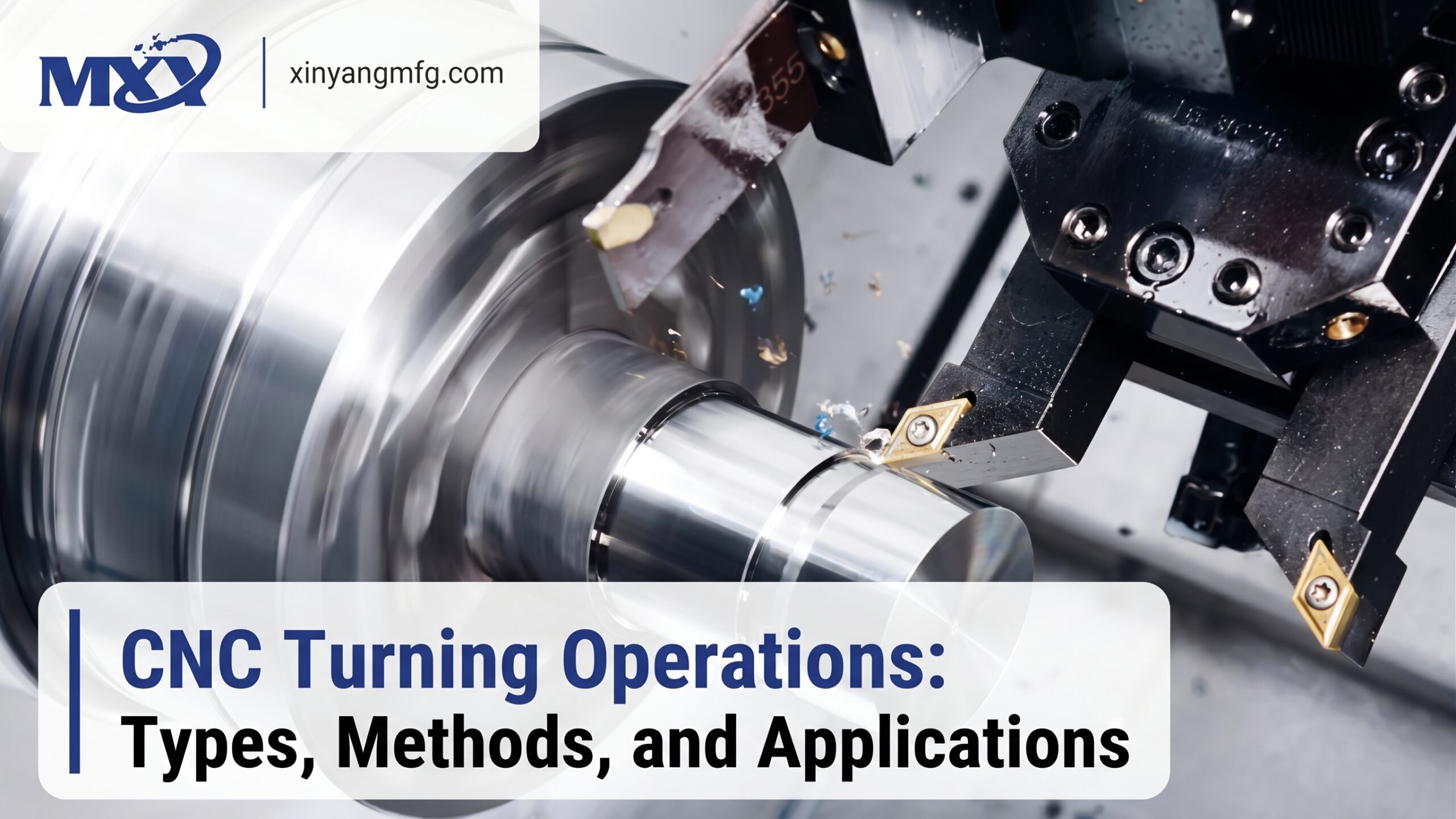
What are CNC turning operations and how are they used in modern manufacturing? What are the different types of CNC turning operations available today? How do CNC turning methods improve precision, production speed, and component quality? What role do CNC lathe operations play in industries such as aerospace, automotive, medical, and industrial manufacturing?
CNC turning operations are computer-controlled machining processes used to manufacture cylindrical components by rotating a workpiece while a cutting tool removes material to create accurate shapes. These operations include facing, threading, drilling, grooving, boring, and contour turning methods that help manufacturers produce precise parts with consistent quality and repeatability.
Understanding CNC Turning Operations
CNC turning operations are an essential part of precision manufacturing where a CNC lathe machine controls cutting tools through programmed instructions. Unlike traditional manual turning, CNC turning uses digital designs and automated movements to achieve accurate dimensions, complex geometries, and high production efficiency.
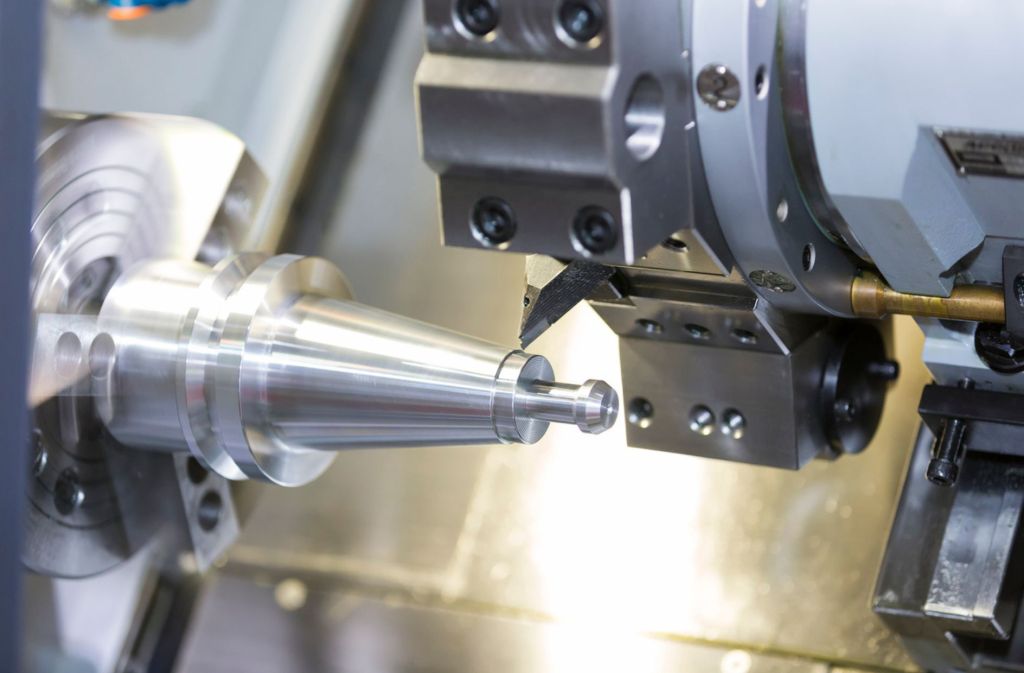
During the CNC turning process, the workpiece rotates around its axis while a cutting tool moves along programmed paths. The machine controls factors such as cutting speed, feed rate, tool movement, and machining depth to create the final component.
Modern manufacturers use CNC turning because it provides excellent accuracy, reduced production errors, and the ability to produce large quantities of identical parts.
Em Xinyang MFG, CNC manufacturing solutions are used to create precision components based on specific material requirements, design specifications, and industrial applications.
CNC turning operations are widely used for manufacturing:
- Shafts and rods
- Bushings and bearings
- Fasteners
- Automotive components
- Medical parts
- Industrial machine components
The correct selection of CNC lathe operations depends on component design, material properties, tolerance requirements, and surface finish expectations.
What Are CNC Lathe Operations?
CNC lathe operations are the individual machining processes performed on a CNC turning machine to shape and finish a workpiece. Each operation has a specific purpose and is selected according to the final part requirements.
The main advantage of CNC lathe operations is their ability to combine multiple machining steps into a single automated process. This reduces manual handling, improves consistency, and increases production efficiency.
Common CNC lathe operations include:
| CNC Lathe Operation | Objetivo | Aplicações típicas |
| Facing | Creates a flat surface at the end of a component | Shafts, discs, and cylindrical parts |
| Turning | Reduces external diameter and creates cylindrical shapes | Rotating machine components |
| Threading | Produces internal or external threads | Screws, bolts, and connectors |
| Grooving | Creates narrow channels on a workpiece | Sealing rings and mechanical parts |
| Boring | Enlarges existing holes with high accuracy | Precision housings and sleeves |
| Drilling | Creates holes in components | Assembly and fastening applications |
Each CNC lathe operation requires proper tooling, programming, and cutting parameters to achieve the desired results.
Types of CNC Turning Operations
There are different types of CNC turning operations used in manufacturing depending on the component design and production requirements.
External Turning
External turning is one of the most common CNC turning methods. It involves removing material from the outside surface of a rotating workpiece.
This operation is used to create specific diameters, smooth surfaces, and precise cylindrical shapes.
External turning is frequently used for manufacturing shafts, pins, rollers, and other rotational components.
Facing Operation
Facing creates a flat surface at the end of a workpiece by moving the cutting tool across the rotating material.
This operation is often the first machining step because it establishes a reference surface for additional CNC machining processes.
Thread Cutting
Threading is a specialized CNC turning operation used to create accurate screw threads.
CNC machines can produce internal and external threads with high precision, making them suitable for automotive, aerospace, and industrial applications.
Grooving Operation
Grooving creates narrow cuts or channels on the surface of a component.
This method is commonly used for creating spaces for seals, retaining rings, and mechanical connections.
Parting Operation
Parting, also known as cutoff operation, separates a finished component from the remaining stock material.
It requires careful tool selection because incorrect cutting parameters can affect surface quality and tool performance.
CNC Turning Methods Explained
CNC turning methods define how machining operations are planned and executed to achieve the required component specifications.
Manufacturers select different methods based on material type, component complexity, production volume, and accuracy requirements.
Conventional CNC Turning Method
Conventional CNC turning focuses on standard machining processes where tools follow programmed paths to remove material gradually.
This method is suitable for many general manufacturing applications and provides reliable results for simple to medium-complexity components.
Precision CNC Turning Method
Precision CNC turning is used when components require extremely tight tolerances and accurate dimensions.
Industries such as aerospace and medical manufacturing often require precision turning because even small dimensional variations can affect product performance.
For projects requiring high-quality manufacturing, businesses can explore CNC turning services by Xinyang MFG for customized precision machining solutions.
High-Speed CNC Turning Method
High-speed turning uses optimized cutting parameters and advanced tooling to increase production speed while maintaining accuracy.
This approach is beneficial for manufacturers producing large quantities of components.
CNC Turning Strategies for Better Machining Performance
Successful CNC turning requires more than selecting the correct machine. Proper machining strategies help improve productivity, tool life, and final product quality.
Tool Selection Strategy
Choosing the correct cutting tool is important because different materials require different tool geometries and coatings.
Carbide tools, ceramic tools, and coated inserts are commonly selected based on machining conditions.
Cutting Parameter Optimization
Cutting speed, feed rate, and depth of cut directly influence machining results.
Optimized parameters help reduce tool wear, improve surface finish, and maintain dimensional accuracy.
Proper Workholding Strategy
Secure workholding prevents vibration and movement during machining.
Manufacturers use appropriate chucks, fixtures, and support systems to maintain stability during CNC turning operations.
Applications of CNC Turning Operations
CNC turning operations are used across multiple industries because they provide accuracy, repeatability, and efficient production.
| Setor | CNC Turning Applications |
| Automotivo | Engine parts, shafts, connectors, transmission components |
| Aeroespacial | Precision fittings, structural parts, hydraulic components |
| Médico | Surgical tools, implants, equipment components |
| Eletrônica | Small precision housings and connectors |
| Industrial Machinery | Gears, rollers, bushings, and machine parts |
Automotive Industry
The automotive sector depends heavily on CNC turning operations for producing reliable mechanical components.
Parts such as shafts, fasteners, and transmission components require accurate dimensions to ensure proper vehicle performance.
Aerospace Manufacturing
Aerospace components require strict quality standards because they operate under demanding conditions.
CNC turning allows manufacturers to create lightweight and strong components using materials such as aluminum, titanium, and stainless steel.
Medical Manufacturing
Medical devices often require extremely precise components.
CNC turning methods help produce surgical instruments, implants, and specialized medical parts with consistent quality.
Manufacturers often combine CNC turning with additional processes such as precision machining services to achieve advanced accuracy requirements.
Factors Affecting CNC Turning Quality
Several factors influence the performance and quality of CNC turning operations.
Seleção de materiais
Different materials require different machining approaches. Aluminum, steel, titanium, and plastics each have unique cutting characteristics.
Machine Capability
The CNC lathe type, spindle speed, and automation features affect production possibilities.
Programming Accuracy
Accurate CNC programming ensures that tools follow correct paths and produce components according to design specifications.
Surface Finishing Requirements
Many components require additional finishing after machining. Surface treatments can improve appearance, durability, and corrosion resistance.
You can also learn more about related manufacturing techniques through our guide on CNC machining processes.
CNC Turning vs CNC Milling
Although CNC turning and CNC milling are both computer-controlled machining processes, they are used for different manufacturing purposes.
CNC turning is mainly used for cylindrical parts where the workpiece rotates during machining. CNC milling is better suited for complex shapes, flat surfaces, pockets, and multi-dimensional components.
| Recurso | Torneamento CNC | Fresagem CNC |
| Workpiece Movement | Rotates around an axis | Usually remains fixed |
| Main Purpose | Cylindrical components | Complex geometric parts |
| Common Parts | Shafts, rods, bushings | Housings, molds, brackets |
| Cutting Tool Movement | Mainly linear movement | Multi-directional movement |
Both processes are often combined in modern manufacturing environments to achieve complete component production.
Future Trends in CNC Turning Technology
CNC turning technology continues to improve through automation, artificial intelligence, and smart manufacturing systems.
Modern CNC machines now include advanced monitoring systems that analyze tool performance, detect errors, and improve production efficiency.
Automation and robotics are also becoming more common, allowing manufacturers to increase productivity while maintaining consistent quality.
The integration of digital manufacturing technologies will continue to make CNC turning operations faster, more accurate, and more cost-effective.
Conclusão
CNC turning operations are a fundamental technology in modern precision manufacturing. From basic turning and facing to advanced threading and multi-operation machining, CNC lathe operations allow manufacturers to produce accurate components efficiently.
Understanding different CNC turning methods, strategies, and applications helps businesses select the right machining approach for their production needs.
With continued improvements in automation, smart technology, and precision engineering, CNC turning will remain an essential manufacturing process for industries requiring reliable and high-quality components.
Perguntas frequentes
What are CNC turning operations?
CNC turning operations are automated machining processes where a rotating workpiece is shaped using computer-controlled cutting tools. These operations include turning, facing, threading, drilling, and grooving.
What are the main types of CNC turning operations?
The main types include external turning, facing, threading, boring, grooving, drilling, and parting operations. Each process is selected based on the required component design and manufacturing goal.
What industries use CNC lathe operations?
CNC lathe operations are widely used in automotive, aerospace, medical, electronics, and industrial equipment industries because they provide accurate and repeatable machining results.
How do CNC turning methods improve manufacturing?
CNC turning methods improve manufacturing by increasing precision, reducing human errors, improving production speed, and allowing manufacturers to create complex components consistently.
Qual é a diferença entre torneamento CNC e fresagem CNC?
CNC turning is mainly used for cylindrical components where the workpiece rotates. CNC milling is used for complex shapes, flat surfaces, and multi-dimensional parts.
Sobre o autor Patrick Chen — Engenheiro de Aplicações, XY Machining Patrick analisa projetos de peças com paredes finas para equipes de engenharia dos EUA na XY Machining e trabalha em conjunto com a equipe de produção na definição de dispositivos de fixação e trajetórias de usinagem que garantam que peças delicadas permaneçam dentro das tolerâncias. Para realizar um teste de pressão em uma peça com paredes finas antes de elaborar o orçamento, Envie seu modelo para nossa equipe.