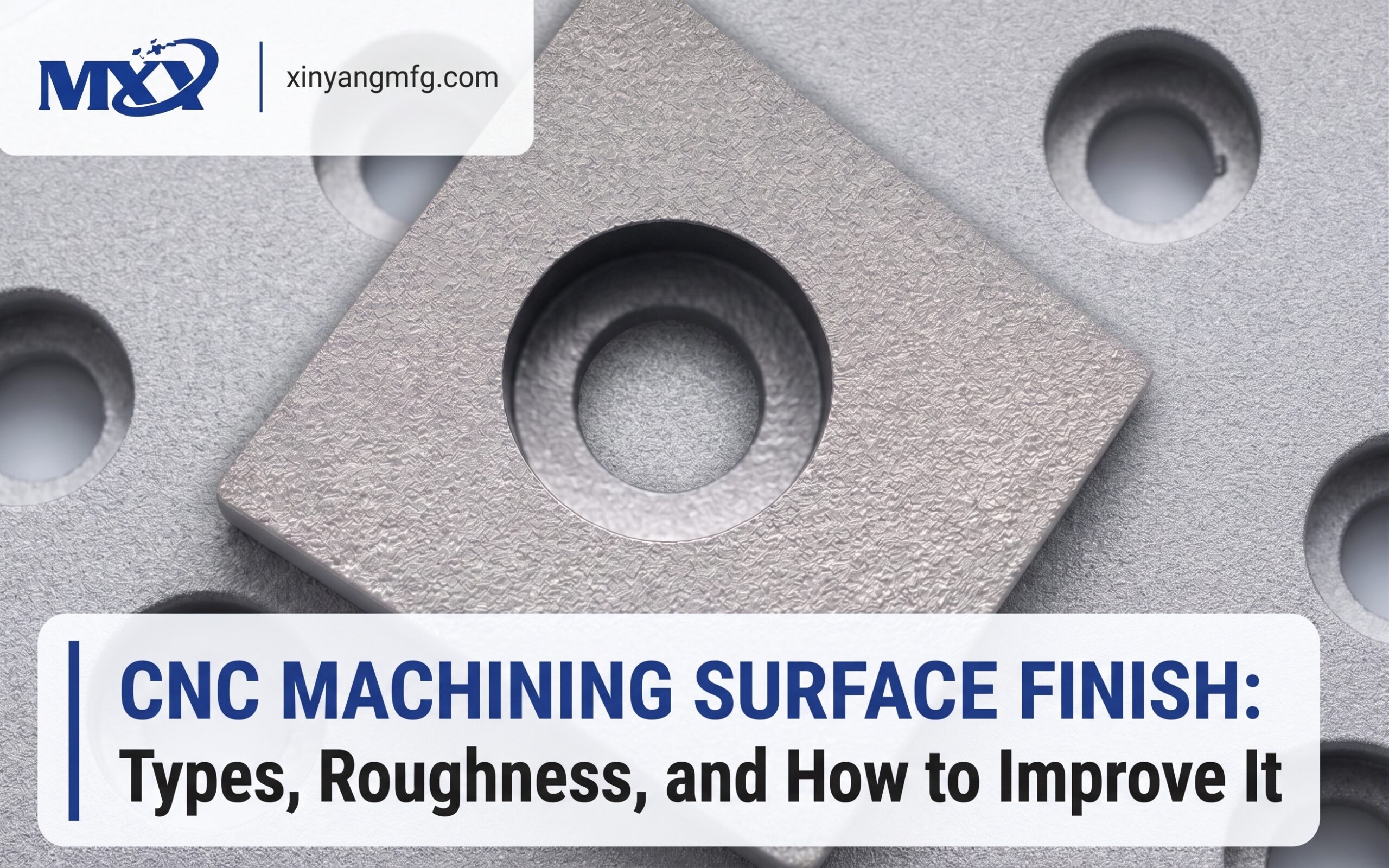
What is CNC machining surface finish? What are the different CNC surface finish types used in manufacturing? How does CNC surface roughness affect part performance, appearance, accuracy, and durability? What methods can improve CNC machining surface finish quality?
CNC machining surface finish refers to the final texture, smoothness, and appearance of a machined component after cutting operations. The quality of a surface finish depends on machining parameters, cutting tools, material properties, machine accuracy, and post-processing techniques. Selecting the correct finish helps improve part functionality, reduce friction, increase durability, and achieve the required visual appearance.
Manufacturers use different surface finishing methods based on application requirements. A precision aerospace component may require a smoother finish than a general industrial bracket. Understanding surface roughness values and finishing options helps engineers select the right manufacturing approach.
For professional production support, Serviços de usinagem CNC provide precision manufacturing solutions with optimized machining processes and finishing techniques.
What Is CNC Machining Surface Finish?
CNC machining surface finish describes the condition of a part’s surface after it has been manufactured using computer numerical control machining processes.
During CNC machining, cutting tools remove material from a workpiece layer by layer. The movement of the cutting tool creates small patterns and marks on the surface. These microscopic variations determine the final surface texture.
Surface finish affects more than appearance. It influences:
- Part performance
- Friction levels
- Resistência ao desgaste
- Sealing ability
- Dimensional accuracy
- Assembly compatibility
A properly selected surface finish ensures that manufactured components perform reliably in their intended applications.
Why CNC Surface Finish Matters in Manufacturing
The required finish depends on how a component will be used. Some parts require extremely smooth surfaces for movement, sealing, or aesthetic reasons, while others only need functional machining quality.
For example, medical devices, automotive components, and aerospace parts often require controlled surface finishes because small imperfections can affect performance.
| Surface Finish Factor | Impact on CNC Parts |
| Surface Roughness | Determines smoothness and friction behavior |
| Tool Selection | Influences machining marks and accuracy |
| Velocidade de corte | Affects heat generation and surface quality |
| Feed Rate | Controls the texture created by the cutting tool |
Manufacturers evaluate these factors before production to achieve consistent results.
Understanding CNC Surface Roughness
CNC surface roughness refers to the measurement of small irregularities found on a machined surface. It is commonly measured using Ra (roughness average), which represents the average deviation of surface texture from an ideal smooth line.
Lower Ra values indicate smoother surfaces, while higher values represent rougher finishes.
Typical CNC machining roughness levels include:
| Surface Roughness Level | Approximate Ra Value | Application |
| Standard Machined Finish | 3.2 μm Ra | General components |
| Fine Machined Finish | 1.6 μm Ra | Precision parts |
| Smooth Finish | 0.8 μm Ra | Moving or visible components |
| Ultra-Fine Finish | Below 0.4 μm Ra | High-precision applications |
The required CNC surface roughness depends on material type, part function, and industry standards.
Common CNC Surface Finish Types
Different finishing methods are available depending on the required appearance, protection, and performance characteristics.
Standard Machined Finish
A standard machined finish is the natural surface produced directly after CNC cutting. It is commonly used when appearance is not the primary concern.
This finish provides a balance between cost and performance. It is suitable for prototypes, internal components, and general mechanical parts.
Advantages include:
- Lower manufacturing cost
- Faster production
- Reliable dimensional accuracy
Bead Blasting Finish
Bead blasting uses small abrasive particles to create a uniform matte texture on the surface.
This process removes visible machining marks and creates a consistent appearance. It is commonly used for aluminum components, electronic housings, and consumer products.
Bead blasting can also improve surface cleanliness by removing minor imperfections.
Anodizing Finish
Anodizing is an electrochemical process commonly used for aluminum parts. It increases corrosion resistance and improves surface hardness.
There are different anodizing options depending on the required protection level and appearance.
Benefits include:
- Improved durability
- Better corrosion resistance
- Decorative color options
- Increased surface hardness
Powder Coating Finish
Powder coating applies a protective layer of powdered material that is cured onto the part surface.
This finish provides excellent protection against corrosion, impact, and environmental exposure.
It is widely used for industrial equipment, automotive components, and outdoor applications.
Polishing Finish
Polishing creates a smooth and reflective surface by removing minor imperfections.
It is often selected for parts where appearance and smooth contact surfaces are important.
Applications include:
- Medical components
- Decorative parts
- Consumer products
Brushing Finish
Brushing creates directional surface lines that provide a unique visual appearance.
This finish is commonly used for stainless steel parts and decorative components.
Factors That Affect CNC Machining Surface Finish
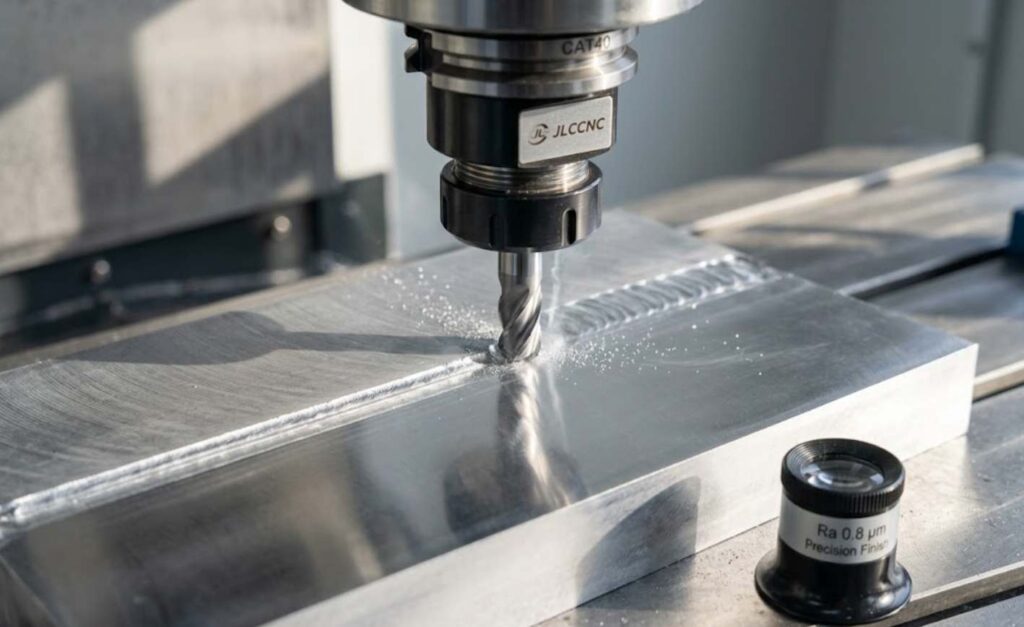
Several manufacturing variables influence final surface quality.
Cutting Tool Condition
A sharp cutting tool produces cleaner surfaces, while worn tools can create rough textures and inconsistent finishes.
Regular tool inspection helps maintain quality during production.
Cutting Speed and Feed Rate
Machining parameters directly affect surface texture. Higher feed rates may increase visible tool marks, while optimized speeds can improve smoothness.
Engineers adjust these settings according to material properties and part requirements.
Seleção de materiais
Different materials respond differently during machining.
For example, aluminum is generally easier to achieve smooth finishes on compared with harder materials such as stainless steel or titanium.
Machine Accuracy
CNC machine stability, vibration control, and calibration influence surface quality.
High-precision machines provide better consistency, especially for complex or tight-tolerance components.
How to Improve CNC Machining Surface Finish
Improving CNC machining surface finish requires optimization throughout the manufacturing process.
Use Appropriate Cutting Tools
Selecting the correct tool material, geometry, and coating improves cutting performance and reduces surface defects.
Optimize Machining Parameters
Adjusting spindle speed, feed rate, and cutting depth helps achieve better surface results.
Manufacturers often perform testing during prototype development to determine the ideal settings.
Using rapid prototyping services allows engineers to evaluate designs and finishing requirements before mass production.
Reduce Machine Vibration
Vibration creates unwanted surface patterns and reduces machining accuracy.
Proper machine setup, stable workholding, and suitable cutting conditions help minimize vibration.
Apply Post-Processing Techniques
Additional finishing processes can improve appearance, protection, and functionality.
Common post-processing options include:
- Anodização
- Polimento
- Powder coating
- Jateamento com esferas
- Electroplating
CNC Machining Surface Finish Selection Guide
| Application | Recommended Finish | Motivo |
| Functional mechanical parts | Usinagem padrão | Cost-effective performance |
| Consumer products | Bead blasting or anodizing | Better appearance |
| Medical components | Polished finish | Smooth and clean surface |
| Equipamentos para atividades ao ar livre | Powder coating | Environmental protection |
| Precision assemblies | Fine machining finish | Improved fitting accuracy |
Industries That Require Specific CNC Surface Finishes
Different industries have different surface quality requirements.
Aerospace Industry
Aerospace components require strict surface control because rough surfaces can affect performance, weight efficiency, and durability.
Automotive Industry
Automotive parts require finishes that balance appearance, strength, and resistance to wear.
Medical Industry
Medical components often require smooth surfaces that are easy to clean and resistant to contamination.
Indústria de Eletrônicos
Electronic housings frequently use finishes such as anodizing and bead blasting to improve appearance and protection.
Surface Finish and Manufacturing Cost
Surface finish selection affects production cost. A smoother finish often requires additional machining time, specialized tools, or post-processing.
Manufacturers must balance quality requirements with budget considerations.
Choosing the correct finish during the design stage prevents unnecessary processing costs while ensuring the part meets performance expectations.
Companies often combine CNC machining with other manufacturing methods such as injection molding services when developing different component requirements.
Considerações finais
CNC machining surface finish plays a critical role in determining the performance, appearance, and reliability of manufactured components. Understanding CNC surface finish types and CNC surface roughness measurements allows engineers to select the right solution for every application.
Improving CNC machining surface finish requires careful control of machining parameters, tooling, material selection, and post-processing methods. By optimizing these factors, manufacturers can produce high-quality components that meet demanding industry requirements.
Whether developing prototypes, precision parts, or production components, choosing the correct surface finish ensures better performance, longer service life, and improved manufacturing results.
Perguntas frequentes
What is the best CNC machining surface finish?
The best surface finish depends on the part application. Standard machined finishes work for general components, while polished or precision finishes are better for parts requiring smoothness, appearance, or tight performance requirements.
What does CNC surface roughness mean?
CNC surface roughness measures the small variations and texture patterns on a machined surface. Lower roughness values indicate smoother surfaces and are often required for precision applications.
How can CNC machining surface finish be improved?
Surface quality can be improved by optimizing cutting parameters, using sharp tools, reducing vibration, selecting suitable materials, and applying post-processing techniques.
Which CNC surface finish is best for aluminum parts?
Anodizing and bead blasting are commonly used for aluminum parts because they improve appearance, corrosion resistance, and durability while maintaining lightweight properties.
Does surface finish affect CNC machining cost?
Yes, smoother finishes usually require additional machining time or secondary processes, which can increase costs. Selecting the correct finish helps maintain quality while controlling expenses.
Sobre o autor Patrick Chen — Engenheiro de Aplicações, XY Machining Patrick analisa projetos de peças com paredes finas para equipes de engenharia dos EUA na XY Machining e trabalha em conjunto com a equipe de produção na definição de dispositivos de fixação e trajetórias de usinagem que garantam que peças delicadas permaneçam dentro das tolerâncias. Para realizar um teste de pressão em uma peça com paredes finas antes de elaborar o orçamento, Envie seu modelo para nossa equipe.