Para engenheiros de hardware que elaboram orçamentos para gabinetes e suportes de chapa metálica, o principal motivo de ultrapassagem do orçamento não é o custo por dobra — é o número de dobras que o projeto exige e que o engenheiro não levou em conta. Cada dobra em uma peça de chapa metálica aumenta o tempo de preparação, o tempo de reposicionamento e as exigências de ferramentas de estampagem. Um projeto de chassi com 14 dobras não custa o dobro de um projeto com 7 dobras — custa de 3 a 4 vezes mais devido à complexidade das fixações, ao número de configurações da prensa de dobra e ao acúmulo de tolerâncias geométricas resultante de múltiplas dobras sequenciais que exigem correção progressiva.
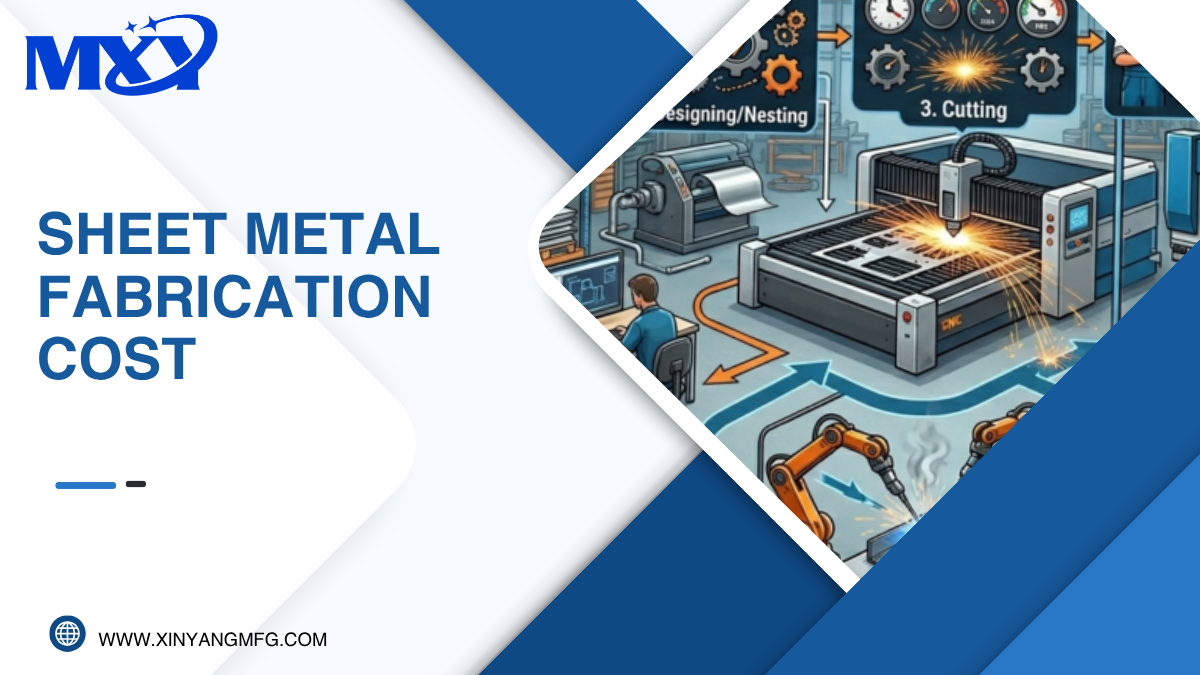
Os custos de fabricação de chapas metálicas em 2026 variam entre $5 e $200+ por peça, dependendo do material, da espessura, da complexidade e do volume. A estrutura de custos é determinada por três fatores: tempo de corte a laser (determinado pelo comprimento do corte e pela espessura do material), configuração da dobra (determinada pelo número de dobras e pelas restrições mínimas de flange) e acabamento superficial (revestimento em pó, anodização ou zincagem acrescentam 15–40% ao custo básico de fabricação). Compreender como cada fator se comporta e quais alterações de DFM (Projeto para Fabricação) o reduzem de forma mais eficiente é como os engenheiros controlam os orçamentos dos programas de chapas metálicas.
Fórmula para cálculo do custo de fabricação de chapas metálicas
Custo total por peça = Custo do material + Custo do corte a laser + Custo da dobra + Soldagem (se necessário) + Acabamento superficial + Configuração/programação (amortizado pela quantidade)
Fórmula de cálculo do custo do material: (área da peça × espessura × densidade × preço do material/kg) ÷ taxa de aproveitamento do material (normalmente entre 75 e 85% devido ao desperdício no encaixe).
Custo por peça, por material e operação: Tabela de tarifas de 2026
| Material | Espessura | Taxa de corte a laser | Taxa de dobra (por dobra) | Revestimento em pó (por peça) | Conjunto de peças simples (5 curvas, 10 unidades) | Conjunto de peças simples (5 curvas, 100 unidades) |
|---|---|---|---|---|---|---|
| Aço laminado a frio (CRS) | 1,0–2,0 mm | $70–$100/h | $8–$18/curva | $12–$35/peça | $85–$180/peça | $30–$70/peça |
| Aço galvanizado | 1,0–2,0 mm | $75–$110/h | $8–$18/curva | Não é necessário | $75–$160/peça | $28–$65/peça |
| Alumínio 5052-H32 | 1,0–3,0 mm | $80–$120/h | $10–$22/curva | Anodização $15–$45 | $110–$230/peça | $40–$90/peça |
| Aço inoxidável 304/316L | 1,0–2,0 mm | $90–$140/h | $12–$25/curva | Passivação $8–$20 | $130–$280/peça | $50–$110/peça |
| Cobre / latão | 0,5–2,0 mm | $100–$160/h | $12–$28/curva | Verniz transparente $8–$18 | $140–$320/peça | $55–$130/peça |
Da Xinyang Industrial Tech’s fabricação de chapas metálicas A operação utiliza fibra corte a laser (1–6 kW), prensa dobradeira CNC com matriz em V e ferramentas de corte, além de acabamento completo da superfície (revestimento em pó, anodização, zincagem) realizado internamente — reduzindo o prazo de entrega e os custos em comparação com programas que envolvem vários fornecedores.
Os principais fatores que influenciam os custos na fabricação de chapas metálicas
1. Contagem de dobras — o fator de custo mais controlável
Cada dobra exige uma configuração da prensa dobradeira, o reposicionamento do material e uma troca de ferramenta caso o ângulo da aba, o material ou o raio de dobra sejam diferentes da operação anterior. Em uma série de protótipos de 10 peças, cada dobra acrescenta $8–$25 em custo direto de fabricação, além de $15–$40 em amortização da configuração. Uma peça com 12 dobras que pudesse ser reprojetada para 7 dobras (eliminando flanges de reforço e utilizando uma seção transversal diferente) economiza $75–$200 por peça em uma série de protótipos.
2. Comprimento mínimo da flange — a restrição que obriga a operações adicionais
Cada combinação de espessura de material possui um comprimento mínimo prático de flange que o conjunto de ferramentas da prensa dobradeira pode formar sem operações secundárias. A regra: flange mínima ≥ 4× a espessura do material. Para aço inoxidável de 2,0 mm: flange mínima = 8 mm. Um desenho que especifique flanges de 5 mm em aço inoxidável de 2,0 mm requer ferramentas especiais (acrescenta $200–$600/configuração) ou uma sequência de conformação diferente (acrescenta tempo e custo). Projete todas as flanges com comprimento ≥ 4× a espessura do material antes da aprovação.
3. Complexidade do corte a laser — cantos internos acentuados e proximidade entre furos
Raios de cantos internos menores que a largura do corte a laser (normalmente 0,1–0,3 mm) exigem que o laser diminua a velocidade ou pare no canto, aumentando o tempo de corte em 10–30% em peças com muitos cantos internos. Da mesma forma, furos com distância entre si ou em relação às bordas da peça inferior a 2× a espessura do material causam distorção do material durante o corte, exigindo operações secundárias ou velocidades de corte mais baixas. Regra padrão: diâmetro mínimo do furo ≥ espessura do material; espaçamento mínimo entre furos ≥ 2× a espessura do material.
4. Especificação de acabamento superficial — o acréscimo de custo 20–40%
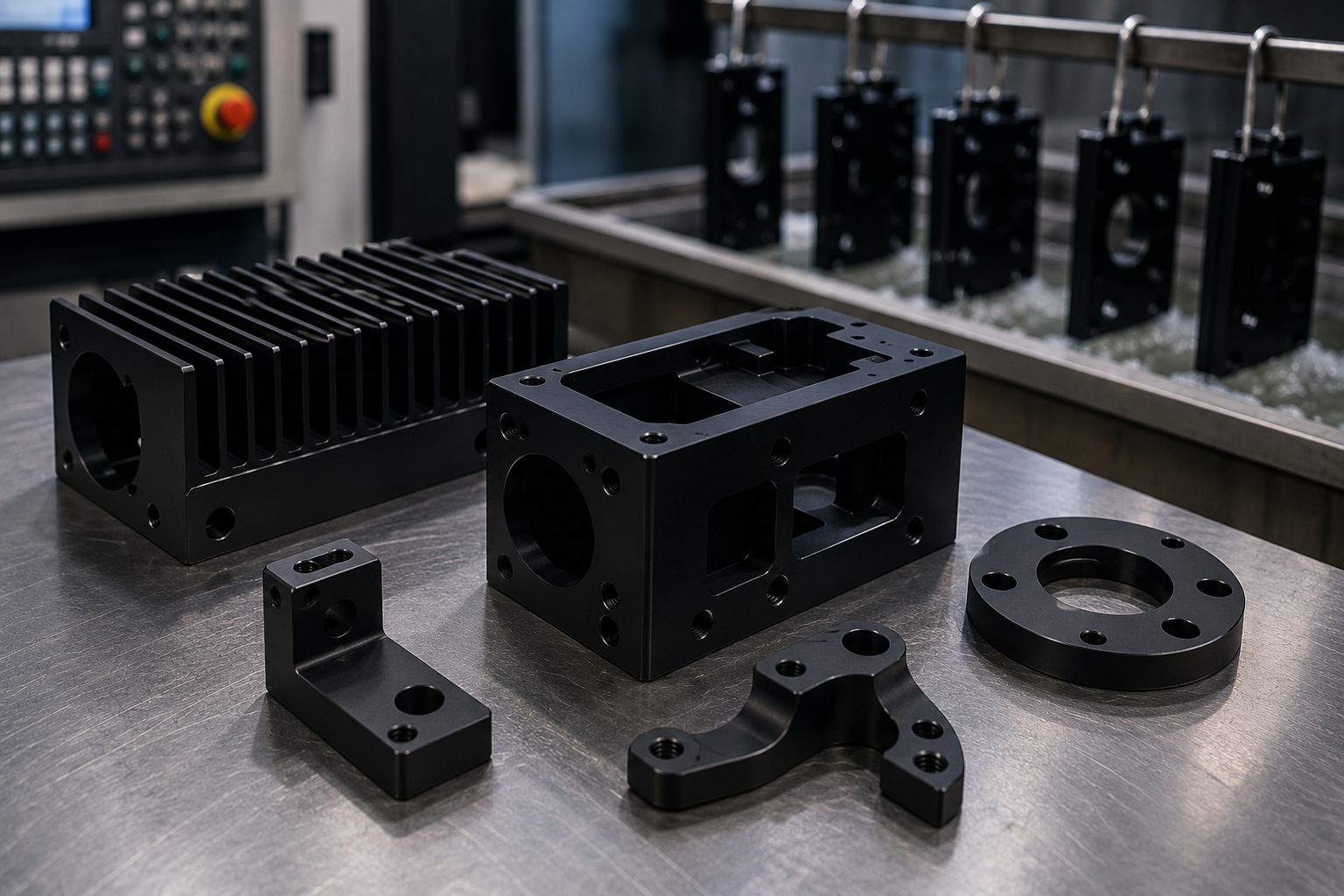
O acabamento “como fabricado” (acabamento de fábrica, com leve camada de óxido) não acarreta custo adicional. O revestimento em pó acrescenta 15–30% ao custo básico de fabricação. A anodização Tipo II acrescenta 20–35%. A anodização dura Tipo III acrescenta 30–50%. O zincado acrescenta 12–20%. Para protótipos e amostras de validação de engenharia, especifique “tal como fabricado” ou apenas rebarbação leve — acrescente acabamento superficial somente quando a peça for destinada a uma aplicação voltada para o cliente ou exigir proteção contra corrosão durante o uso.
5. Amortização dos custos de instalação — Por que o volume faz toda a diferença
Programação e configuração de um novo custos das peças de chapa metálica $80–$300, dependendo da complexidade. Esse custo fixo é amortizado ao longo da série de produção. Para 5 peças: a configuração $80 acrescenta $16 por peça. Para 100 peças: a configuração $80 acrescenta $0,80 por peça. Para 1.000 peças: insignificante. A diferença de custo por peça entre o protótipo de 5 peças e a produção de 100 peças da mesma peça é normalmente uma redução de 50–70% — principalmente devido à amortização da configuração e à melhoria na eficiência do agrupamento de materiais.
Curva de custo por quantidade: como o volume reduz o custo da chapa metálica
| Quantidade | Chassi de alumínio 5052 (8 dobras, 200 × 150 × 50 mm, pintura a pó) | Fator de custo neste volume |
|---|---|---|
| 1 parte | $180–$320/peça | A configuração é predominante (configuração 100% em 1 peça) |
| 5 partes | $120–$200/peça | Configuração de amortização; aninhamento abaixo do ideal |
| 10 partes | $85–$150/peça | Melhoria na eficiência do aninhamento; custo de configuração <30% |
| 50 peças | $55–$95/peça | O tempo de material e de máquina são os fatores predominantes; preparação <10% |
| 200 peças | $38–$70/peça | Otimização por lote; com foco no material e no tempo de ciclo |
| 1.000 peças | $25–$48/peça | Quase ideal; considere o uso de ferramentas dedicadas para obter economias adicionais |
5 regras de DFM que reduzem o custo da fabricação de chapas metálicas em 20–40%
- Limitar a 7 dobras ou menos em qualquer peça moldada — cada dobra além da sétima implica em configuração adicional e gerenciamento de tolerâncias geométricas, o que aumenta os custos
- Todas as flanges com espessura ≥ 4× a espessura do material (mínimo de 8 mm em material de 2 mm) — evita o uso de ferramentas especiais e configurações adicionais que acrescentam $200–$600 por código de peça
- Diâmetro mínimo do furo ≥ espessura do material; espaçamento entre furos ≥ 2× a espessura — evita reduções na velocidade do laser e distorções que aumentam o tempo de corte em 10–30%
- Utilize raios de curvatura padrão (0,5 mm ou 1,0 mm, dependendo do material) — raios de curvatura não padrão exigem ferramentas de moldagem personalizadas a um custo de $150–$400 por ferramenta
- Combinar características em uma única peça moldada, em vez de soldar duas peças mais simples — a soldagem acrescenta $30–$150 por junta, além do sistema de fixação; moldar a característica equivalente em uma única peça elimina ambos
Perguntas frequentes
Quanto custará o corte a laser de chapas metálicas em 2026?
As taxas de corte a laser para chapas metálicas em 2026 variam entre $70 e $160/h, dependendo do material e do tipo de laser. O aço laminado a frio e o aço galvanizado estão na faixa mais baixa ($70–$100/h efetivos). O alumínio apresenta taxas de $80–$120/h. O aço inoxidável apresenta taxas de $90–$140/h (laser de fibra). O cobre e o latão apresentam taxas de $100–$160/h. O custo de corte a laser por peça depende do comprimento total do corte, da espessura do material e do número de perfurações (cada início de recorte interno adiciona 2–5 segundos). Um painel simples de alumínio com 3 furos internos e um corte perimetral de 700 mm de comprimento total de corte leva normalmente de 45 a 90 segundos em um laser de fibra de 3 kW — adicionando $0,90–$4,00 no tempo de corte a laser ao custo por peça no volume de produção.
Qual é o material de chapa metálica mais barato para fabricação?
Aço laminado a frio (CRS, 1008/1010) é o material mais barato entre as chapas metálicas comuns, custando aproximadamente $0,80–$1,20/kg, seguido pelo aço galvanizado ($0,90–$1,40/kg), que elimina o custo de uma proteção anticorrosiva separada. O alumínio 5052-H32 é 1,5–2,0× mais caro por kg do que o CRS, mas é mais leve, com melhor resistência à corrosão e usinabilidade. O aço inoxidável 304/316L é 3,5–5,0× mais caro por kg do que o CRS, com a maior tempo de usinagem e custo associado. Para programas em que o custo é um fator determinante, nos quais a resistência à corrosão não é necessária e o peso não constitui uma restrição de projeto, a combinação de CRS com revestimento em pó é a mais econômica.
Quantas dobras uma peça de chapa metálica pode ter antes de ficar muito cara?
Não há um limite absoluto, mas o custo aumenta de forma não linear acima de 7 a 8 dobras por peça, pois cada dobra adicional exige o reposicionamento do material, uma configuração potencialmente diferente da matriz e o gerenciamento do acúmulo de tolerâncias. Uma peça com 12 dobras normalmente custa 2,5 a 4 vezes mais do que o projeto equivalente com 5 dobras em uma série de protótipos — e não 2,4 vezes (12 ÷ 5), como a aritmética sugeriria. A orientação prática de engenharia: analise seu projeto em busca de qualquer dobra cujo objetivo principal seja a rigidez e considere substituí-la por uma forma estrutural, uma reentrância ou uma nervura que alcance a mesma rigidez sem a operação adicional da prensa de dobra.
Qual é o raio mínimo de curvatura para chapas metálicas?
Raio mínimo de curvatura interna para materiais comuns: Aço laminado a frio: 0,5–1,0× a espessura. Alumínio 5052-H32: 1,0–1,5× a espessura (o alumínio é menos dúctil que o aço; raios menores causam rachaduras no material). Aço inoxidável 304/316L: 0,8–1,0× a espessura. Latão: 0,5–1,0× a espessura. Especificar um raio de curvatura menor do que o mínimo do material causa rachaduras na curvatura — um critério de rejeição. Especificar um raio fora do padrão (por exemplo, 0,75 mm quando seu fornecedor dispõe de matrizes de 0,5 mm e 1,0 mm) requer ferramentas personalizadas a um custo de $150–$400.
Conclusão: O número de dobras e a amortização da configuração são os principais fatores que determinam o custo da chapa metálica
- O principal fator de custo em séries de protótipos de 1 a 10 peças é a amortização da configuração — e não o material nem o tempo de uso do laser. Encomendar 10 peças em vez de 5 geralmente reduz o custo por peça em 20–35%.
- Cada curva acima de 7 acarreta um custo desproporcional — verifique seu projeto em busca de curvas que possam ser eliminadas ou substituídas por elementos moldados antes de encaminhá-lo para a fabricação
- O acabamento superficial é um item que aumenta o custo do 20–40% — especifique “conforme fabricado” para validação de engenharia; adicione o acabamento superficial apenas para aplicações voltadas ao cliente ou de proteção contra corrosão