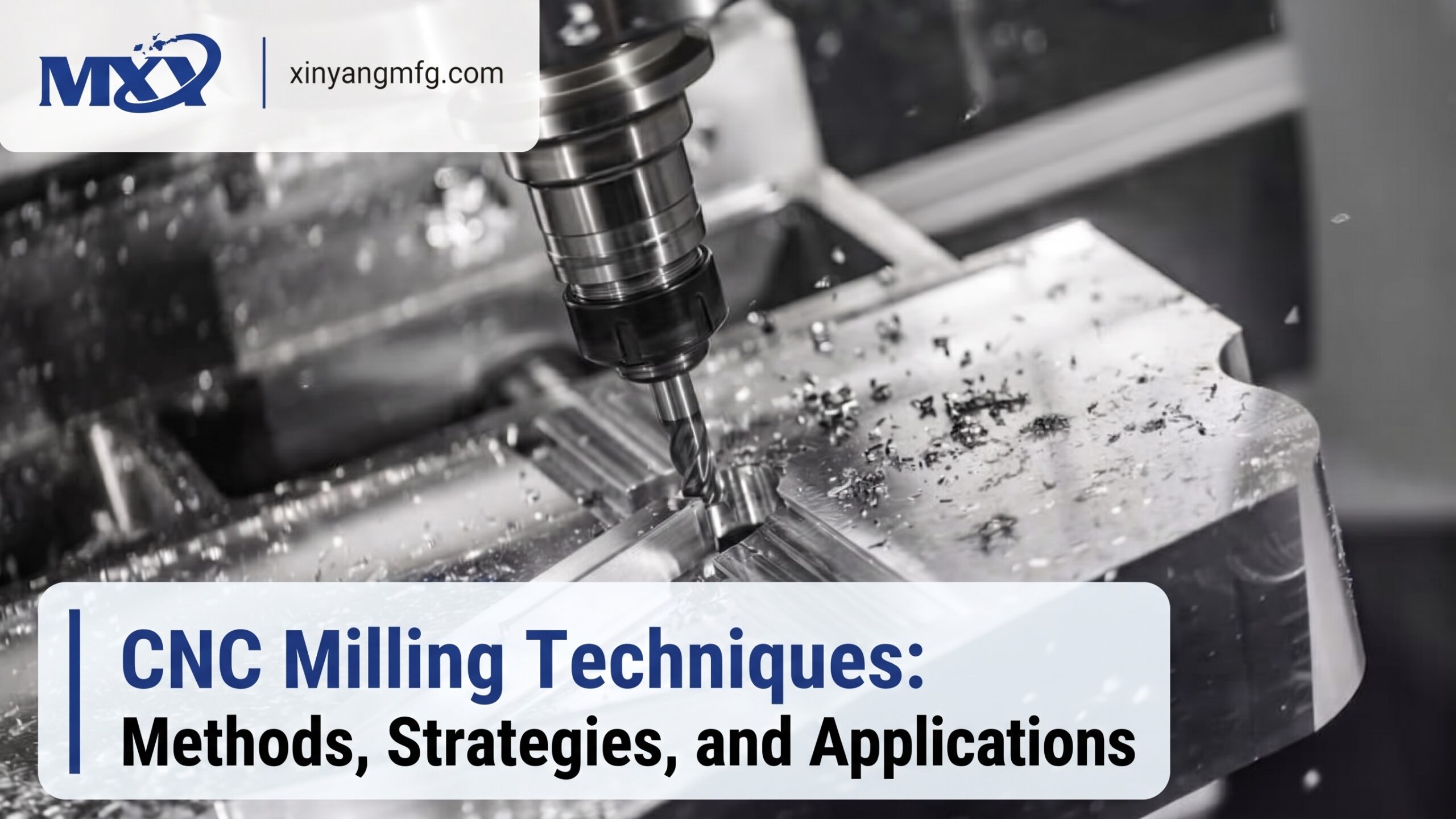
什么是数控铣削技术?它们为何在现代制造业中如此重要?制造商使用的数控铣削技术有哪些类型?数控铣削方法如何提高精度、生产效率和产品质量?哪些数控铣削策略适用于复杂零件和精密零部件?
数控铣削技术是一种先进的加工方法,利用计算机控制的切削工具从工件上切除材料,从而形成精确的形状。这些技术涵盖了各种铣削方法、刀具运动、切削策略和加工工艺,有助于制造商为航空航天、汽车、医疗、电子和工业设备等行业生产高精度零部件。.
什么是数控铣削技术?
数控铣削技术是指在计算机数控铣削加工中为实现特定加工目标而采用的各种方法。与传统铣削不同,数控铣削利用编程指令来控制机床的运动、切削速度、刀具路径和加工顺序。.
现代制造商采用数控铣削技术,因为它能提供更高的精度、重复性和生产效率。通过选择合适的铣削工艺,工程师可以减少材料浪费、提高表面质量,并加工出难以通过手工制造的复杂几何形状。.
在 信阳制造, 数控加工工艺用于根据客户的规格、材料要求和行业标准生产精密零部件。.
选择正确的数控铣削方法取决于多个因素,包括:
- 材料类型
- 零件复杂度
- 要求的公差
- 表面处理要求
- 产量
- 工具选择
合适的数控铣削策略可确保在保持加工效率的同时,维持稳定的质量。.
各种数控铣削工艺
制造过程中使用的数控铣削技术有多种类型。每种技术都有其特定的优势,具体取决于设计要求和加工目标。.
| 数控铣削技术 | 描述 | 常见应用 |
| 端面铣削 | 使用多齿切削刀具从表面切除材料 | 平整表面、机器底座、结构部件 |
| 周边铣削 | 沿工件外边缘的切削 | 槽、轮廓和剖面 |
| 口袋铣削 | 形成内部空腔或凹陷区域 | 外壳、模具、机械零件 |
| 螺纹铣削 | 可加工出精确的内螺纹和外螺纹 | 汽车和工业零部件 |
| 三轴铣削 | 控制沿X、Y和Z轴的运动 | 标准精密加工 |
| 5轴铣削 | 支持从多个角度进行复杂动作 | 航空航天和医疗部件 |
端面铣削工艺
端面铣削是最常用的数控铣削方法之一。该工艺通过沿工件表面进行切削,以获得平整光滑的表面。.
该工艺常用于初始加工阶段,因为它既能快速去除多余材料,又能为工件的后续加工做好准备。.
端面铣削需要仔细选择切削速度、进给速度和刀具几何形状,以获得所需的表面质量。.
口袋铣削技术
口袋铣削用于在工件内部形成中空区域、腔体或凹槽。该方法广泛应用于机械零件、电子机箱以及轻量化结构件的制造。.
先进的数控编程使制造商能够精确控制刀具的运动,从而缩短加工时间并提高尺寸精度。.
CNC铣削方法详解
数控铣削方法是指用于切除材料并塑造工件形状的具体加工方法。选择合适的方法会直接影响生产效率、精度和成本。.
一些常用的数控铣削方法包括常规铣削、爬升铣削、轮廓铣削和自适应铣削。.
常规铣削
传统的铣削工艺是指切削工具沿与工件运动方向相反的方向移动。该方法通常用于某些需要更好控制的材料。.
它能提供稳定的加工条件,但与较新的方法相比,可能会产生更大的切削力。.
爬升铣削
上铣加工是指刀具沿与工件进给方向相同的方向移动。如果应用得当,这种方法通常能提高表面光洁度并延长刀具寿命。.
许多现代数控机床采用爬升铣削,因为这种方法可以减少摩擦并提高切削效率。.
自适应铣削
自适应铣削是一种先进的数控铣削方法,可根据材料状况自动调整切削参数。.
This approach helps maintain consistent tool performance and reduces machining time, especially for complex parts.
Businesses looking for high-quality production can also explore CNC machining services by Xinyang MFG for customized manufacturing solutions.
CNC Milling Strategies for Better Results
CNC milling strategies involve planning the complete machining process, including tool selection, cutting paths, machining sequences, and optimization methods.
A strong CNC milling strategy helps manufacturers achieve better accuracy while reducing production costs.
Tool Path Optimization
Tool path planning is one of the most important parts of CNC milling. Optimized tool paths reduce unnecessary movements and improve machining speed.
Advanced CAM software allows engineers to simulate cutting operations before production begins, reducing errors and improving efficiency.
Selecting Appropriate Cutting Parameters
Cutting parameters such as spindle speed, feed rate, and depth of cut influence machining performance.
Incorrect settings can lead to poor surface quality, excessive tool wear, or damaged components.
Multi-Axis Machining Strategy
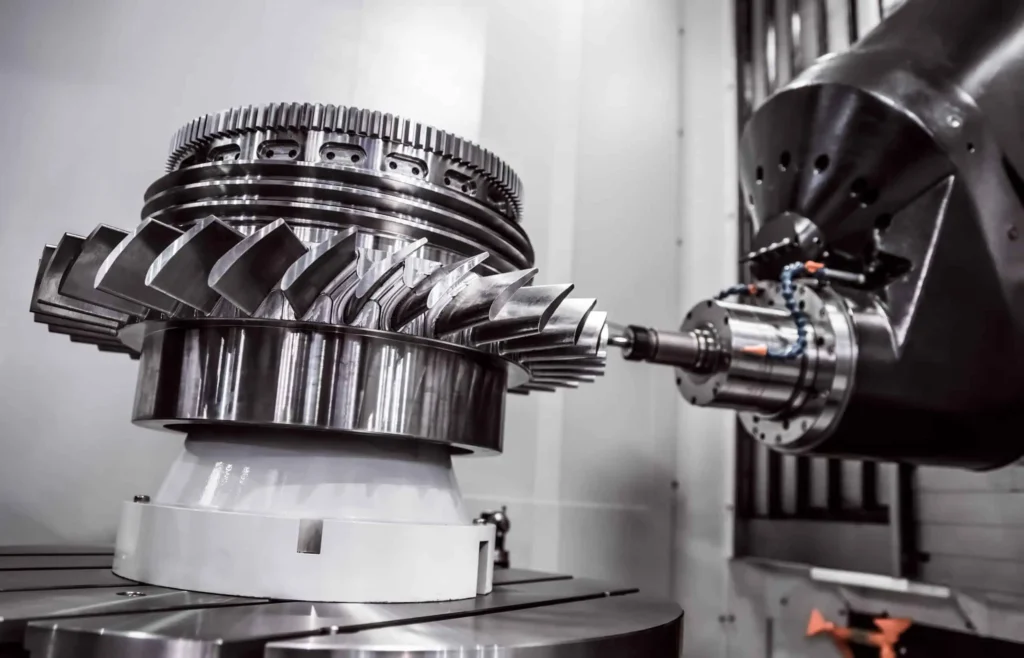
Multi-axis CNC milling allows tools to approach a component from different angles. This strategy is useful for producing complex shapes with fewer setups.
Industries requiring high precision often use multi-axis machining for advanced components.
Applications of CNC Milling Techniques
CNC milling techniques are used across many industries because they provide reliable precision and repeatable production.
| 行业 | CNC Milling Applications |
| 航空航天 | Aircraft brackets, structural components, engine parts |
| 汽车 | Transmission components, prototypes, tooling parts |
| 医疗 | Surgical instruments, implants, medical devices |
| 电子产品 | Enclosures, heat sinks, precision housings |
| Industrial Equipment | Machine parts, fixtures, and mechanical components |
Aerospace Manufacturing
Aerospace companies require extremely accurate components because even small manufacturing errors can affect performance and safety.
CNC milling techniques allow manufacturers to produce lightweight yet strong components from materials such as aluminum and titanium.
Medical Component Production
Medical industries depend on precision machining for instruments and specialized devices.
CNC milling provides the accuracy required for producing complex medical components with strict dimensional requirements.
For projects requiring advanced material processing, manufacturers often combine CNC milling with professional surface finishing services to achieve improved appearance, durability, and corrosion resistance.
Factors Affecting CNC Milling Performance
Several factors influence the success of CNC milling operations.
材料选择
Different materials require different machining approaches. Aluminum, stainless steel, titanium, and plastics each have unique cutting requirements.
Machine Capability
The CNC machine type, spindle power, and axis configuration affect the complexity of parts that can be manufactured.
Tool Quality
High-quality cutting tools improve accuracy, reduce production delays, and increase tool lifespan.
Programming Accuracy
Correct CNC programming ensures that machines follow precise movements and produce accurate components.
CNC Milling Techniques vs Traditional Machining
CNC milling provides several advantages compared with traditional machining methods.
| 功能 | 数控铣削 | Traditional Milling |
| Accuracy | Very high precision | Depends heavily on operator skill |
| Repeatability | Excellent for production runs | Limited consistency |
| Complexity | Suitable for complex geometries | More difficult for advanced shapes |
| Automation | Fully computer controlled | Mostly manual operation |
CNC milling is preferred for modern manufacturing because it combines speed, precision, and automation.
Future Trends in CNC Milling
The future of CNC milling is moving toward smarter and more automated manufacturing systems.
Artificial intelligence, advanced sensors, and connected manufacturing technologies are improving machining efficiency and quality control.
Manufacturers are increasingly adopting automated inspection systems, digital twins, and real-time monitoring to reduce errors and improve production performance.
Companies that understand modern CNC milling strategies can gain advantages through faster production cycles, improved quality, and reduced operational costs.
You can also learn more about related manufacturing processes through our guide on precision machining techniques.
结论
CNC milling techniques play an important role in modern manufacturing by enabling accurate, efficient, and repeatable production of complex components. Understanding different CNC milling methods and CNC milling strategies helps manufacturers select the right approach for every project.
From simple surface machining to advanced multi-axis operations, CNC milling continues to improve manufacturing capabilities across multiple industries. With the integration of automation, artificial intelligence, and advanced software, CNC milling will remain a key technology for precision manufacturing in the future.
常见问题解答
What are CNC milling techniques?
CNC milling techniques are machining approaches that use computer-controlled machines to cut and shape materials. They include different methods such as face milling, pocket milling, contour milling, and multi-axis machining.
What are the main CNC milling methods?
The main CNC milling methods include conventional milling, climb milling, adaptive milling, face milling, and contour milling. Each method is selected based on material type, design complexity, and production requirements.
Which CNC milling technique is best for complex parts?
5-axis CNC milling is commonly used for complex components because it allows machining from multiple angles. It reduces setups and improves accuracy for advanced geometries.
How can CNC milling strategies improve manufacturing?
Effective CNC milling strategies optimize tool paths, cutting parameters, and machining sequences. They help reduce production time, minimize waste, and improve final component quality.
What industries use CNC milling techniques?
CNC milling techniques are widely used in aerospace, automotive, medical, electronics, and industrial manufacturing industries because they provide high precision and repeatable results.
关于作者 陈帕特里克——XY Machining 应用工程师 帕特里克负责审查XY Machining公司美国工程团队设计的薄壁零件,并与车间人员合作,针对夹具和刀具路径进行优化,以确保精密零件的尺寸公差符合要求。为了在报价前对薄壁零件进行压力测试,, 将您的模型发送给我们的团队.