A robot is only as accurate as the parts it’s built from. When an arm repeats a pick-and-place move to within a fraction of a millimetre, thousands of times a day, that precision doesn’t come from the software alone. It’s machined into the joints, the bearings, the structural members. Put a little slack in a gearbox, let a bearing bore drift a few microns, let a bracket flex under load and the whole arm loses accuracy at the tool. That’s why robotics leans so hard on CNC machining. It’s the process that turns a design for a precise machine into parts that are actually precise.
在此,我将阐述为何机械加工是机器人制造的支柱,哪些零部件最依赖它,以及是什么原因使得机器人硬件的制造如此具有挑战性。这些内容源自我们每天在 机器人加工工作, ,其中精度、重量和重复性必须同时满足,而不能逐一满足。.
机器人技术对每个零件提出的四项要求
机器人零部件同时受到多方面的拉力。只要理解了这些相互冲突的要求,就能明白为什么是机加工——而不是铸造或模塑——在该领域占据主导地位。.
- 精度——定位精度取决于每个接头和孔的严格尺寸和几何公差。.
- 可重复性——生产线上的每一件产品都必须完全一致,因为自动化无法弥补零部件之间的偏差。.
- 重量轻——运动部件越轻,运动速度越快,惯性越小,电机也越小、越便宜。.
- 耐用性——零部件需经受数百万次循环,因此材料强度和表面质量绝非可有可无。.
这些要求本身并非机器人技术所独有,但它们的结合却是独一无二的。一个零件必须同时具备轻量化、高强度、高精度和可重复性这四项特性。数控加工是少数几种能够在一件工件上同时满足所有这些要求的工艺之一。.
通过数控加工制造的关键机器人部件
接头与结构构件
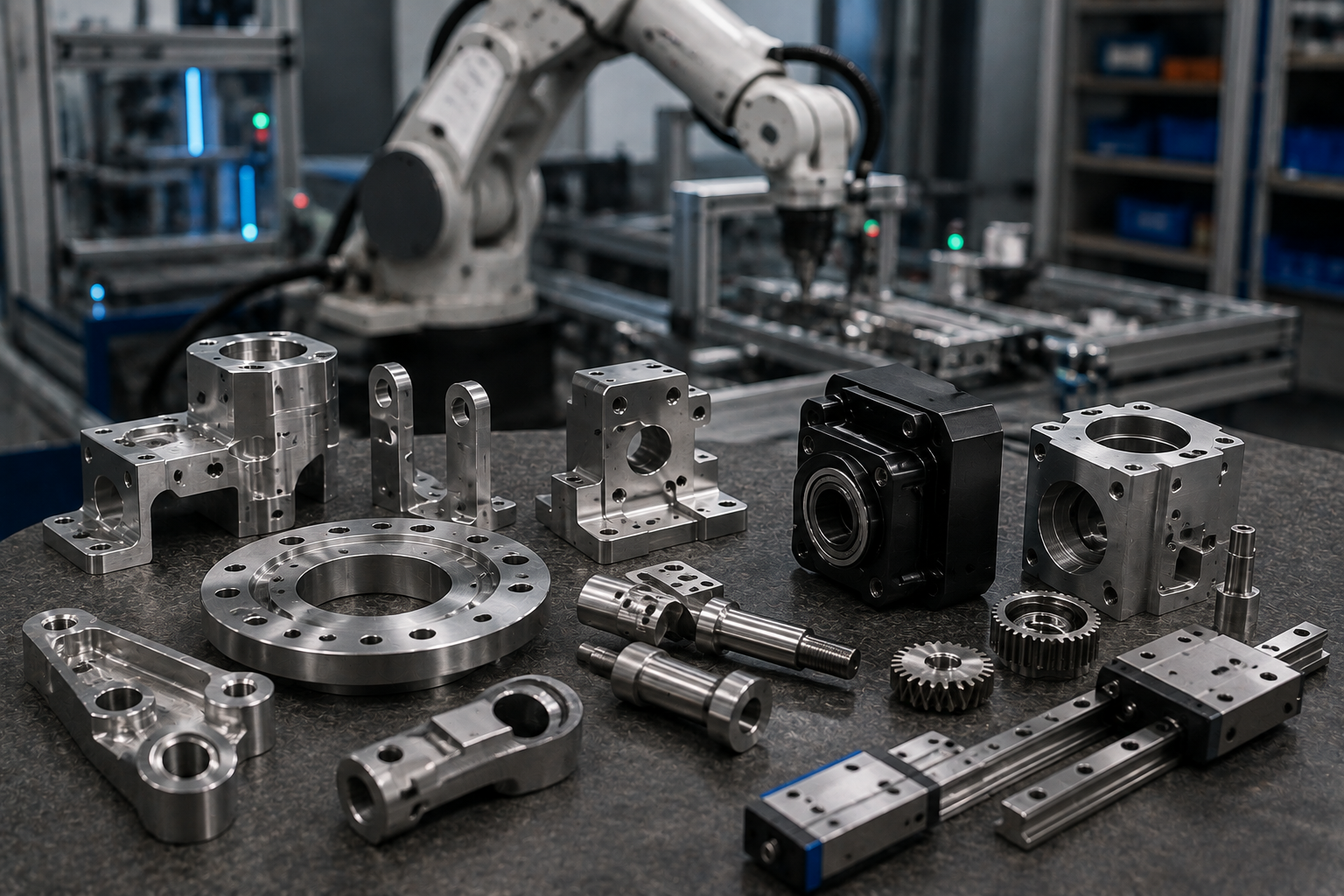
The arms and joints that give a robot its reach usually get machined from aluminium for the strength-to-weight. These parts carry complex geometry – mounting faces at odd angles, internal cable routing, weight-saving pockets – which is a natural fit for 5轴数控加工. 它通过一次配置即可整合所有这些功能,并确保它们之间的紧密关联。.
变速箱和执行器外壳
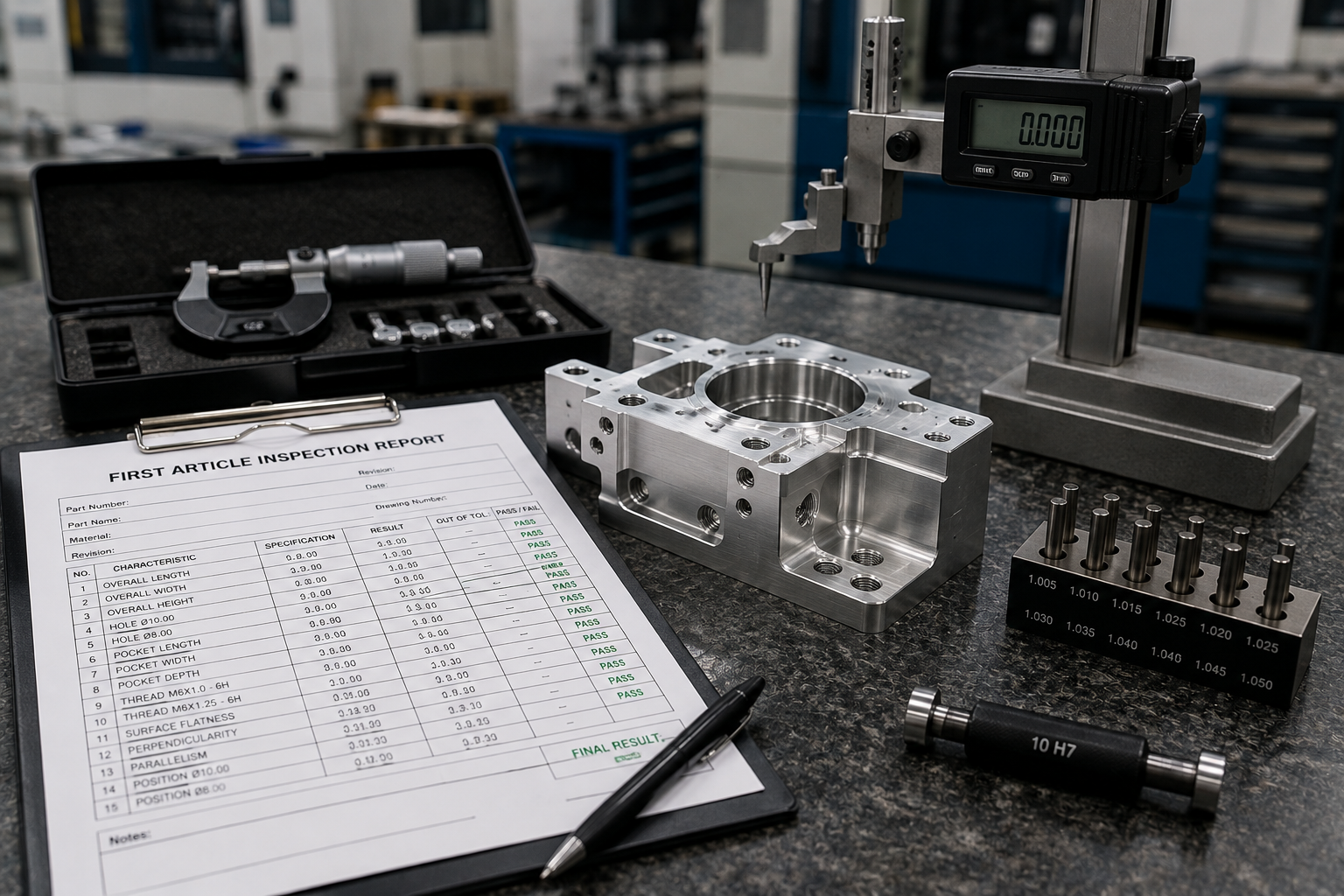
装载齿轮、轴承和谐波减速器的壳体是整个机器人中公差要求最严格的部件。轴承孔必须圆度良好、同心且尺寸精准,这样齿轮才能无间隙啮合,轴才能无偏摆地旋转。 此处仅几微米的误差,在长达一米的机械臂末端就会表现为肉眼可见的松动。因此,这些部件在制造过程中需按照最严格的公差标准进行加工和检测。.
末端执行器和夹爪
The hands of automation – grippers, tool changers, custom end effectors – tend to be low-volume, one-application parts. That’s machining’s sweet spot: no tooling to build, and a handful of custom effectors costs about what a prototype does. Turned bits like shafts and pins for these mechanisms come off our 数控车削服务 并满足旋转组件所需的同心度要求。.
运动与线性分量
Lead-screw nuts, linear-rail carriages, cam followers, couplings – they all depend on machined precision to move smoothly and locate the same way every time. Any roughness or dimensional slip in these shows up straight away as vibration, wear, and lost accuracy in the finished machine.
| 组件 | 关键要求 | 常用材料 | 典型流程 |
| 机械臂/关节 | 轻质且刚性,几何形状复杂 | 6061/7075铝合金 | 5轴铣削 |
| 变速箱壳体 | 严格的孔径公差、同心度 | 铝、钢 | 铣削 + 镗孔 |
| 执行器轴 | 同心度、表面粗糙度 | 钢、不锈钢 | 数控车削 |
| 末端执行器/抓取器 | 定制、小批量 | 铝、塑料 | 铣削 |
| 轴承座 | 圆度,精确直径 | 铝、钢 | 镗孔 / 扩孔 |
| 传感器支架 | 可重复的位置,光线 | 铝 | 三轴铣削 |
为什么不采用铸造或3D打印呢?
Robotics engineers do use casting and 3D printing just rarely on the precision-critical interfaces. Casting can’t hold tight tolerances and needs machining on any mating face anyway. 3D printing is great for complex, low-stress brackets and fast iteration, but printed parts generally fall short on the dimensional accuracy, surface finish, and strength that a loaded joint demands. Machining bridges that gap, which is why it stays the default for the parts that actually set a robot’s accuracy. A lot of it comes down to material, and our 材料指南 阐述了机器人设计师在金属和塑料选项之间权衡的考量。.
| 流程 | 宽容 | 强度 | 最佳机器人应用 |
| 数控加工 | 极佳(±0.01 毫米) | 材料的最大强度 | 接头、孔、承重部件 |
| 金属铸造 | 中等 | 好 | 批量生产的壳体(随后进行机加工) |
| 3D打印 | 公平 | 较低(各向异性) | 原型件、非关键支架 |
| 注塑成型 | 好(塑料) | 限用塑料 | 大容量封面、保护套 |
驱动机器人的材料
在机器人领域,材料选择始终是在重量与强度之间的一场拉锯战。铝材——尤其是6061和7075——在运动结构中占据主导地位,因为它重量轻、易于加工,且强度足以承受大多数载荷;我们的 铝材数控加工指南 在材料等级方面进行了深入探讨。钢材和不锈钢被应用于磨损和载荷最大的部位——齿轮、轴以及高应力接头。POM和PEEK等工程塑料则用于加工需要轻量化、自润滑或电气绝缘的零部件。 要确保所有这些部件的配合精准,关键在于设定切合实际的公差,而我们的 数控加工公差指南 封面。.
大规模生产中的精度与重复性
Here’s the real payoff. Machining doesn’t just make one accurate part – it makes the thousandth part identical to the first. Because the geometry lives in a program and gets cut by a controlled machine, part-to-part variation stays tiny and predictable. For automated assembly, where robots handle parts with no human tweaking, that consistency is everything. A gripper set up for one part works for every part. A joint that fits on unit one fits on unit one thousand. That repeatability is what lets a robotics program scale from prototype to production without re-engineering the fits along the way.
常见问题解答
机器人零部件需要满足哪些公差要求?
这取决于具体的工作要求。结构支架的公差范围可能在±0.1毫米内即可满足要求,而轴承孔和齿轮啮合特征通常需要±0.01毫米或更严格的公差,并需对同心度和圆度进行几何控制。最严格的公差要求通常适用于决定定位精度的接口。.
为什么铝在机器人领域如此常见?
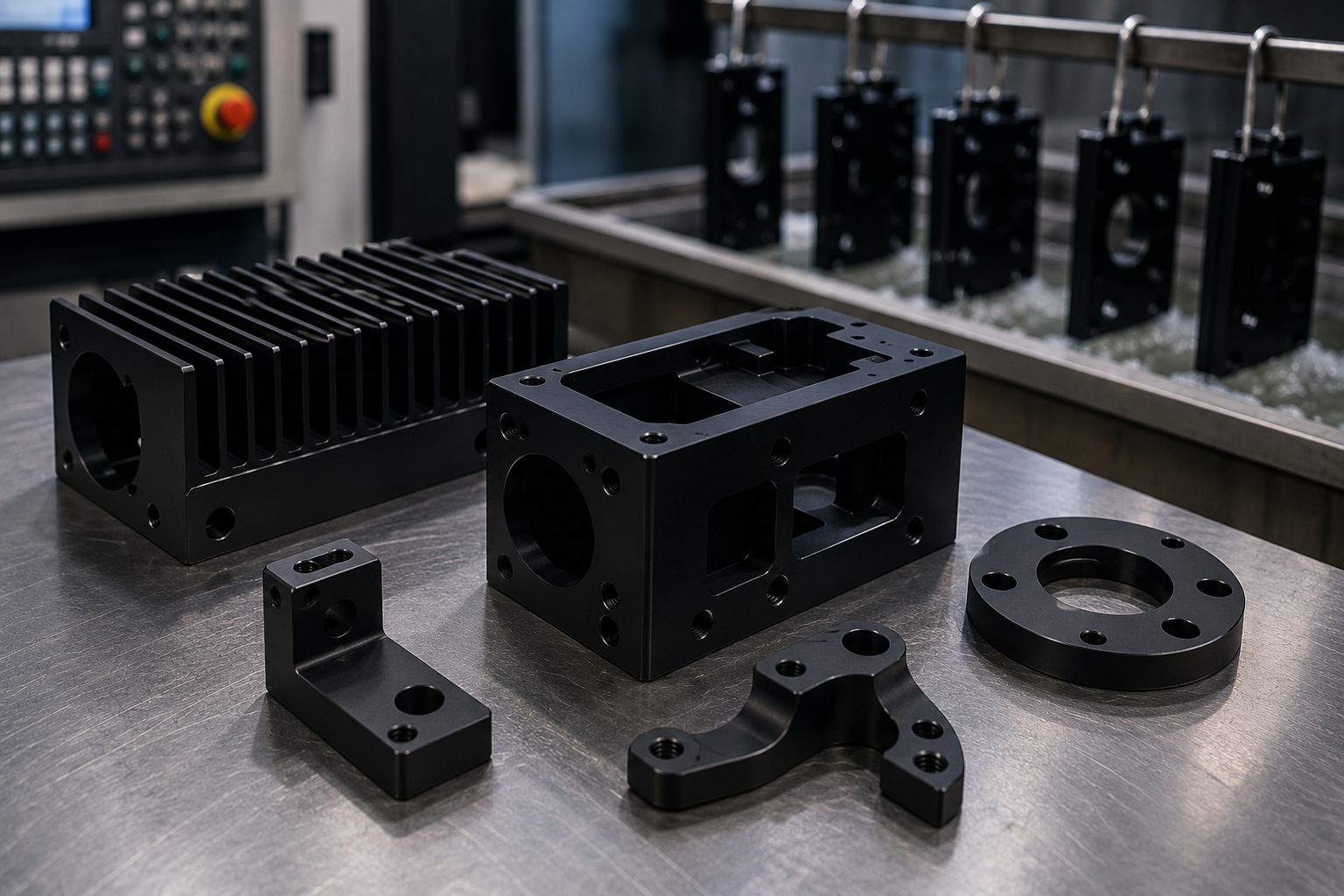
Great strength-to-weight, quick to machine, and it anodizes for wear and corrosion resistance. Lighter moving parts also cut inertia, which means faster motion and smaller motors – a real edge in a robotic arm.
数控加工能否跟上自动化生产的产量?
是的。借助托盘更换装置、棒料送料机和无人值守运行,机床能够以量产规模加工机器人零部件,同时仍能保持严格的公差。对于简单盖板的大批量生产,注塑工艺也可与之协同进行。.
哪些机器人部件对精密加工最为关键?
齿轮箱壳体、轴承孔和接头接口。这些部位的误差会沿着机械臂的长度方向放大,最终在刀具尖端产生巨大的定位误差,因此必须确保这些部位的精度。.
结论
Robotics and automation live on precision, repeatability, and the right balance of weight and strength – and CNC machining is the process built to deliver all three in one part. From load-bearing joints to tolerance-critical gearbox housings, the parts that set a robot’s accuracy get machined for a reason. To see the sectors we support, browse our 服务行业, ,请查看我们的 精密数控加工服务, ,或 联系我们 与您详细讨论您的机器人和自动化组件。.
About the Author
xinyangmfg Engineering Team — Senior Manufacturing Engineer, 12 years in precision CNC machining
xinyangmfg assembly systems, specializing in tolerance-critical gearbox and joint hardware. Working closely with automation engineers on DFM and material selection, Hasib writes to explain why a robot’s accuracy starts on the shop floor, long before the control software ever runs.