A robot is only as accurate as the parts it’s built from. When an arm repeats a pick-and-place move to within a fraction of a millimetre, thousands of times a day, that precision doesn’t come from the software alone. It’s machined into the joints, the bearings, the structural members. Put a little slack in a gearbox, let a bearing bore drift a few microns, let a bracket flex under load and the whole arm loses accuracy at the tool. That’s why robotics leans so hard on CNC machining. It’s the process that turns a design for a precise machine into parts that are actually precise.
ここでは、なぜ機械加工がロボット製造の根幹をなすのか、どの部品がそれに最も依存しているのか、そしてロボットのハードウェアの製造がなぜこれほどまでに困難なのかについて解説します。これは、私たちが日々現場で目にする状況に基づいており、 ロボットによる機械加工作業, 、そこでは、精度、重量、再現性のすべてを、一つずつではなく、同時に満たさなければならない。.
ロボット工学がすべての部品に求める4つの要件
ロボットの構成部品は、同時に複数の方向から力を受けます。こうした相反する要求を理解すれば、なぜこの分野では鋳造や成形ではなく、機械加工が主流となっているのかがわかるでしょう。.
- 精度 — 位置決め精度は、すべての接合部および穴において、厳しい寸法公差および形状公差に左右されます。.
- 再現性 — 自動化では部品ごとのばらつきを補正できないため、生産ラインから出荷されるすべての製品は同一でなければならない。.
- 軽量 — 可動部が軽量であれば、動作が速くなり、慣性が低減され、より小型で安価なモーターを使用できるようになります。.
- 耐久性 — 部品は数百万回のサイクルに耐えるため、材料の強度と表面品質は不可欠です。.
これらはいずれも、ロボット工学に特有のものではありません。しかし、その組み合わせこそが独特なのです。部品には、軽量かつ高強度で、かつ高精度であり、さらに再現性がある――これら4つの要件をすべて同時に満たす必要があります。CNC加工は、1つの部品においてこれらすべての要件を満たすことができる数少ない加工プロセスの一つです。.
CNC加工によって製造される主要なロボット部品
接合部および構造部材
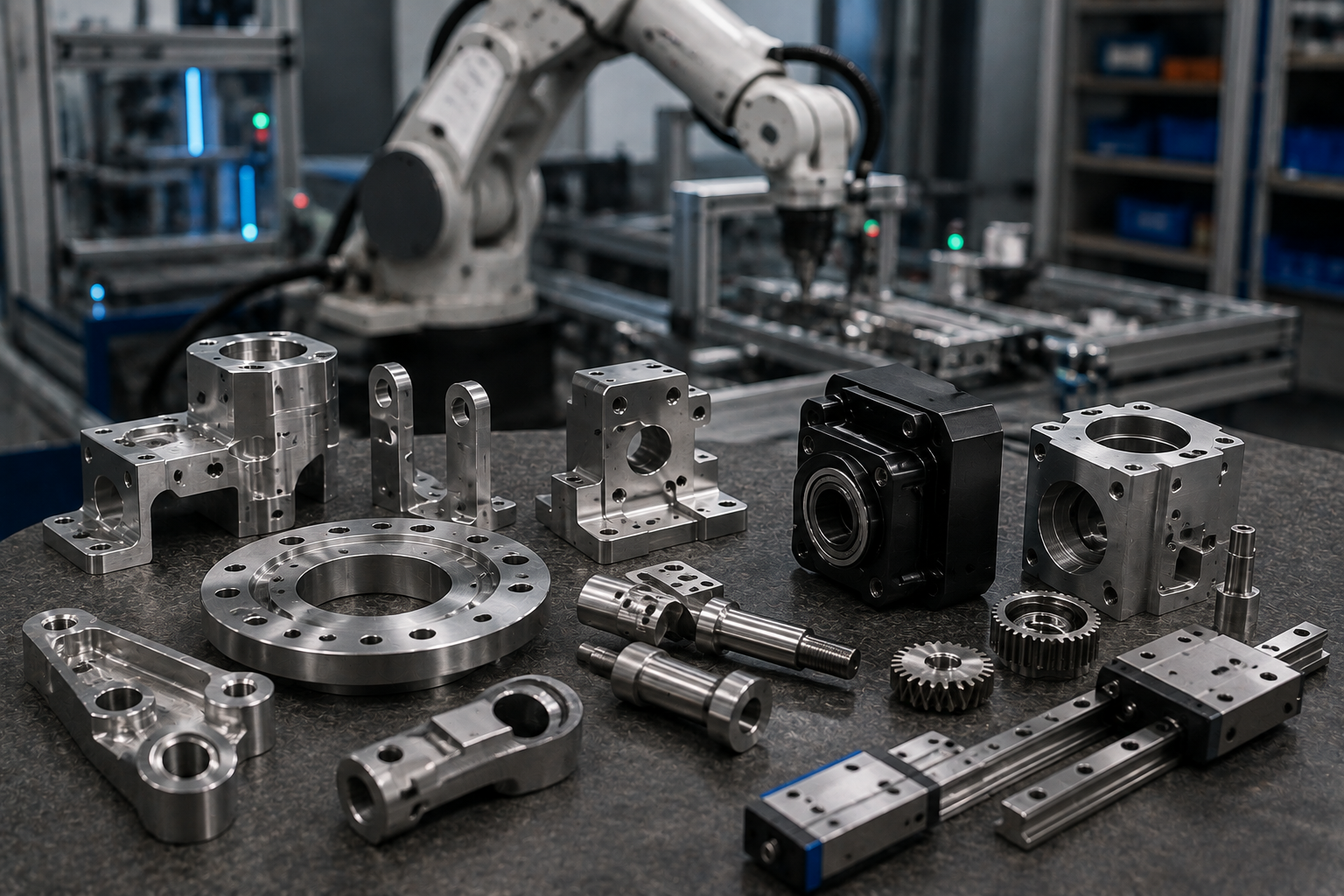
The arms and joints that give a robot its reach usually get machined from aluminium for the strength-to-weight. These parts carry complex geometry – mounting faces at odd angles, internal cable routing, weight-saving pockets – which is a natural fit for 5軸CNC加工. これを使えば、1回の設定ですべての機能を統合し、それらの間の関係をしっかりと維持することができます。.
ギアボックスおよびアクチュエータハウジング
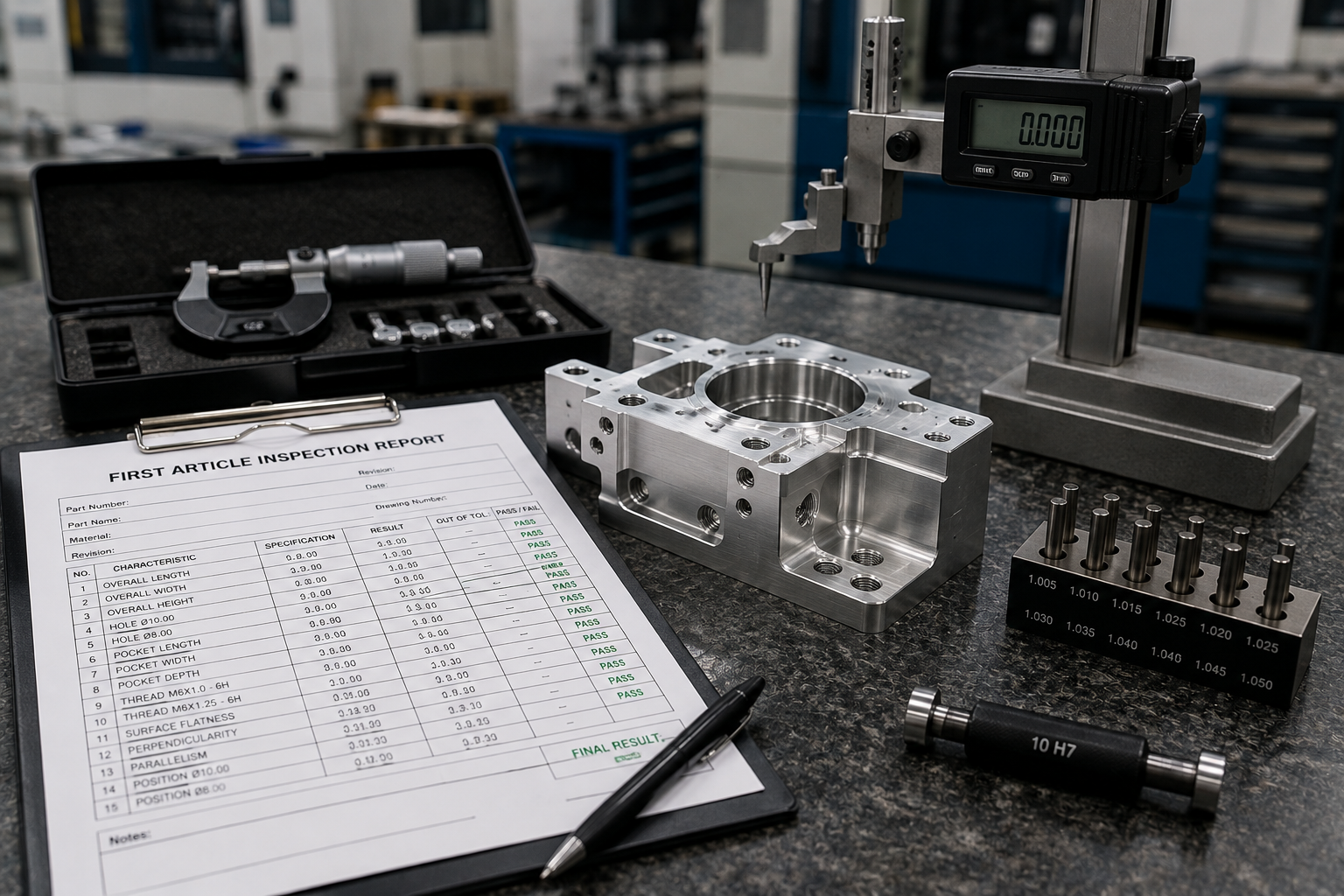
ギア、ベアリング、ハーモニックドライブを収容するハウジングは、ロボット全体の中で最も公差が厳しく求められる部品です。ベアリングの穴は真円であり、同心であり、寸法が厳密に合っていなければなりません。そうして初めて、ギアはバックラッシュなく噛み合い、シャフトは振れなく回転するのです。 ここで数ミクロンの誤差が生じると、1メートルもの長さのアームの先端で目に見えるほどのガタとして現れてしまいます。そのため、これらの部品は、製造工程の中で最も厳しい公差に基づいて加工・検査されます。.
エンドエフェクタとグリッパー
The hands of automation – grippers, tool changers, custom end effectors – tend to be low-volume, one-application parts. That’s machining’s sweet spot: no tooling to build, and a handful of custom effectors costs about what a prototype does. Turned bits like shafts and pins for these mechanisms come off our CNC旋盤加工サービス 回転アセンブリに求められる同心度を備えています。.
運動および直線成分
Lead-screw nuts, linear-rail carriages, cam followers, couplings – they all depend on machined precision to move smoothly and locate the same way every time. Any roughness or dimensional slip in these shows up straight away as vibration, wear, and lost accuracy in the finished machine.
| コンポーネント | 主要要件 | 一般的な素材 | 一般的なプロセス |
| ロボットアーム/関節 | 軽量かつ剛性が高く、複雑な形状 | アルミニウム 6061/7075 | 5軸フライス加工 |
| ギアボックスハウジング | 厳密な内径公差、同心度 | アルミニウム、鋼 | フライス加工+ボーリング加工 |
| アクチュエータシャフト | 同心度、表面仕上げ | 鋼、ステンレス | CNC旋盤加工 |
| エンドエフェクタ/グリッパー | 受注生産、小ロット | アルミニウム、プラスチック | フライス加工 |
| ベアリングマウント | 真円度、正確な直径 | アルミニウム、鋼 | 穴あけ/リーマ加工 |
| センサーブラケット | 繰り返し出現する場所、光 | アルミニウム | 3軸フライス加工 |
なぜ鋳造や3Dプリントを使わないのか?
Robotics engineers do use casting and 3D printing just rarely on the precision-critical interfaces. Casting can’t hold tight tolerances and needs machining on any mating face anyway. 3D printing is great for complex, low-stress brackets and fast iteration, but printed parts generally fall short on the dimensional accuracy, surface finish, and strength that a loaded joint demands. Machining bridges that gap, which is why it stays the default for the parts that actually set a robot’s accuracy. A lot of it comes down to material, and our 材料ガイド ロボット設計者が検討する金属とプラスチックの選択肢について解説している。.
| プロセス | 寛容 | 強さ | ロボット技術の最適な活用例 |
| CNC加工 | 優秀(±0.01 mm) | 材料の全強度 | 接合部、穴、荷重を受ける部品 |
| 金属鋳造 | 中程度 | いいね | バルクハウジング(その後、機械加工される) |
| 3Dプリント | フェア | 下側(異方性) | 試作品、重要度の低いブラケット |
| 射出成形 | 良い(プラスチック) | プラスチック使用制限 | 大容量のカバー、ガード |
ロボットを動かす素材
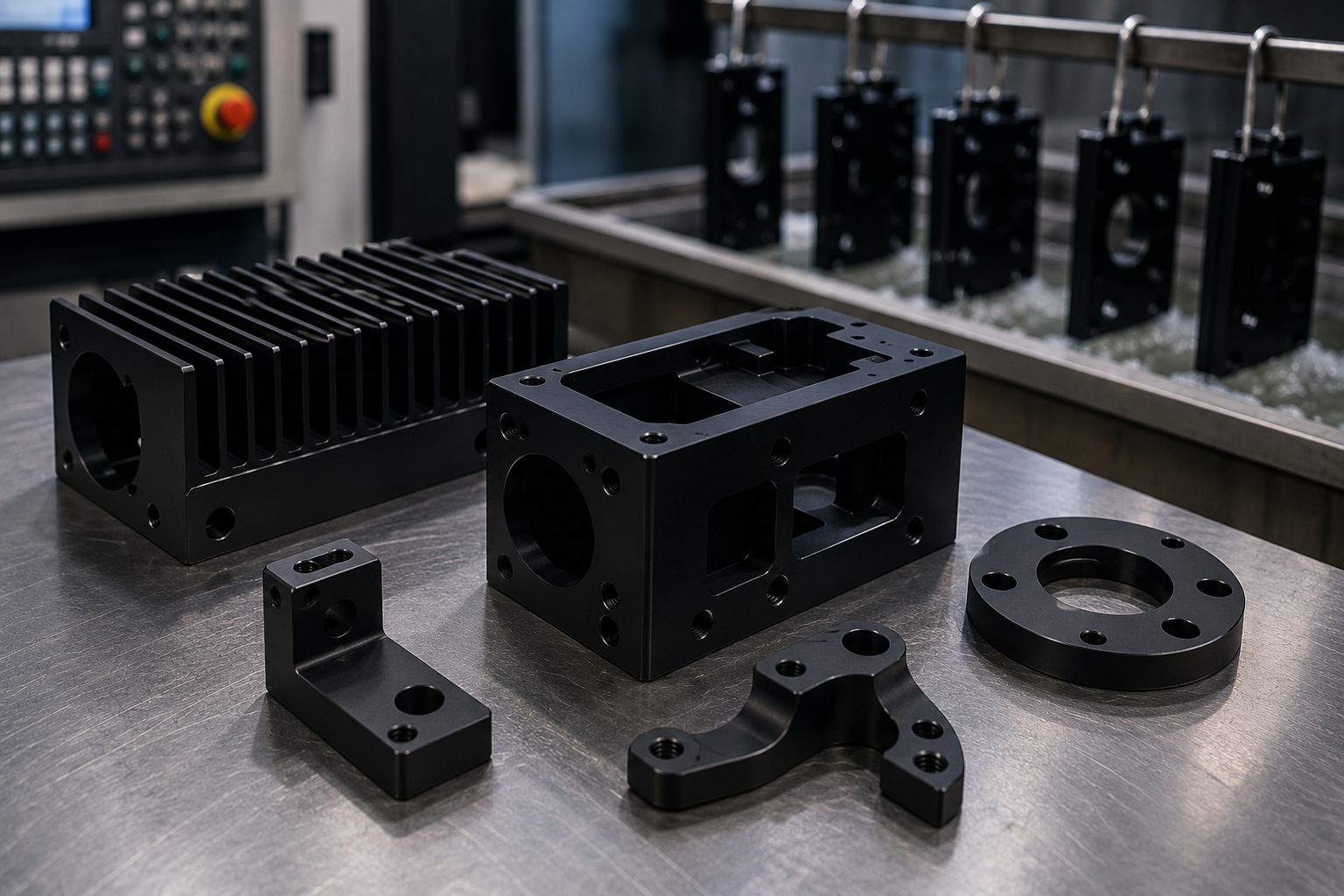
ロボット工学における材料選びは、重量と強度の間の絶え間ないせめぎ合いです。アルミニウム(特に6061および7075)は、軽量で加工しやすく、ほとんどの荷重に耐える十分な強度を備えているため、可動構造部材として広く採用されています。当社の アルミニウムのCNC加工ガイド 材質の選定には細心の注意が払われています。摩耗や負荷が最も大きい箇所――ギア、シャフト、高応力接合部――には、鋼やステンレスが採用されます。POMやPEEKなどのエンジニアリングプラスチックは、軽量化、自己潤滑性、あるいは電気絶縁性が求められる部品の加工に使用されます。 これらすべてにおいて適切な嵌合を実現するには、現実的な公差設定が不可欠であり、当社の CNC公差ガイド 表紙。.
大規模な環境における精度と再現性
Here’s the real payoff. Machining doesn’t just make one accurate part – it makes the thousandth part identical to the first. Because the geometry lives in a program and gets cut by a controlled machine, part-to-part variation stays tiny and predictable. For automated assembly, where robots handle parts with no human tweaking, that consistency is everything. A gripper set up for one part works for every part. A joint that fits on unit one fits on unit one thousand. That repeatability is what lets a robotics program scale from prototype to production without re-engineering the fits along the way.
よくある質問
ロボット部品にはどのような公差が必要ですか?
用途によって異なります。構造用ブラケットであれば±0.1 mmの公差でも問題ない場合がありますが、軸受穴や歯車噛み合わせ部では、多くの場合±0.01 mm以下の公差が求められ、同心度や真円度についても幾何学的要件が課されます。最も厳しい公差は、位置決め精度を決定する接合部に適用されます。.
なぜロボット工学ではアルミニウムがこれほど広く使われているのでしょうか?
Great strength-to-weight, quick to machine, and it anodizes for wear and corrosion resistance. Lighter moving parts also cut inertia, which means faster motion and smaller motors – a real edge in a robotic arm.
CNC加工は、自動化による生産量の増加に対応できるのでしょうか?
はい。パレットチェンジャー、バーフィーダー、無人運転を活用することで、機械加工では厳しい公差を維持しつつ、ロボット用部品を量産レベルで生産することができます。単純なカバー部品を非常に大量に生産する場合は、成形加工も併せて行うことができます。.
機械を精密に加工する上で、どのロボット部品が最も重要ですか?
ギアボックスハウジング、ベアリング穴、および接合部。これらの箇所で生じた誤差は、アームの長さに沿って増幅され、工具先端で大きな位置決め誤差となるため、精度を確保しなければならないのはまさにそこなのです。.
結論
Robotics and automation live on precision, repeatability, and the right balance of weight and strength – and CNC machining is the process built to deliver all three in one part. From load-bearing joints to tolerance-critical gearbox housings, the parts that set a robot’s accuracy get machined for a reason. To see the sectors we support, browse our 対象業界, 、詳しくは当社の 高精度CNC加工サービス, 、または お問い合わせ お客様のロボット工学および自動化コンポーネントについて詳しくお話しさせていただきます。.
About the Author
xinyangmfg Engineering Team — Senior Manufacturing Engineer, 12 years in precision CNC machining
xinyangmfg assembly systems, specializing in tolerance-critical gearbox and joint hardware. Working closely with automation engineers on DFM and material selection, Hasib writes to explain why a robot’s accuracy starts on the shop floor, long before the control software ever runs.