As peças de chapa metálica podem ser fabricadas de duas maneiras fundamentalmente diferentes. A conformação geral de chapas metálicas — baseada no corte a laser CNC ou por punção em torre, combinada com a dobra em prensa-dobra — utiliza equipamentos e ferramentas genéricas que podem ser reconfiguradas de trabalho para trabalho. A estampagem utiliza um conjunto de matrizes personalizadas em uma prensa mecânica ou hidráulica para cortar, perfurar e conformar uma peça específica em um ou poucos cursos. Os dois processos não são concorrentes; são ferramentas adequadas para diferentes volumes de produção, geometrias de peças e níveis de maturidade do projeto.
Resumindo: se você estiver produzindo centenas de peças ou menos, ou se houver previsão de alterações no projeto, a conformação geral é quase sempre a opção de menor custo. Se você estiver produzindo dezenas de milhares de peças com um projeto definido, a vantagem do custo por peça da estampagem — obtida ao distribuir um grande investimento em ferramentas por uma série longa — geralmente prevalece. Tudo o que se situa entre esses dois extremos requer uma análise de ponto de equilíbrio que compare o custo total da conformação com o custo total da estampagem, com base no volume anual esperado.
Este guia detalha como os dois processos diferem em termos de custo de ferramentas, economia por peça, tolerância, flexibilidade de projeto e a geometria com a qual cada um lida melhor. Ambos se enquadram em nossa serviços de usinagem de chapas metálicas, e você pode ver onde elas se encaixam no conjunto mais amplo de ferramentas em nosso processos de conformação de chapas metálicas guia.
O que é a conformação geral de chapas metálicas
Na fabricação cotidiana, ‘conformação de chapas metálicas’ significa moldar chapas planas com equipamentos programáveis de uso geral. A chapa em bruto é normalmente cortada por laser CNC ou puncionadeira de torre — o laser para bordas limpas e perfis de corte complexos, e a puncionadeira para furos e perfurações em grande volume. A peça cortada é então dobrada em uma prensa dobradeira CNC, onde um punção e uma matriz em V produzem ângulos e flanges. As operações secundárias incluem a inserção de peças de fixação (insertos roscados, espaçadores, fixadores PEM), soldagem por pontos, acabamento e montagem.
A característica marcante da conformação geral é que não são necessárias ferramentas específicas para cada peça. A cortadora a laser e a prensa dobradeira são capazes de processar qualquer geometria dentro de sua capacidade. Uma alteração no projeto significa atualizar um programa CNC, e não descartar uma matriz. Essa flexibilidade torna a conformação a opção econômica para precisamos de protótipos, primeiros exemplares, volumes de produção baixos a médios e produtos cujos projetos ainda não foram finalizados.
A conformação em prensa-dobra impõe algumas restrições geométricas: raios internos apertados, canais profundos e estreitos e características que exigem mais de três ou quatro configurações aumentam o custo. Mas, no caso de caixas, suportes, chassis, painéis, placas de montagem e da ampla categoria de peças fabricadas a partir de chapas planas dobradas, a conformação geral é rápida de configurar e econômica em uma ampla faixa de volume.
O que é estampagem
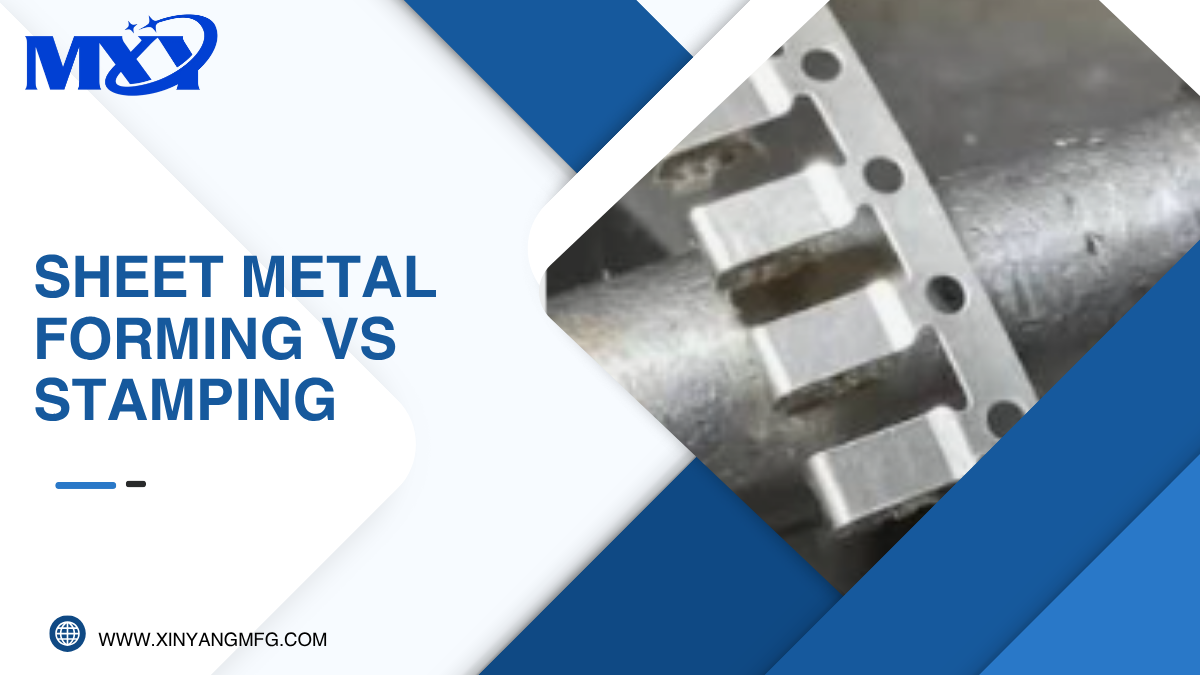
A estampagem utiliza um conjunto de matrizes personalizado — um punção e uma matriz combinados, usinados de acordo com a geometria exata da peça — montado em uma prensa e acionado através da chapa metálica com alta força. Em uma matriz simples de golpe único, um curso da prensa produz a peça. Em uma matriz progressiva, uma tira de chapa em bobina passa por várias estações, cada uma adicionando um recurso — um furo aqui, um entalhe ali, uma conformação na seguinte — até que uma peça acabada saia da estação final a cada curso.
A estampagem com matriz progressiva é um dos processos de fabricação com maior rendimento disponíveis. Os tempos de ciclo são medidos em cursos por minuto, e não em peças por hora. Uma matriz progressiva bem projetada, operando em uma prensa servoacionada, pode produzir milhares de peças complexas e com tolerâncias rigorosas por hora, com o mínimo de intervenção do operador. Em volumes suficientes, o custo por peça é uma pequena fração do que custaria a conformação em prensa dobradeira para a mesma geometria.
O problema está no ferramental. Uma matriz progressiva para uma peça moderadamente complexa é um conjunto de aço para ferramentas de precisão cujo projeto, usinagem e depuração podem custar de dezenas a centenas de milhares de dólares. Prazos de entrega de seis a dezesseis semanas são comuns. Alterações no projeto após o corte da matriz exigem retrabalho ou substituição de estações da matriz, o que pode custar uma parcela significativa do custo original da matriz. A estampagem é, portanto, um compromisso com a geometria da peça e não deve ser realizada até que o projeto esteja definido e o volume justifique o investimento.
Visão geral das principais escolhas
| Fator | Conformação Geral | Estampagem |
| Custo de ferramentas | Baixo — ferramentas genéricas para prensas dobradeiras e máquinas a laser | Alto — conjunto de matrizes personalizadas, geralmente $10K–$200K+ |
| Custo unitário em produção em série | Mais alto — a mão de obra por peça é relativamente fixa | Muito baixo — amortizado ao longo do longo prazo |
| Preparação e prazo de entrega | Prazo curto — dias até o primeiro artigo | Longo — 6 a 16 semanas para a construção do molde |
| Melhor faixa de volume | Protótipo a produção em média escala (1–10.000 peças) | Alta a muito alta (10.000–milhões) |
| Alterações no projeto | Fácil e barato — atualizar o programa CNC | Caro — retrabalho ou substituição da matriz |
| Tolerância dimensional | Bom — tipicamente de ±0,1 a ±0,5 mm | Excelente — é possível atingir uma precisão de ±0,05 mm ou melhor |
| Repetibilidade em grande escala | Funciona bem com um operador experiente | Excelente — a geometria da matriz controla cada peça |
| Recursos de geometria | Curvas, socos, formas simples | Formulários complexos com vários campos preenchidos de uma só vez |
O ponto de equilíbrio: quando a estampagem se torna rentável?
O ponto de equilíbrio econômico entre a conformação e a estampagem não é um valor fixo; depende da geometria específica da peça, do número de operações de dobra, do custo da matriz para a versão estampada e do volume anual. O princípio é simples: o custo total da conformação é igual ao custo por peça conformada multiplicado pelo volume. O custo total de estampagem é igual ao custo da matriz mais o custo por peça estampada multiplicado pelo volume. O ponto de equilíbrio é o volume no qual esses dois totais se igualam.
Para um suporte simples que requer duas dobras em uma prensa-dobra, uma peça moldada pode custar de três a oito dólares em mão de obra e amortização da configuração. Uma matriz de estampagem para a mesma peça pode custar vinte mil dólares, mas a peça estampada pode custar cinquenta centavos cada, em produção em massa. O ponto de equilíbrio fica em torno de 4.000 a 5.000 peças — abaixo desse número, a conformação é mais barata no total; acima disso, a estampagem se torna mais vantajosa. Para uma peça mais complexa que exija cinco ou seis operações de conformação, o ponto de equilíbrio se desloca para um número menor, pois cada configuração adicional da prensa-dobra aumenta o custo da peça conformada.
A maioria das equipes de engenharia cria protótipos por meio de conformação e inicia a produção inicial também por meio dessa técnica. Uma vez confirmados os volumes anuais e validado o projeto em campo, a decisão de investir em uma matriz de estampagem é simples: compare o custo total de dois anos da continuação da conformação com o investimento na matriz mais o custo das peças estampadas durante o mesmo período. Se o retorno do investimento na matriz ocorrer em menos de doze a dezoito meses, a relação custo-benefício favorece a estampagem.
Quando optar pela conformação geral
A conformação geral é a escolha certa quando os volumes são baixos a médios, quando o projeto ainda pode sofrer alterações, quando é necessário obter um protótipo ou um primeiro artigo rapidamente, ou quando a geometria da peça consiste principalmente em dobras e elementos perfurados. É o padrão para oficinas de fabricação sob encomenda e o processo padrão para caixas, suportes, painéis de chassi, ferragens de montagem e componentes estruturais personalizados.
A flexibilidade de revisar um projeto sem a necessidade de retrabalho na matriz é uma grande vantagem nas fases iniciais do ciclo de vida de um produto. Um engenheiro de projeto capaz de realizar três ou quatro revisões do suporte ao longo de seis semanas utilizando protótipos moldados — alterando a altura de uma flange, adicionando uma ranhura, ajustando um ângulo de curvatura — e, em seguida, lançar o produto com uma peça moldada está em uma posição muito mais vantajosa do que aquele que já se comprometeu com uma matriz de estampagem logo na primeira revisão.
A conformação também permite trabalhar com materiais e espessuras que a estampagem nem sempre consegue processar de forma econômica. Chapas muito espessas, ligas especiais e pequenos lotes com vários números de peça diferentes produzidos no mesmo equipamento são mais adequados para a conformação do que para a estampagem.
Quando optar pela estampagem
A estampagem é a escolha certa quando os volumes anuais são elevados e o projeto é estável, quando a peça apresenta características de conformação complexas — relevos, lanças, cavidades estampadas, dobras compostas — que uma matriz progressiva pode produzir em uma única passagem, mas uma prensa dobradeira exigiria várias configurações para moldar, e quando o menor custo possível por peça é o objetivo principal.
Os setores de fabricação de automóveis, eletrodomésticos, eletrônicos de consumo e ferragens são dominados pela estampagem, pois apresentam grandes volumes de produção, seus projetos são fixados para ciclos de produção que variam de um a vários anos e suas exigências de custo por peça são muito restritas para trabalhos com prensas dobradoras, que exigem mão de obra intensiva. O excelente repetibilidade O fato de as peças serem estampadas — cada peça sendo produzida a partir da mesma geometria de matriz, com dimensões essencialmente idênticas — também simplifica a montagem posterior e reduz a carga de trabalho relacionada à inspeção.
Os setores de defesa, aeroespacial e de fabricação de produtos médicos utilizam a estampagem de forma mais seletiva, aplicando-a nos casos em que os volumes e a estabilidade do projeto justificam seu uso e recorrendo à conformação geral para trabalhos de menor volume ou com maior variedade de modelos.
Considerações sobre os materiais
Ambos os processos trabalham com toda a gama de materiais de chapa metálica: aço carbono (A36, A1011), aço galvanizado e pré-revestido, aço laminado a frio, aço inoxidável (304, 316, 17-4 PH), ligas de alumínio (5052, 6061) e ligas de cobre. A escolha do material influencia a seleção do processo de duas maneiras.
Em primeiro lugar, a ductilidade influencia o que cada processo é capaz de moldar sem que ocorra fissuração. A embutida profunda, os relevos apertados e as formas compostas na estampagem exigem materiais com alongamento adequado — o aço macio de baixo carbono e o alumínio 5052 são bem adequados; o 6061-T6 fica no limite para embutidas severas. A dobra em prensa-dobra impõe menos severidade de conformação e funciona com uma gama mais ampla de materiais.
Em segundo lugar, a espessura do material afeta o custo da matriz para estampagem. Materiais mais espessos exigem componentes de matriz mais pesados e mais caros, além de uma tonelagem maior da prensa. Para materiais espessos e de alta resistência em volumes moderados, a conformação geral costuma ser mais econômica do que investir em uma matriz de estampagem pesada.
Abordagens híbridas
Muitas peças de produção utilizam ambos os processos em diferentes etapas. Uma carcaça estampada pode ser combinada com suportes conformados em prensa-dobra em um subconjunto soldado. Uma matriz progressiva de estampagem pode produzir o corpo principal de uma peça, com reforços formados em prensa-dobra soldados nela. Também é comum criar protótipos e validar com a conformação, mudar para a estampagem na produção em série e manter a capacidade de conformação como reserva para picos de demanda ou períodos de manutenção das ferramentas.
Perguntas frequentes
A estampagem é mais barata do que a conformação?
Por peça, em grandes volumes, sim — porque o custo do molde é distribuído entre muitas peças. Mas a estampagem exige um grande investimento inicial em ferramentas (muitas vezes, de dezenas a centenas de milhares de dólares), além de um prazo de entrega do molde de seis a dezesseis semanas. Para protótipos e volumes baixos a médios, a conformação geral oferece um custo total menor. O ponto de equilíbrio depende do custo específico da matriz e da diferença de custo por peça para cada peça.
A partir de qual volume a estampagem se torna viável?
Não existe um limite universal, mas a estampagem geralmente se justifica a partir de dezenas de milhares de peças por ano ou mais, para um projeto estável. Para um suporte simples, o ponto de equilíbrio pode ser tão baixo quanto 3.000 a 5.000 peças. Para uma peça complexa com vários recursos, que exija muitas operações de prensa-dobra, esse número pode ser ainda menor. Faça uma análise de ponto de equilíbrio usando a cotação específica da matriz e o custo da peça conformada para o seu projeto.
Qual processo apresenta tolerâncias mais restritas?
A estampagem oferece as tolerâncias mais restritas e a melhor repetibilidade em grandes volumes, pois cada peça é moldada pela mesma geometria da matriz. A conformação em prensa dobradeira CNC mantém boas tolerâncias — normalmente de mais ou menos 0,1 a 0,5 mm nas dimensões conformadas —, mas a variação entre peças é maior do que na estampagem, pois depende da consistência do material, da habilidade do operador e da calibração da máquina.
Posso criar um protótipo por moldagem e produzir em série por estampagem?
Sim, e esse é o fluxo de trabalho padrão de desenvolvimento de produtos para muitas peças de alto volume. A conformação é utilizada para validar o projeto e atender à demanda inicial; a estampagem assume o processo assim que o volume justificar o investimento em ferramentas. O principal risco é que uma alteração significativa no projeto após a construção da matriz exija um retrabalho oneroso; portanto, o projeto deve ser cuidadosamente validado antes de se comprometer com uma matriz de estampagem.
E se eu estiver entre os dois intervalos de volume?
Faça as contas. Solicite um orçamento de conformação por peça e um orçamento de matriz de estampagem, além do custo da peça estampada, e compare os custos totais para um período de dois anos com base no volume previsto. Se a diferença for pequena, opte pela conformação devido à sua flexibilidade. Se a economia com a estampagem for substancial, avalie se o projeto é estável o suficiente para se comprometer com uma matriz. Uma análise de DFM (Design for Manufacturing) feita pelo seu fornecedor pode ajudar a quantificar ambas as opções.