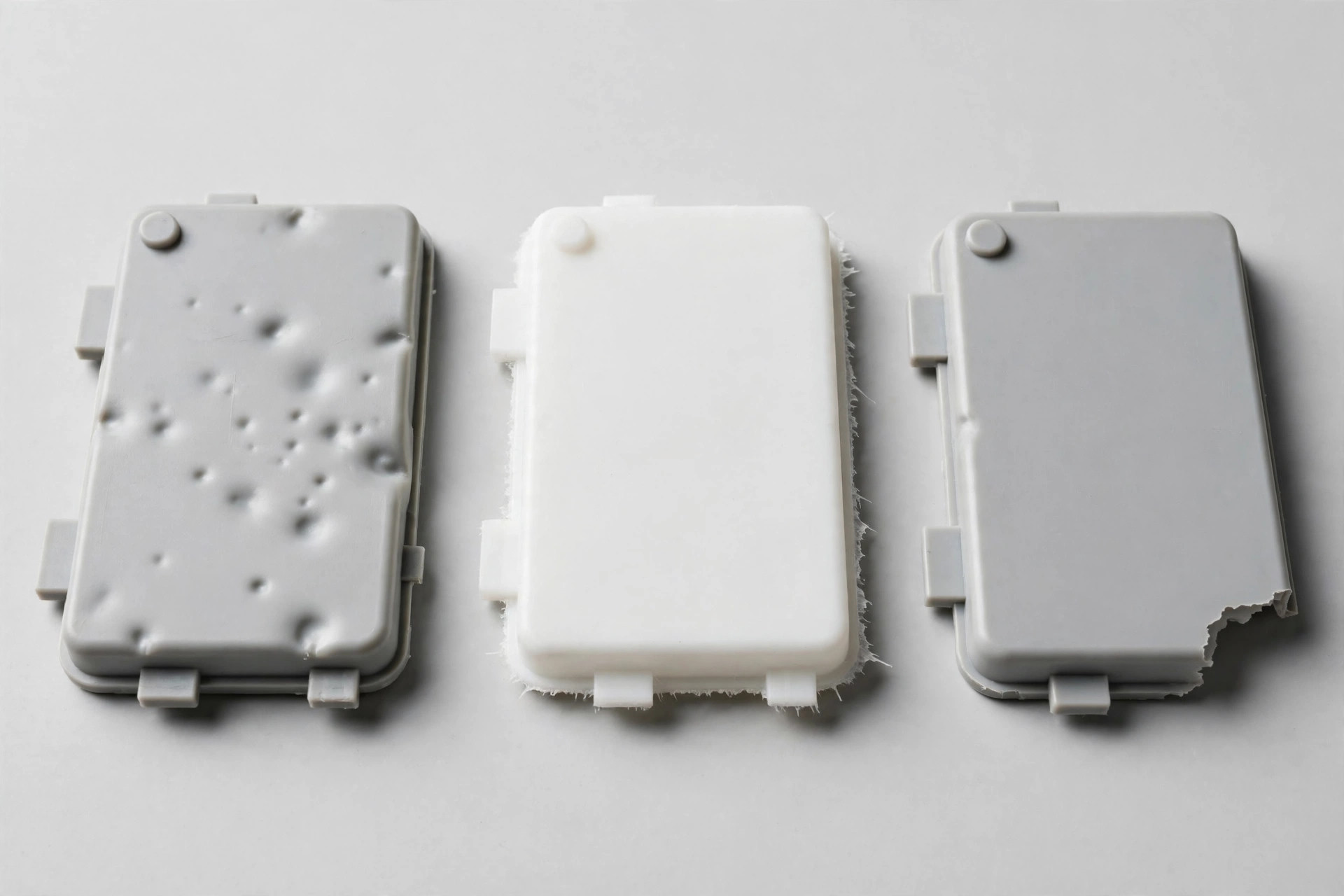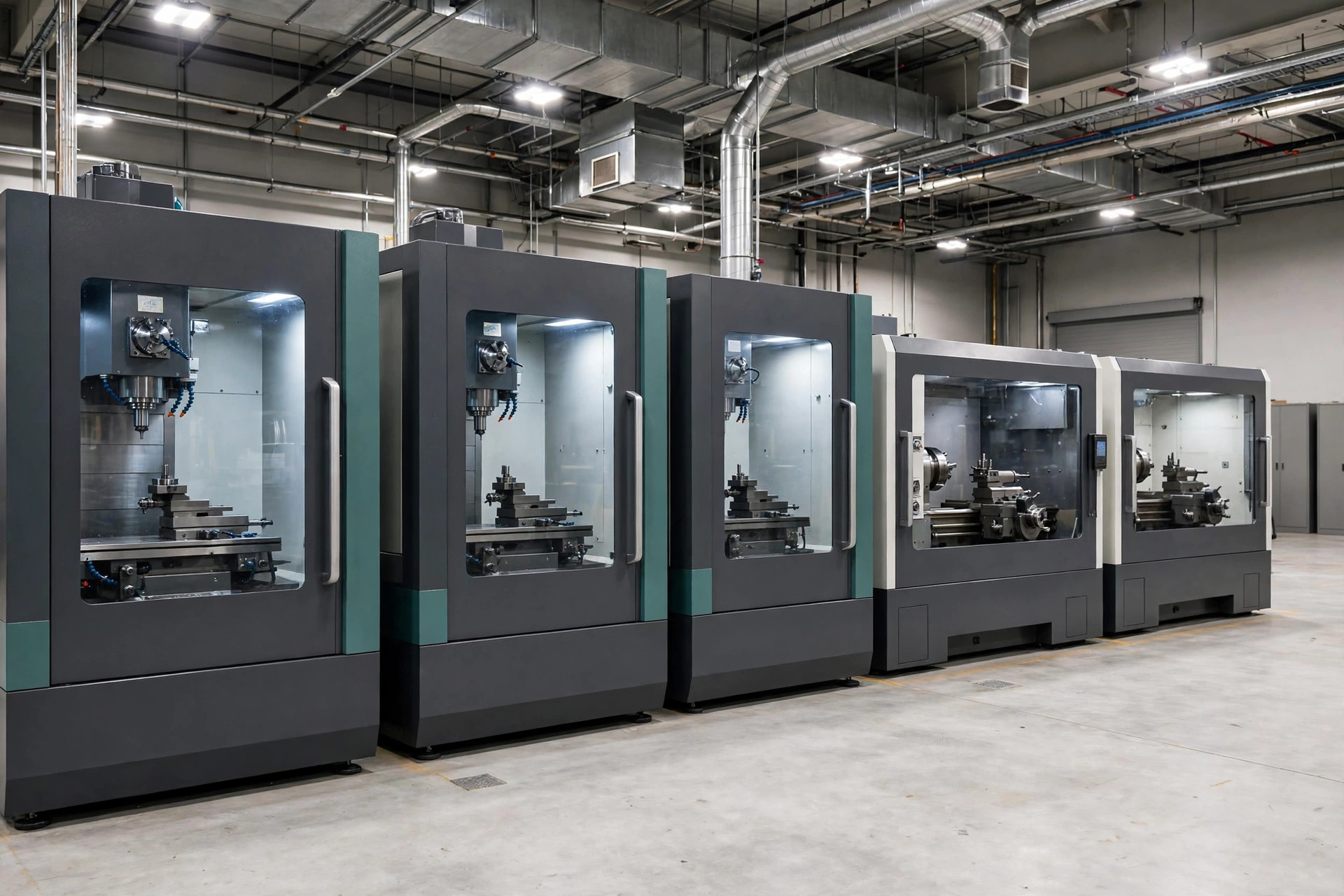

The choice in urethane casting vs injection molding usually comes down to quantity. Urethane casting pours polyurethane resin into a silicone mold made from a master pattern, so tooling is cheap and fast but each part costs more. Injection molding shoots molten thermoplastic into a machined metal tool, so tooling costs far more, yet each part becomes very cheap once the tool exists.
That is the short version. The rest of this guide shows where casting and molding each win, where each hides costs, and how to work out the crossover point for your own part instead of trusting a rule of thumb.
Quick answer
Quick answer: Use urethane casting for prototypes, pilot builds and runs of roughly tens to low hundreds of parts, when you need production-like parts in days or a few weeks. Use injection molding once the design is frozen and the volume is high enough that the tool cost, spread across every part, beats the higher unit price of casting.
How Urethane Casting and Injection Molding Make a Part
Casting and molding look similar on a drawing. Both produce plastic parts from a cavity. The difference is what the cavity is made of and what goes into it.
Urethane casting
Urethane casting, often called vacuum casting, starts with a master pattern, usually a 3D printed or CNC machined part finished to the surface you want. The pattern is suspended in a box and liquid silicone is poured around it.
Once the silicone cures, the mold is cut open, the master is removed, and you have a soft mold. Two-part polyurethane resin is mixed, degassed and poured or drawn into that mold under vacuum, then cured. Polyurethane is a thermoset: once it cures it cannot be remelted.
Injection molding
Injection molding uses a hard tool, CNC machined and often EDM finished in aluminum or steel. Thermoplastic pellets are melted in a heated barrel and injected under high pressure, cooled in the tool, and ejected. The tool runs on a molding press and repeats the cycle automatically.
If you want the tooling side in more depth, our injection molding services page covers how we build and run production molds.

Casting vs Molding: Side-by-Side Table
The table below puts the key figures side by side, from mold material and tooling cost to tolerance and design changes.
| Factor | Urethane casting | Injection molding |
|---|---|---|
| Mold material | Silicone (soft) | Aluminum or steel (hard) |
| Tooling cost | Low | High |
| Cost per part | Higher, and roughly flat | Low, and falls with volume |
| Typical quantity | Tens to low hundreds | Thousands and up |
| Lead time to first parts | Days to a few weeks | Several weeks, driven by tool build |
| Typical tolerance | About ±0.010 in | About ±0.005 in |
| Typical wall thickness | About 1 to 5 mm | About 0.5 to 4 mm |
| Material | Polyurethane resins that simulate thermoplastics | The actual production thermoplastic |
| Undercuts | Often possible with flexible silicone | Need side actions or lifters in the tool |
| Design changes | Cheap: new master, new silicone mold | Expensive: steel modification or new tool |
Tolerance and wall figures above are typical published ranges for casting and molding, not guarantees. They shift with part size, geometry and resin.
Urethane Casting vs Injection Molding: Where Each Wins
Where urethane casting wins
Urethane casting is strongest when the design is still moving. A silicone mold takes days to make and costs a fraction of a machined tool, so a change to a boss or a snap fit means a new master and a new mold rather than a tooling rework. That makes it a sensible choice for engineering builds, trade show units, crowdfunding samples and early customer trials.
It also handles some geometry a steel tool struggles with. Because silicone flexes, small undercuts can often be pulled straight out of the mold. Overmolding, insert casting and color-matched parts are practical without paying for extra tool actions. Our urethane casting service is set up for exactly these short runs.
Hardness range: one process, soft to rigid
The resins cover a wide hardness range. Suppliers typically quote rubber-like grades from about Shore A 20 up to Shore A 90, and rigid grades in the Shore D 70 to 80 region, measured with durometers under ASTM D2240. That spread lets one process cover gaskets, grips and rigid housings.
| Resin type | Typical hardness | Typical use |
|---|---|---|
| Rubber-like polyurethane | About Shore A 20 to Shore A 90 | Gaskets, grips and soft-touch parts |
| Rigid polyurethane | Shore D 70 to 80 region | Rigid housings and structural parts |
Where injection molding wins
Injection molding wins on unit cost, repeatability and material truth. Once the tool exists, cycles are short and largely automated, so price per part drops sharply as volume rises. Dimensions hold tighter and drift less across a run, because a metal cavity does not wear the way silicone does.
Most importantly, you get the real resin. A part molded in ABS, PC or nylon is that material, with its actual impact strength, heat resistance and certification status. For parts that must pass regulatory or customer testing, that matters more than speed. Our injection molding services page explains why the tooling bill varies so widely from one part to the next.
What Does Urethane Casting Cost Compared With Molding?
Urethane casting cost is mostly labor and resin. Each part is mixed, poured, cured and demolded by hand, and every silicone mold wears out after a few dozen castings at most, depending on resin and geometry. So the price per part stays high and nearly flat whether you order 20 or 120, and the gap between casting and molding prices widens with every extra part.
Injection molding cost is the opposite shape: a large fixed tooling charge followed by a low variable price per part. Material, cycle time and press rate set the part price. Tool complexity sets the fixed charge: cavities, side actions, surface finish, and whether the steel is aluminum, pre-hardened or fully hardened.
No single break-even number
We are not going to quote one universal break-even number for urethane casting versus injection molding here. Published examples from different suppliers disagree, and your geometry, resin and finish will move the answer more than any average. The next section shows how to work it out properly.
How to Calculate Your Break-Even Quantity
Ask for both quotes at the same quantities, then use this: Break-even quantity = (injection mold tooling − urethane tooling) ÷ (urethane price per part − molded price per part). Below that quantity, casting is cheaper overall. Above it, molding is.
The same formula works for any casting vs molding decision, including bridge tools. Here is an illustrative example with round numbers chosen only to show the arithmetic, not as a price guide.
Worked example
| Cost item | Value in the example |
|---|---|
| Injection mold tooling | 6,000 |
| Silicone tooling and master | 600 |
| Difference in tooling | 5,400 |
| Cast part price | 28 |
| Molded part price | 2 |
| Difference per part | 26 |
| Break-even quantity | About 208 parts |
Suppose the mold costs 6,000, the silicone tooling and master cost 600, a cast part costs 28 and a molded part costs 2. The difference in tooling is 5,400. The difference per part is 26. Break-even is about 208 parts.
Three adjustments that move the crossover
Three adjustments make the math honest:
- Count the silicone molds you will actually need. If one mold yields a few dozen castings, a 200-part order may need several molds, and that tooling sits on the casting side of the equation.
- Add the cost of time. If molding means waiting several more weeks while sales are lost or a launch slips, that delay has a price.
- Include design changes. If you expect two more revisions, casting absorbs them cheaply. Each change to a hardened steel tool costs real money and real days.
Once all three are included, the crossover often moves, and the silicone mold count is the line item most often left out.
When to Choose Urethane Casting, and When to Move On
Choose urethane casting when at least two of these are true:
- You need parts in days or a few weeks, not after a tool build.
- The design is likely to change again.
- Quantity is in the tens or low hundreds.
- You need overmolded, soft-touch or color-matched samples without paying for tool actions.
Move to injection molding when
- The design is frozen and validated.
- Annual volume is in the thousands.
- The part must be made in a specific certified resin.
- You need tight, repeatable tolerances run after run.
| Situation | Choose urethane casting | Move to injection molding |
|---|---|---|
| Design status | Still changing | Frozen and validated |
| Quantity | Tens to low hundreds | Thousands per year |
| Timing | Parts needed in days or a few weeks | Time available for a tool build |
| Material | Simulated resin is acceptable | A specific certified resin is required |
| Tolerances | Typical casting tolerances are enough | Tight, repeatable tolerances run after run |
Plenty of programs use urethane casting and injection molding together. A common sequence is cast urethane for engineering and pilot builds, an aluminum bridge tool for the first production volumes, then hardened steel once demand is proven.
The Validation Trap: “ABS-Like” Is Not ABS
A common and costly mistake: a team approves a design on cast urethane parts, then the first molded parts behave differently, because casting and molding use different materials.
Urethane resins are formulated to imitate thermoplastics, so suppliers sell grades described as ABS-like, PC-like or PP-like. They match some properties, such as hardness or stiffness, closely enough for fit and form checks. They do not match all of them. Chemical resistance, long-term creep, fatigue in a living hinge, heat deflection and flammability can all differ from the real resin.
What does not transfer
That has practical consequences:
- Flammability claims do not transfer. A cast part rated against UL 94 tells you about that urethane, not about the molded thermoplastic. Certification testing belongs on molded parts.
- Snap fits behave differently. A clip that survives repeated assembly in a flexible urethane may crack in a stiffer molded resin, or the reverse.
- Shrinkage is different. Thermoplastics shrink at their own rates as they cool in the tool, so a dimension that fits on the casting can move on the molding.
| Property | Cast urethane part | Molded thermoplastic part |
|---|---|---|
| Flammability rating | Rated for that urethane only | Needs its own certification testing |
| Snap-fit behavior | Flexible urethane survives repeated assembly | Stiffer resin may crack, or the reverse |
| Shrinkage | Follows the casting cure | Follows the thermoplastic cooling rate in the tool |
Use cast parts to prove fit, form, assembly and user feedback. Use molded parts, ideally from a bridge tool, to prove anything that depends on the actual material.
Designing One Part That Works for Both Processes
You can save a redesign by drawing the casting master as if it were already headed for a steel tool, so one CAD model serves casting and molding. Casting is forgiving, which is exactly why parts approved in urethane often turn out to be unmoldable.
- Add draft now. Silicone releases zero-draft walls easily. A metal tool will not. Put draft on vertical faces from the first revision.
- Keep walls within molding limits. Casting accepts thick sections that would sink or warp in a molded part. Hold walls fairly uniform and inside the 0.5 to 4 mm range typical for molding.
- Design out undercuts you will pay for later. If an undercut only works because silicone flexes, note it. In steel it becomes a side action or lifter.
- Plan the gate and parting line. Decide where the molded part will be gated and where the parting line falls, and keep cosmetic surfaces away from both.
A short DFM review before the master is made costs little, and it prevents the most expensive kind of change: one discovered after the steel is cut. Our urethane casting guide for low-volume parts covers master preparation in more detail.
Common Mistakes Buyers Make
Four mistakes show up again and again in casting and molding projects:
- Quoting one process only. Without casting and molding quotes at the same quantities, there is no break-even to compare.
- Assuming the casting resin equals the production resin. See the validation trap above.
- Ordering hundreds of cast parts for a design that is already frozen. At that point a simple aluminum tool often wins on cost and gives you the real material.
- Cutting hardened steel before the design is stable. Changes after hardening are slow and costly. This is where casting or a bridge tool earns its keep.
Frequently Asked Questions
What are the key differences between injection molding and urethane casting?
Urethane casting pours polyurethane resin into a soft silicone mold, so tooling is cheap and fast but each part costs more and molds wear quickly. Injection molding injects molten thermoplastic into a metal tool, which costs more upfront but makes parts cheaply, with tighter tolerances and the actual production resin.
How much does urethane casting cost?
Cost depends on part size, resin, finish and quantity. You pay for a master pattern, one or more silicone molds and hand labor for every casting, so the price per part stays relatively high and flat. Ask for quotes at two or three quantities so you can see how the tooling spreads across the order.
Is injection molding the same as casting?
No. Casting relies on gravity or vacuum to fill a mold with liquid resin that cures chemically, usually in a soft mold. Injection molding forces melted thermoplastic into a hard metal tool at high pressure, then cools it. The pressure and the metal tool are what make molding faster and more precise at volume.
Can urethane be injection molded?
Thermoplastic polyurethane (TPU) can be injection molded, and it is common for seals, grips and flexible parts. The two-part polyurethane resins used in urethane casting are thermosets that cure chemically, so they cannot be melted and injected. If you want a urethane-like feel in production, ask about molding TPU.
When should you switch from urethane casting to injection molding?
Switch when the design is frozen, volume reaches the point where tooling cost spread across the run beats the casting price per part, or the part must be made in a specific certified thermoplastic. Many teams move to an aluminum bridge tool first, then to hardened steel once demand is proven.
Choosing Between Urethane Casting vs Injection Molding for Your Project
If you are still changing the design, need parts quickly, or need fewer than a few hundred, cast urethane is usually the better choice. If the design is locked, volume is climbing, or the part has to be certified in a real thermoplastic, injection molding is the stronger option, and the earlier you plan for it in the master pattern, the cheaper the switch becomes.
The figures in this guide are typical ranges, and your crossover point will depend on your geometry, resin and finish. The reliable way to decide is to price urethane casting and injection molding at the same quantities. Send XY Machining your CAD file and we can quote casting and molding side by side, with DFM notes for both.