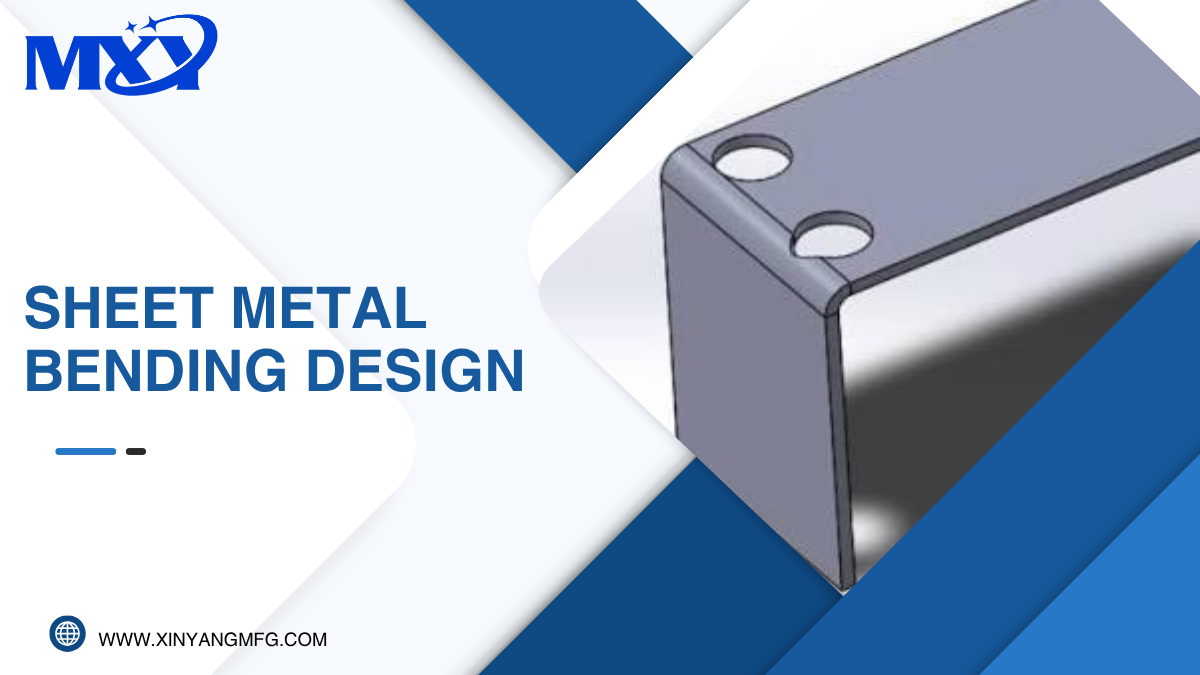
要生产出符合正确成品尺寸的弯曲钣金件,必须考虑材料在弯曲过程中的行为。弯曲处的外部会拉伸,内部则会压缩。 在这两者之间存在一个平面——即中性轴——该平面既不会拉伸也不会压缩。沿中性轴在弯曲过程中消耗的材料长度必须重新计入展开图的计算中,否则弯曲件的每个边长都会出现尺寸偏差。.
有三个密切相关的概念决定了这一计算:K系数,它描述了中性轴相对于材料厚度的位置;弯曲余量,即沿中性轴消耗的弧长;以及弯曲扣除量,即从外侧边尺寸中减去的量,以得出平铺坯料的长度。 对于给定的材料、厚度和弯曲半径,只要这三个数值计算准确,折弯后的零件就与图纸一致。若计算有误,每个边长都会系统性地向同一方向偏离——这是一种可重复的误差,只有查明原因才能予以纠正。.
本指南提供了相关计算公式、按材料分类的实用初始值、确保弯件可制造性的设计规则,以及关于回弹现象的解释。它是任何设计弯曲钣金零件的工程师的参考指南。 关于决定这些参数在实际中如何应用的弯曲方法——气动弯曲、底弯和冲压弯曲——请参阅我们关于这三种V型弯曲方法的专门指南。如需了解更广泛的钣金加工工艺,请参阅我们的 钣金 成形工艺指南。.
中性轴与K因子
当平板发生弯曲时,与板面平行的每一层材料要么被拉伸(位于弯曲外侧),要么被压缩(位于弯曲内侧)。中性轴是指在材料厚度范围内应变为零的理论平面——即既不受拉伸也不受压缩。 在完全无应力的平板中,中性轴位于中间平面,这对应于K系数为0.5。.
当发生弯曲时,中性轴会向弯曲的内表面迁移。迁移程度取决于弯曲内半径与材料厚度之比(R/T比)、材料的应变硬化特性以及成形方法。 与大曲率半径的软材料相比,小曲率半径(低R/T比)和较硬的材料会使中性轴向弯曲内表面偏移得更远。.
K因子将该位置量化为材料厚度的一个比例,该厚度从内表面开始测量:
K = t / T
其中 t 是内表面到中性轴的距离,T 是材料的总厚度。.
实际应用中,K系数的典型值范围为0.30至0.50。对于低碳钢的空气弯曲,K系数0.33是一个被广泛采用的起始值。《机械手册》和SolidWorks钣金参考资料中提供了针对特定材料和R/T组合的K系数表。 对于经常加工的材料,应通过实际试弯校准K系数:按生产半径弯曲一条带材,测量实际消耗的平整坯料,并根据弯曲余量公式反向计算出K系数。.
弯曲余量计算公式
弯曲余量(BA)是指沿中性轴穿过弯曲区域所消耗的材料弧长:
BA = θ × (R + K × T)
其中θ为弯曲角度(单位为弧度,即度数×π/180),R为内弯半径,K为K系数,T为材料厚度。.
对于厚度为 2 mm、内半径为 3 mm 的低碳钢,其 90 度弯曲时的 K 值为 0.33:
theta = 90 × (π/180) = 1.5708 弧度
BA = 1.5708 × (3 + 0.33 × 2) = 1.5708 × 3.66 = 5.75 毫米
这意味着扁平坯料必须包含5.75毫米的材料才能形成这个弯曲——这部分材料在弯曲过程中被‘消耗’掉了,因此不能计入任何一条腿的长度中。.
弯曲扣减公式
弯曲扣除量(BD)是指从外侧边长之和中减去的总和,以得出平铺坯料长度。它是弯曲余量的补数,计算方法如下:
BD = 2 × (R + T) × tan(θ/2) – BA
因此,一个简单的双腿零件的坯料长度为:
展开长度 = 边 A(外侧)+ 边 B(外侧)– BD
以同一例题为例:BD = 2 × (3 + 2) × tan(45度) – 5.75 = 10 × 1.0 – 5.75 = 4.25 毫米。 如果边A长50毫米,边B长40毫米,则平板坯料尺寸为50 + 40 – 4.25 = 85.75毫米。.
最常见的平面图错误是将内腿长和外腿长的测量标准混为一谈。折边扣除采用的是外腿长。如果您的CAD模型报告的是内腿长,请在应用折边扣除之前,先将材料厚度加到每条裤腿上。现代CAD系统会自动执行这一计算,但需要正确输入K系数和内半径——输入错误,输出错误。.
不同材料的最小弯曲半径
如果指定的内半径小于材料的最小半径,弯曲处的外部纤维就会开裂。最小半径取决于材料、状态以及相对于板材轧制晶粒方向的弯曲方向。.
| 材料 | 最小内半径(约) | 注释 |
| 普通钢(A1011、CR) | 1.0 × 厚度 | 顺着木纹方向弯曲,可将开裂风险降低一半 |
| 304不锈钢 | 2.0 × 厚度 | 会迅速产生冷作硬化;请使用锋利的刀具 |
| 5052-H32 铝合金 | 1.5 × 厚度 | 一种良好的通用弯曲合金 |
| 6061-T6 铝合金 | 3.0 × 厚度 | 在小曲率半径处易开裂;必要时需进行退火处理 |
| 铜(半硬) | 1.0 × 厚度 | 具有延展性,但会产生加工硬化;进行大角度弯曲前需进行退火处理 |
| 黄铜(半硬) | 1.0 × 厚度 | 弯曲性能良好,弯曲半径适中 |
这些仅为大致的参考值。针对特定合金批次、厚度和成形速度的实际最小弯曲半径,应参照材料供应商的技术数据表进行核对,或通过试弯进行确认。沿轧制晶粒方向(垂直于轧制方向)进行弯曲,可有效降低开裂风险,因为晶粒横向的延展性更高。 对于延展性较低的合金中的关键弯曲部位,应在图纸上标明晶粒方向。.
回弹:原因与补偿
回弹是指在去除成形力后发生的弹性恢复现象。金属在弯曲过程中会同时发生弹性和塑性变形。 当冲头退回时,弹性部分会恢复,导致工件弹回至其原始平整状态。回弹量与材料的屈服强度除以其弹性模量成正比——该比值(屈服强度/弹性模量)越高,回弹量越大。.
按材料划分的实际影响:
- 普通钢的回弹幅度适中且可预测——通常每个弯曲处为2至5度。数控折弯机通过在程序中设置超弯补偿来对此进行校正。.
- 不锈钢的回弹量更大——通常为5至10度——因为不锈钢的屈服比模量高于低碳钢。因此需要进行密切监测,并根据不同材料采用相应的修正系数。.
- 由于6061-T6铝合金的屈服强度相对较高,因此其回弹现象较为显著。在T6时效状态下,大曲率半径处的回弹角度可能超过8至12度。.
- 高强度钢(HSLA、DP钢)需要采取强力的过弯补偿措施;某些钢种的回弹角度可达15至20度,如果未谨慎选择弯曲方法,回弹角度甚至可能超过90度。.
补偿方法包括:CNC过弯校正(在程序中根据预期的回弹量调整冲头深度);从气动折弯切换为到底折弯,通过使材料更紧密地贴合模具来减少回弹;以及压印成型,通过使材料完全屈服来消除大部分回弹。 关于每种方法在何种情况下适用的详细信息,请参阅我们关于“气弯、底弯与压印”的指南。.
弯曲钣金零件的实用设计规则
将零件上所有折弯处的内弯半径统一标准化。采用统一的半径,可使用同一套折弯机模具完成所有折弯,无需更换模具,从而缩短准备时间并降低成本。如果单个零件上使用多种半径,则需要进行多次模具调整。.
应保持足够的法兰长度。最小法兰长度必须足够长,以便在弯曲过程中能够抵靠在模具肩部上。一般规则是,法兰长度至少应为材料厚度与弯曲半径之和的四倍。较短的法兰会滑入模具开口,并以无法控制的半径进行弯曲。.
请保持孔与折弯线之间的最小距离。如果孔距离折弯线过近,折弯操作会导致孔变形为椭圆形。 孔边到折弯线的最小距离通常为两个材料厚度加上折弯半径。对于必须靠近折弯处的孔,应将孔移至另一侧,或增加一个倒角槽。.
在部分弯曲的末端添加弯曲减应力槽。当弯曲未贯穿工件的整个宽度时——例如,从较大面板边缘向上弯曲的凸片——弯曲线的拐角处会形成应力集中。如果没有减应力槽或切口,材料会在弯曲末端发生撕裂。 减应力槽的宽度应至少等于材料厚度,且应向弯曲线外延伸至少一个材料厚度。.
保持展开图尺寸的一致性。在图纸标题栏中明确说明尺寸是按弯头内侧还是外侧测量,以及应以展开图尺寸还是成形尺寸为准。规范不一致是实际工作中导致展开图错误的最常见原因之一。.
对于延展性较差的合金,应避免沿轧制方向进行弯曲。如果必须沿晶粒方向进行弯曲,则应指定较大的弯曲半径,或改用延展性更好的回火状态。.
利用CAD进行平铺图开发
现代 CAD 系统——SolidWorks Sheet Metal、Inventor、Creo 和 Fusion 360——在设计师输入材料、厚度和 K 系数(或折弯余量表)后,会自动完成展开图的生成。系统会计算每个折弯的折弯余量,并自动将零件展开为展开图。 这虽然减轻了计算负担,但并不意味着可以忽略对基础力学原理的理解。如果 K 系数不正确,所有展开图尺寸都会出现系统性偏差。对于公差要求严格的成形零件,必须针对生产中每种材料-厚度-弯曲半径的组合,通过实物试弯来校准 K 系数。.
常见问题解答
在钣金折弯中,K系数是什么?
K系数是指中性轴的位置占材料厚度的比例,该比例从弯曲面的内侧面开始测量。在平整且未弯曲的板材中,该系数为0.5;在弯曲过程中,该系数通常在0.30至0.50之间,具体取决于材料、厚度、弯曲半径和成形方法。 对于低碳钢的空气弯曲,0.33是常见的起始值。对于常规加工的材料,应通过实物试弯进行校准。.
如何计算弯曲余量?
使用公式 BA = θ × (R + K × T),其中 θ 为弯曲角度(单位为弧度),R 为内弯半径,K 为 K 系数,T 为材料厚度。 弯曲余量是指沿中性轴方向,弯曲区域消耗的材料弧长。将其加到平直边长度上(或从外侧边总和中减去相应的弯曲扣除量),即可得到正确的平板坯料长度。.
钣金的最小弯曲半径是多少?
近似最小值如下:低碳钢和铜为材料厚度的1倍;5052铝合金为1.5倍;304不锈钢为2倍;6061-T6铝合金为3倍。 请务必对照具体合金和状态的技术数据表进行核对。沿轧制晶粒方向进行弯曲可降低开裂风险,并使大多数合金能够实现更小的弯曲半径。.
为什么我的弯曲件长度不正确?
最常见的原因包括:CAD模型中K系数输入错误;程序中未考虑回弹;模具磨损导致有效弯曲半径发生变化;或者内侧和外侧边长测量规则不一致。 请使用实际生产半径和材料进行试弯以校准K系数,核实数控程序中是否包含回弹修正,并确认图纸中尺寸标注规则保持一致。.