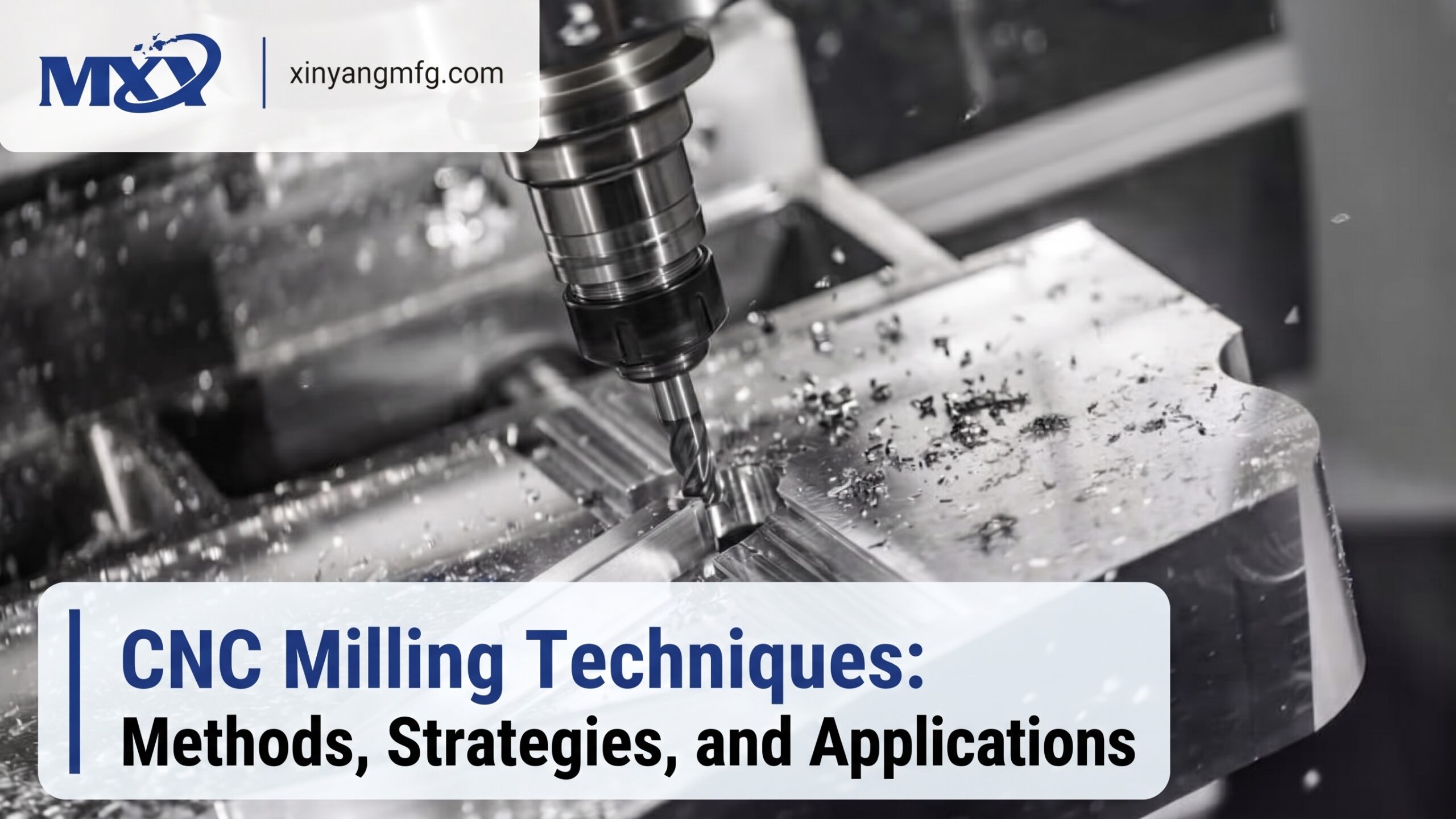
What are CNC milling techniques and why are they important in modern manufacturing? What are the different types of CNC milling techniques used by manufacturers? How do CNC milling methods improve accuracy, productivity, and product quality? Which CNC milling strategies are suitable for complex parts and precision components?
CNC milling techniques are advanced machining approaches that use computer-controlled cutting tools to remove material from a workpiece and create precise shapes. These techniques include various milling methods, tool movements, cutting strategies, and machining processes that help manufacturers produce accurate components for industries such as aerospace, automotive, medical, electronics, and industrial equipment.
What Are CNC Milling Techniques?
CNC milling techniques refer to the different approaches used in computer numerical control milling operations to achieve specific machining goals. Unlike traditional milling, CNC milling uses programmed instructions to control machine movements, cutting speed, tool paths, and machining sequences.
Modern manufacturers use CNC milling because it provides higher accuracy, repeatability, and production efficiency. By selecting the right milling technique, engineers can reduce material waste, improve surface quality, and manufacture complex geometries that would be difficult to produce manually.
で Xinyang MFG, CNC machining processes are used to produce precision components according to customer specifications, material requirements, and industry standards.
The selection of the correct CNC milling approach depends on several factors, including:
- Material type
- Part complexity
- Required tolerances
- Surface finish requirements
- 生産量
- Tool selection
A suitable CNC milling strategy ensures that machining operations remain efficient while maintaining consistent quality.
Different Types of CNC Milling Techniques
There are several types of CNC milling techniques used in manufacturing. Each technique has specific advantages depending on the design requirements and machining objectives.
| CNC Milling Technique | 説明 | 一般的な用途 |
| Face Milling | Removes material from the surface using cutting tools with multiple teeth | Flat surfaces, machine bases, structural components |
| Peripheral Milling | Cuts along the outer edges of a workpiece | Slots, contours, and profiles |
| Pocket Milling | Creates internal cavities or recessed areas | Housings, molds, mechanical parts |
| ねじ切り | Produces accurate internal and external threads | Automotive and industrial components |
| 3軸フライス加工 | Controls movement along X, Y, and Z axes | Standard precision machining |
| 5軸フライス加工 | Allows complex movement from multiple angles | Aerospace and medical components |
Face Milling Technique
Face milling is one of the most commonly used CNC milling methods. It involves cutting across the surface of a material to create flat and smooth finishes.
This technique is often used during the initial machining stage because it quickly removes excess material while preparing the workpiece for additional operations.
Face milling requires careful selection of cutting speed, feed rate, and tool geometry to achieve the desired surface quality.
Pocket Milling Technique
Pocket milling is used to create hollow areas, cavities, or recessed sections inside a component. This method is widely used for manufacturing machine parts, electronic enclosures, and lightweight structural components.
Advanced CNC programming allows manufacturers to control tool movement precisely, reducing machining time and improving dimensional accuracy.
CNC Milling Methods Explained
CNC milling methods describe the specific machining approaches used to remove material and shape components. Choosing the right method directly affects production efficiency, accuracy, and cost.
Some commonly used CNC milling methods include conventional milling, climb milling, contour milling, and adaptive milling.
Conventional Milling
Conventional milling involves moving the cutting tool against the direction of workpiece movement. This method is commonly used for certain materials where better control is required.
It can provide stable machining conditions but may generate more cutting force compared with newer approaches.
Climb Milling
Climb milling moves the cutter in the same direction as the workpiece feed. This method usually provides improved surface finish and longer tool life when properly applied.
Many modern CNC machines use climb milling because it reduces friction and improves cutting efficiency.
Adaptive Milling
Adaptive milling is an advanced CNC milling method that automatically adjusts cutting parameters based on material conditions.
This approach helps maintain consistent tool performance and reduces machining time, especially for complex parts.
Businesses looking for high-quality production can also explore CNC machining services by Xinyang MFG for customized manufacturing solutions.
CNC Milling Strategies for Better Results
CNC milling strategies involve planning the complete machining process, including tool selection, cutting paths, machining sequences, and optimization methods.
A strong CNC milling strategy helps manufacturers achieve better accuracy while reducing production costs.
Tool Path Optimization
Tool path planning is one of the most important parts of CNC milling. Optimized tool paths reduce unnecessary movements and improve machining speed.
Advanced CAM software allows engineers to simulate cutting operations before production begins, reducing errors and improving efficiency.
Selecting Appropriate Cutting Parameters
Cutting parameters such as spindle speed, feed rate, and depth of cut influence machining performance.
Incorrect settings can lead to poor surface quality, excessive tool wear, or damaged components.
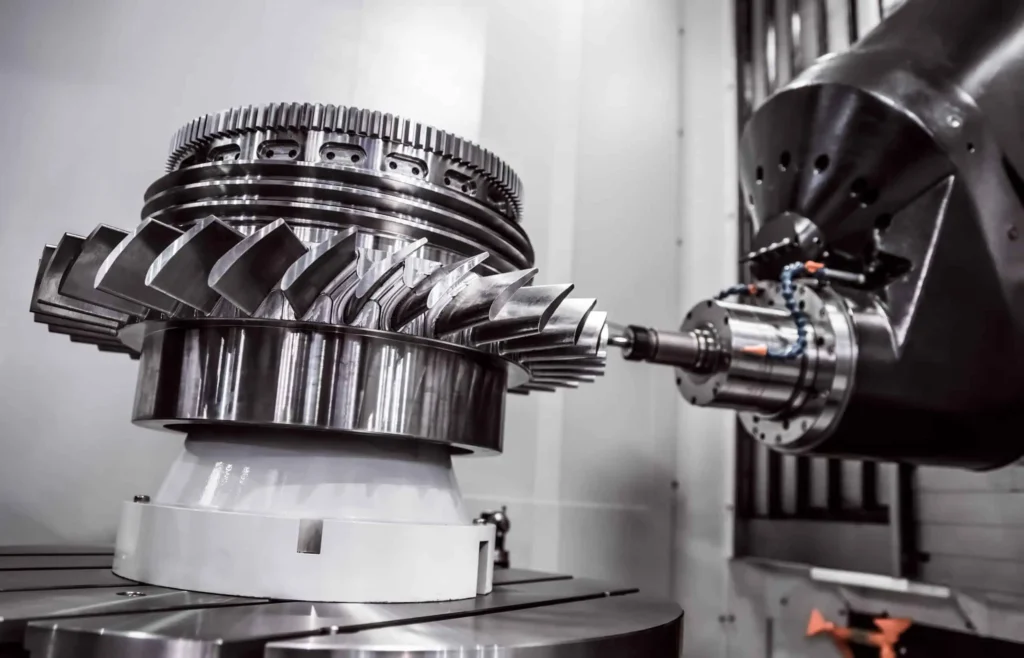
Multi-Axis Machining Strategy
Multi-axis CNC milling allows tools to approach a component from different angles. This strategy is useful for producing complex shapes with fewer setups.
Industries requiring high precision often use multi-axis machining for advanced components.
Applications of CNC Milling Techniques
CNC milling techniques are used across many industries because they provide reliable precision and repeatable production.
| 産業 | CNC Milling Applications |
| 航空宇宙 | Aircraft brackets, structural components, engine parts |
| 自動車 | Transmission components, prototypes, tooling parts |
| 医療 | Surgical instruments, implants, medical devices |
| エレクトロニクス | Enclosures, heat sinks, precision housings |
| Industrial Equipment | Machine parts, fixtures, and mechanical components |
Aerospace Manufacturing
Aerospace companies require extremely accurate components because even small manufacturing errors can affect performance and safety.
CNC milling techniques allow manufacturers to produce lightweight yet strong components from materials such as aluminum and titanium.
Medical Component Production
Medical industries depend on precision machining for instruments and specialized devices.
CNC milling provides the accuracy required for producing complex medical components with strict dimensional requirements.
For projects requiring advanced material processing, manufacturers often combine CNC milling with professional surface finishing services to achieve improved appearance, durability, and corrosion resistance.
Factors Affecting CNC Milling Performance
Several factors influence the success of CNC milling operations.
材料の選定
Different materials require different machining approaches. Aluminum, stainless steel, titanium, and plastics each have unique cutting requirements.
Machine Capability
The CNC machine type, spindle power, and axis configuration affect the complexity of parts that can be manufactured.
Tool Quality
High-quality cutting tools improve accuracy, reduce production delays, and increase tool lifespan.
Programming Accuracy
Correct CNC programming ensures that machines follow precise movements and produce accurate components.
CNC Milling Techniques vs Traditional Machining
CNC milling provides several advantages compared with traditional machining methods.
| 特集 | CNCフライス加工 | Traditional Milling |
| Accuracy | Very high precision | Depends heavily on operator skill |
| Repeatability | Excellent for production runs | Limited consistency |
| Complexity | Suitable for complex geometries | More difficult for advanced shapes |
| 自動化 | Fully computer controlled | Mostly manual operation |
CNC milling is preferred for modern manufacturing because it combines speed, precision, and automation.
Future Trends in CNC Milling
The future of CNC milling is moving toward smarter and more automated manufacturing systems.
Artificial intelligence, advanced sensors, and connected manufacturing technologies are improving machining efficiency and quality control.
Manufacturers are increasingly adopting automated inspection systems, digital twins, and real-time monitoring to reduce errors and improve production performance.
Companies that understand modern CNC milling strategies can gain advantages through faster production cycles, improved quality, and reduced operational costs.
You can also learn more about related manufacturing processes through our guide on precision machining techniques.
結論
CNC milling techniques play an important role in modern manufacturing by enabling accurate, efficient, and repeatable production of complex components. Understanding different CNC milling methods and CNC milling strategies helps manufacturers select the right approach for every project.
From simple surface machining to advanced multi-axis operations, CNC milling continues to improve manufacturing capabilities across multiple industries. With the integration of automation, artificial intelligence, and advanced software, CNC milling will remain a key technology for precision manufacturing in the future.
よくある質問
What are CNC milling techniques?
CNC milling techniques are machining approaches that use computer-controlled machines to cut and shape materials. They include different methods such as face milling, pocket milling, contour milling, and multi-axis machining.
What are the main CNC milling methods?
The main CNC milling methods include conventional milling, climb milling, adaptive milling, face milling, and contour milling. Each method is selected based on material type, design complexity, and production requirements.
Which CNC milling technique is best for complex parts?
5-axis CNC milling is commonly used for complex components because it allows machining from multiple angles. It reduces setups and improves accuracy for advanced geometries.
How can CNC milling strategies improve manufacturing?
Effective CNC milling strategies optimize tool paths, cutting parameters, and machining sequences. They help reduce production time, minimize waste, and improve final component quality.
What industries use CNC milling techniques?
CNC milling techniques are widely used in aerospace, automotive, medical, electronics, and industrial manufacturing industries because they provide high precision and repeatable results.
著者について パトリック・チェン — XY Machining アプリケーションエンジニア パトリックは、XY Machining社において、米国のエンジニアリングチーム向けに薄肉部品の設計をレビューするとともに、繊細な部品を公差内に収めるための治具や工具経路について、現場の作業員と連携して取り組んでいます。見積もりを出す前に薄肉部品の耐圧試験を行うには、, モデルを弊社チームにお送りください.