Resposta rápida
Resposta rápida: Torneamento CNC spins the workpiece against a stationary cutting tool to make round features fast, while CNC milling holds the part still and spins the tool to cut flats, slots, pockets, and holes. Most real parts need both.
Running them on a single mill-turn machine — instead of moving the part between two separate machines — removes a second setup, protects your tolerances, and typically shaves days off the lead time. That combination is why most precision shops quote milling and turning as one integrated capability rather than two line items.
A bracket that failed inspection
I still remember the first bracket I sent out that needed a turned boss on one face and a milled slot on the other. We machined the turning on a lathe, walked the part across the shop, re-fixtured it on a mill, and lost the concentricity between the two features by four thousandths of an inch. The part failed inspection.
A mill-turn machine would have held both features in one clamping. That lesson is the whole reason this article exists.
Torneamento x Fresagem: a principal diferença
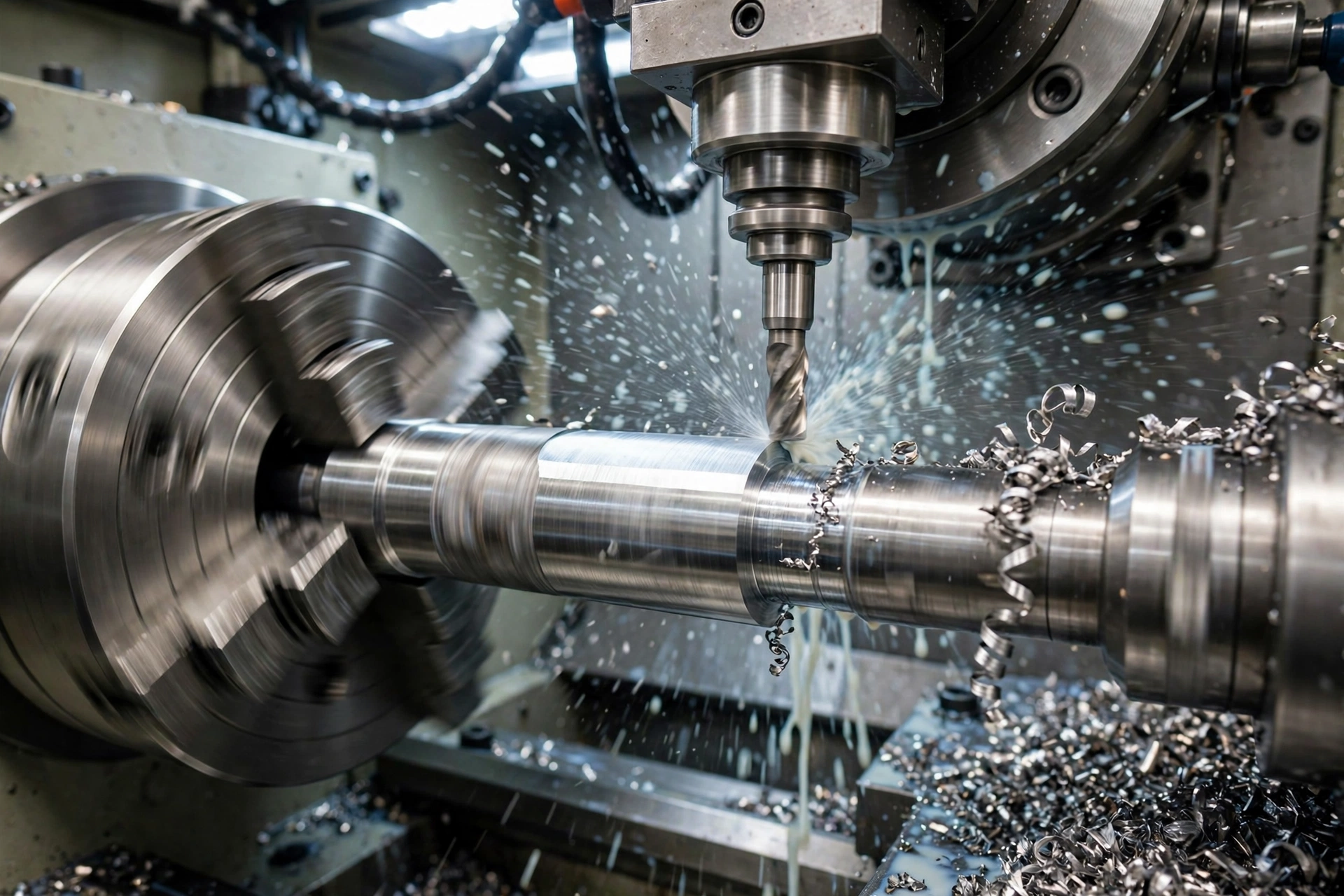
The split is about what moves. In turning, the part rotates and the tool stays put. In milling, the tool rotates and the part stays put (or moves along programmed axes). That single distinction drives everything else — the shapes you can make, the finishes you get, and the cost per part.
| Fator | Torneamento CNC | Fresagem CNC |
|---|---|---|
| O que gira | A peça de trabalho | A ferramenta de corte |
| Ideal para | Peças cilíndricas, redondas e simétricas | Superfícies planas, ranhuras, cavidades, 3D complexo |
| Peças típicas | Eixos, buchas, pinos, pinos roscados | Suportes, caixas, placas, coletores |
| Velocidade nas etapas do circuito | Muito rápido | Lento |
| Velocidade em elementos prismáticos | Pobre | Muito rápido |
| Eixos comuns | 2 eixos (X, Z), além de ferramentas motorizadas | 3 eixos, até 5 eixos |
| Acabamento da superfície no diâmetro externo | Excelente, com brilho de espelho | Em bom estado, pode apresentar marcas de usinagem |
Se você quiser uma análise mais aprofundada, abordamos o assunto com mais detalhes em nosso guia sobre Torneamento CNC x fresagem. Resumindo: eles não são concorrentes. São duas metades de um mesmo trabalho.
Why “milling and turning” is searched as one phrase
People type turning and milling or cnc milling and turning together for a reason. Very few functional components are purely round or purely prismatic. A hydraulic fitting is turned on the outside but needs cross-drilled ports milled into it. A motor shaft is turned to diameter but needs a milled keyway.
When you ask a shop for “milling and turning,” you are really asking a practical question: can you finish my whole part without shipping it somewhere else? That is where mill-turn machining earns its keep.
O que uma máquina de fresagem e torneamento realmente faz
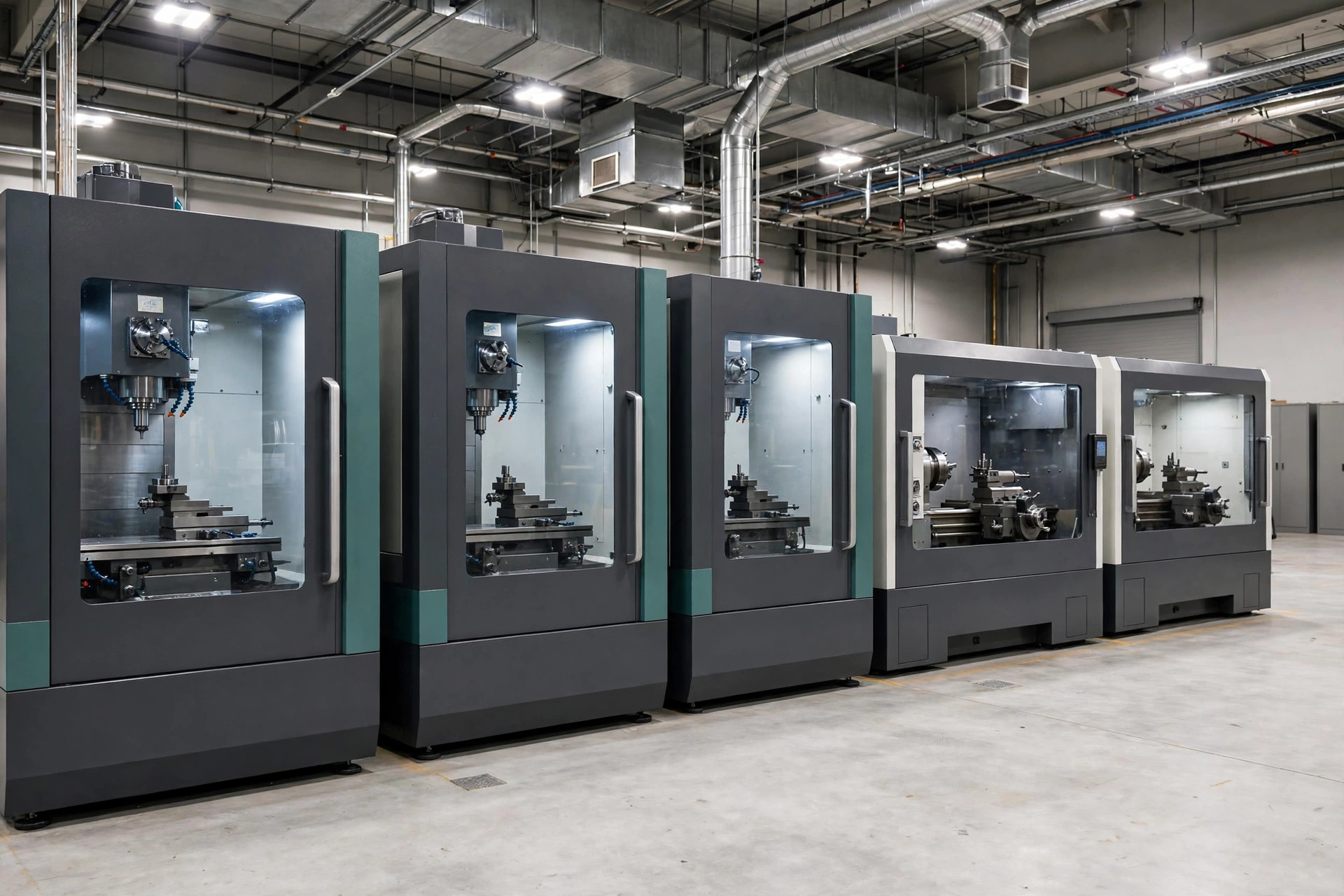
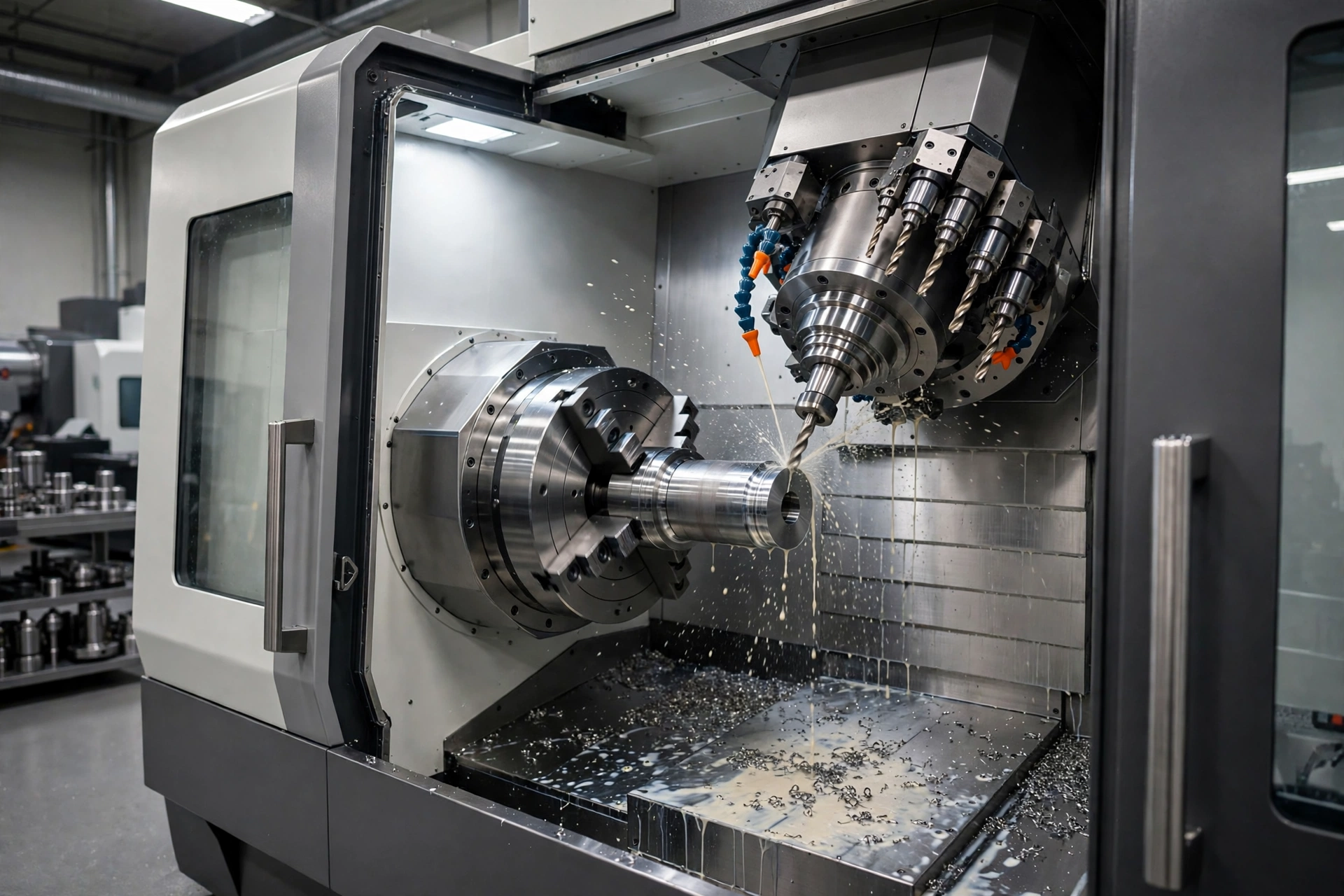
Um centro de fresagem e torneamento é um torno equipado com um cabeçote de fresagem motorizado e, geralmente, um segundo eixo. A peça gira para as operações de torneamento; em seguida, a máquina para o fuso, indexa a peça em um ângulo exato e aciona uma ferramenta rotativa para fresar superfícies planas, fazer furos descentrados ou cortar uma ranhura de chaveta — tudo isso sem soltar a peça do grampo.
Os benefícios se acumulam rapidamente:
- One setup, one datum. Every feature is cut relative to the same reference, so concentricity and position error stay tiny.
- No re-fixturing labor. Moving a part between machines is human time, and human time is where cost and mistakes live.
- Shorter lead time. Fewer setups means fewer queue steps between machines.
- Better repeatability at volume. Once the program is proven, part 1 and part 5,000 look identical.
Para um fornecedor de torneamento de precisão, essa é a diferença entre apresentar uma cotação para um trabalho de 3 dias e uma de 7 dias com base no mesmo desenho.
Uma comparação realista de custos e prazos de entrega
Below is a representative comparison for a medium-complexity part — say, a threaded aluminum housing with a turned body and four milled side ports — at a quantity of 250. Numbers are illustrative and vary by geometry, material, and shop, but the shape of the difference is consistent with what we see on the floor.
| Abordagem | Configurações | Prazo de entrega estimado | Custo relativo por peça | Risco de concentricidade |
|---|---|---|---|---|
| Torno separado + fresadora separada | 2 (reajustado) | 6 a 8 dias | Linha de base (100%) | Mais alto |
| Torno-fresadora (máquina única) | 1 | 3 a 4 dias | ~80–90% | Muito baixo |
| Apenas torneamento (peça reprojetada para evitar a fresagem) | 1 | 2 a 3 dias | ~70% | N/A |
A última linha é aquela que os compradores esquecem: às vezes, a opção mais econômica é uma pequena alteração no projeto. Se um detalhe usinado existe apenas porque o projetista original optou por ele por padrão, uma rápida conversa com a oficina pode transformar uma peça que exige duas operações em uma peça que exige apenas uma. Esse é exatamente o tipo de pensamento voltado para a fabricação que reduz seu preço unitário. Abordamos mais sobre isso em Como reduzir os custos da usinagem CNC.
Quando você ainda quiser dois computadores separados
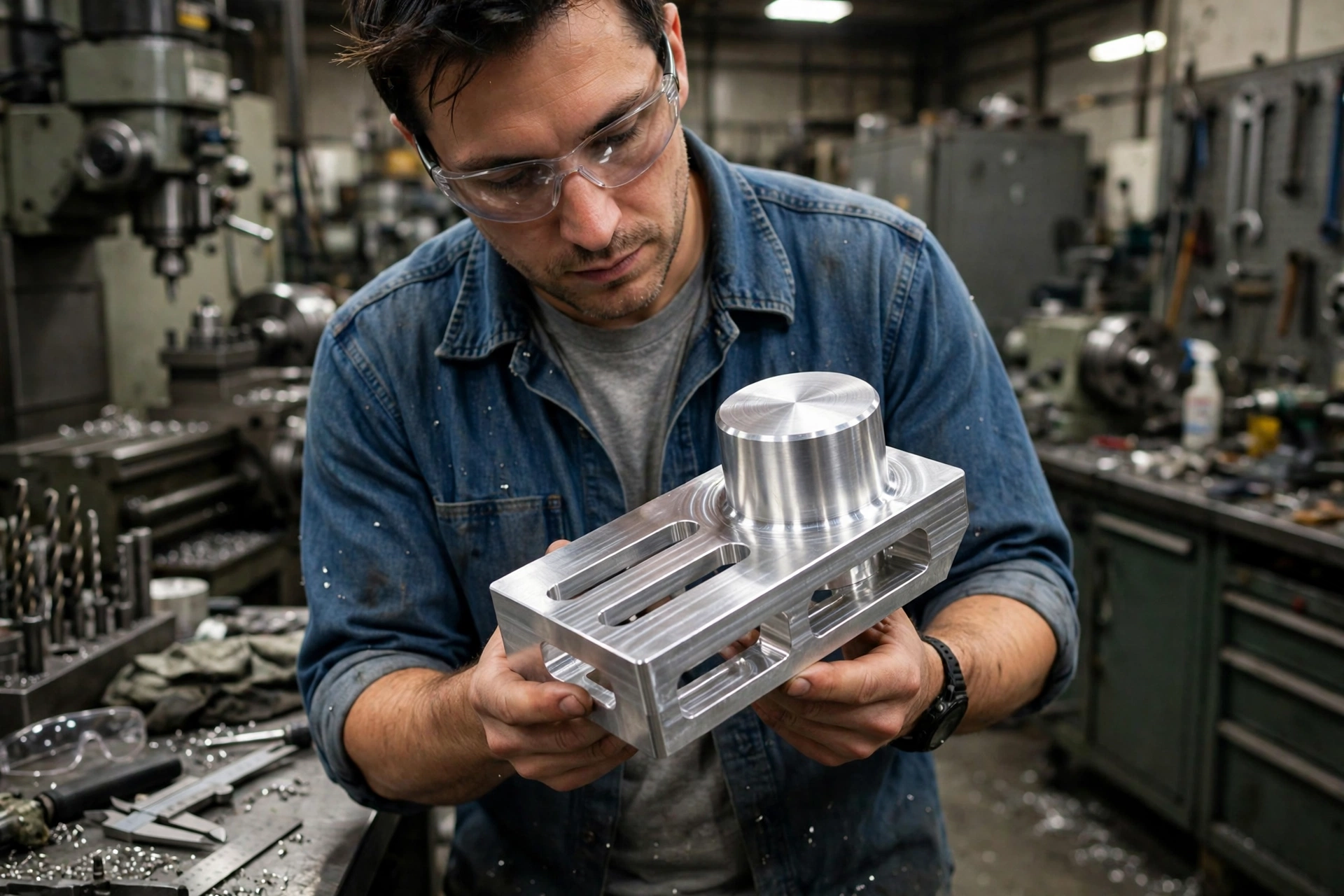
A usinagem combinada (fresagem e torneamento) nem sempre é a solução ideal. Máquinas especializadas podem ser mais vantajosas quando:
- Volumes are very high and geometry is simple. A plain turned pin at 100,000 pieces runs cheapest on a fast, dedicated lathe.
- Milling work is heavy and 5-axis. A complex impeller belongs on a full Usinagem em 5 eixos centro, e não um torno com cabeçote de fresagem.
- The turned and milled features have loose tolerances between them. If nothing needs to be concentric, the re-fixturing risk disappears and cost rules the decision.
Uma boa oficina indica qual o percurso mais adequado para o seu desenho, em vez de forçar todos os trabalhos a serem realizados em uma única máquina.
Materiais: como a fresagem e o torneamento apresentam comportamentos diferentes
Material choice changes how each process performs. Free-machining brass and aluminum turn beautifully and mill cleanly. Stainless and titanium turn well but work-harden if the milling feeds are wrong, which is where an experienced operator matters more than the machine’s spec sheet.
| Material | Comportamento nas curvas | Comportamento na fresagem | Notas |
|---|---|---|---|
| Alumínio 6061 | Excelente | Excelente | O valor padrão para protótipos; consulte 6061 x 7075 |
| Latão C360 | Excelente | Muito bom | O material mais rápido de usinar |
| Aço inoxidável 303/304 | Ótimo | Moderado | As máquinas 303 são muito mais fáceis do que as 304 |
| Titânio Ti-6Al-4V | Moderado | Exigente | Avanços lentos, ferramentas afiadas, refrigerante em abundância |
| Delrin / acetal | Excelente | Excelente | Ótimo para peças isolantes torneadas |
Como passar as instruções a uma oficina para um trabalho de fresagem e torneamento
Para obter um orçamento preciso e rápido, forneça à oficina:
- A STEP file plus a 2D drawing that calls out the critical dimensions — not every dimension, just the ones that matter for fit and function.
- Tolerances only where you need them. A blanket ±0.001 in on a whole part triples the price for no reason.
- Material and finish clearly stated, including any anodização ou galvanização.
- Quantity and target date, so the shop can pick the right machine strategy.
Essa lista de quatro itens é a principal alavanca que você tem para controlar tanto o custo quanto o prazo de entrega.
Perguntas frequentes
O torneamento CNC é mais barato do que a fresagem CNC?
For round features, yes — turning removes material far faster than milling because the whole part is spinning. But comparing them in isolation misses the point. The real cost driver is how many setups your part needs. A part that is 90% round and 10% milled is cheapest on a mill-turn machine, because you pay for one setup instead of two. Judge cost by the finished part, not by the individual process.
Qual é a diferença entre uma máquina de fresagem e torneamento e um torno com ferramentas motorizadas?
Esses conceitos se sobrepõem, e os termos são usados de forma imprecisa. Um torno com ferramentas motorizadas pode acionar algumas ferramentas rotativas para fresagem leve e perfuração transversal enquanto a peça está fixada no mandril. Um centro completo de fresagem e torneamento vai além, geralmente adicionando um eixo Y, um segundo fuso para usinagem na parte traseira e potência de fresagem suficiente para tratar a máquina quase como um torno e um centro de usinagem fundidos em um único equipamento. Para peças complexas que exigem apenas uma configuração, o centro completo de fresagem e torneamento é a opção ideal.
Será que uma única máquina consegue realmente manter a tolerância tanto em peças torneadas quanto em peças fresadas?
Sim, e é exatamente por isso que os compradores optam por ela. Como a peça nunca sai do mandril, cada furo e cada superfície plana fresados são referenciados ao mesmo ponto de referência torneado. Erros de concentricidade e de posição real que surgem quando se refixa a peça em uma segunda máquina simplesmente nunca ocorrem. Para qualquer situação em que uma característica fresada precise permanecer concêntrica com um furo torneado, a usinagem em uma única configuração é a opção mais confiável.
Preciso projetar minha peça especificamente para usinagem combinada (fresagem e torneamento)?
Não logo de cara, mas uma breve revisão do projeto vale a pena. Envie seu modelo para a oficina com antecedência e pergunte se alguma característica exige uma operação extra. Pequenas alterações — reposicionar uma porta, ampliar uma tolerância não crítica, adicionar um alívio — podem transformar uma peça de duas operações em uma de apenas uma. Essa única conversa muitas vezes economiza mais dinheiro do que qualquer substituição de material.
What is CNC milling and turning?
CNC milling and turning are the two core machining processes. Turning spins the workpiece against a fixed cutting tool to make round features — shafts, bores, threads — while milling spins the tool against a stationary part to cut flats, pockets, slots, and holes. Most real parts need both, which is why shops quote them together and why mill-turn centers finish both in one setup.
What is mill-turn machining?
Mill-turn machining is machining on a mill-turn center: a lathe with a powered milling head, usually with a second spindle, that turns and mills the same part in a single clamping. The part is never unclamped between operations, so every feature is cut relative to the same datum — that is what protects concentricity and cuts lead time.
What is the difference between CNC milling and turning?
The difference is what moves. In turning, the part rotates and the tool stays put, which is fastest for round features. In milling, the tool rotates and the part stays put, which is best for flats, slots, pockets, and complex 3D shapes. They are not competitors — they are two halves of the same job, and most parts need both.
Então, qual configuração a sua peça precisa?
Milling and turning are not rival processes to pick between — they are partners. Turning gives you fast, precise round features; milling gives you flats, pockets, and holes.
The strategic decision is not which one, but how many setups your part needs, and whether a single mill-turn machine can finish it in one clamping. Get that right and you win on all three fronts buyers care about: tighter tolerances, lower cost, and shorter lead time.
Sobre o autor Patrick Chen — Engenheiro de Aplicações, XY Machining Patrick analisa projetos de peças com paredes finas para equipes de engenharia dos EUA na XY Machining e trabalha em conjunto com a equipe de produção na definição de dispositivos de fixação e trajetórias de usinagem que garantam que peças delicadas permaneçam dentro das tolerâncias. Para realizar um teste de pressão em uma peça com paredes finas antes de elaborar o orçamento, Envie seu modelo para nossa equipe.