Respuesta rápida
Respuesta rápida: Torneado CNC spins the workpiece against a stationary cutting tool to make round features fast, while CNC milling holds the part still and spins the tool to cut flats, slots, pockets, and holes. Most real parts need both.
Running them on a single mill-turn machine — instead of moving the part between two separate machines — removes a second setup, protects your tolerances, and typically shaves days off the lead time. That combination is why most precision shops quote milling and turning as one integrated capability rather than two line items.
A bracket that failed inspection
I still remember the first bracket I sent out that needed a turned boss on one face and a milled slot on the other. We machined the turning on a lathe, walked the part across the shop, re-fixtured it on a mill, and lost the concentricity between the two features by four thousandths of an inch. The part failed inspection.
A mill-turn machine would have held both features in one clamping. That lesson is the whole reason this article exists.
Torneado frente a fresado: la diferencia fundamental
The split is about what moves. In turning, the part rotates and the tool stays put. In milling, the tool rotates and the part stays put (or moves along programmed axes). That single distinction drives everything else — the shapes you can make, the finishes you get, and the cost per part.
| Factor | Torneado CNC | Fresado CNC |
|---|---|---|
| Lo que gira | La pieza de trabajo | La herramienta de corte |
| Ideal para | Piezas cilíndricas, redondas y simétricas | Superficies planas, ranuras, cavidades, formas 3D complejas |
| Piezas habituales | Ejes, casquillos, pasadores, pernos roscados | Soportes, carcasas, placas, colectores |
| Velocidad en las curvas | Muy rápido | Lento |
| Velocidad en elementos prismáticos | Pobre | Muy rápido |
| Ejes comunes | 2 ejes (X, Z), además de herramientas motorizadas | 3 ejes, hasta 5 ejes |
| Acabado superficial del diámetro exterior | Excelente, con un acabado especular | Buen estado, puede presentar marcas de herramientas |
Si quieres un análisis más detallado, lo explicamos con más detalle en nuestra guía sobre Torneado CNC frente a fresado. En resumen: no son competidores. Son las dos mitades de un mismo trabajo.
Why “milling and turning” is searched as one phrase
People type turning and milling or cnc milling and turning together for a reason. Very few functional components are purely round or purely prismatic. A hydraulic fitting is turned on the outside but needs cross-drilled ports milled into it. A motor shaft is turned to diameter but needs a milled keyway.
When you ask a shop for “milling and turning,” you are really asking a practical question: can you finish my whole part without shipping it somewhere else? That is where mill-turn machining earns its keep.
Qué hace realmente una máquina de torneado y fresado
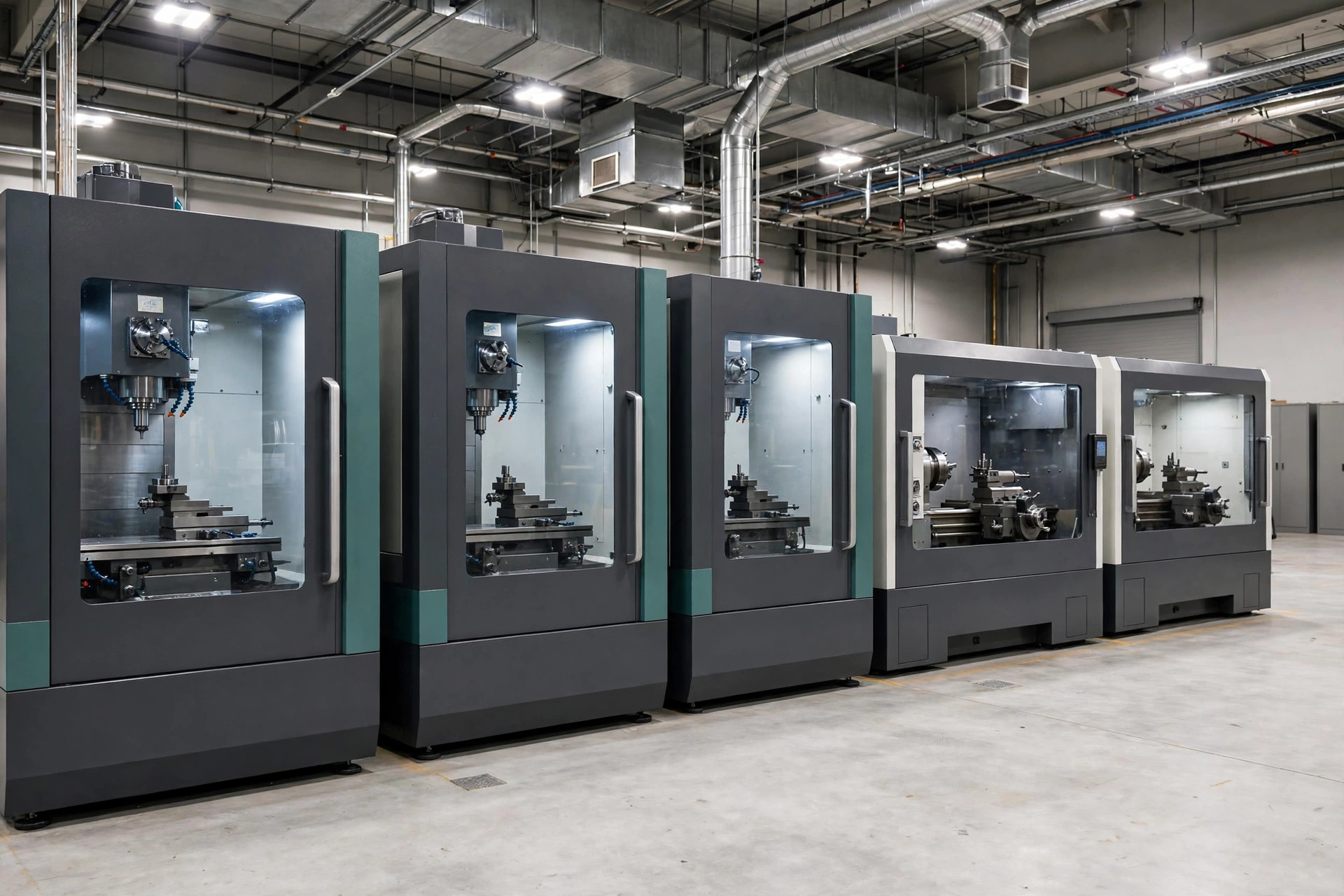
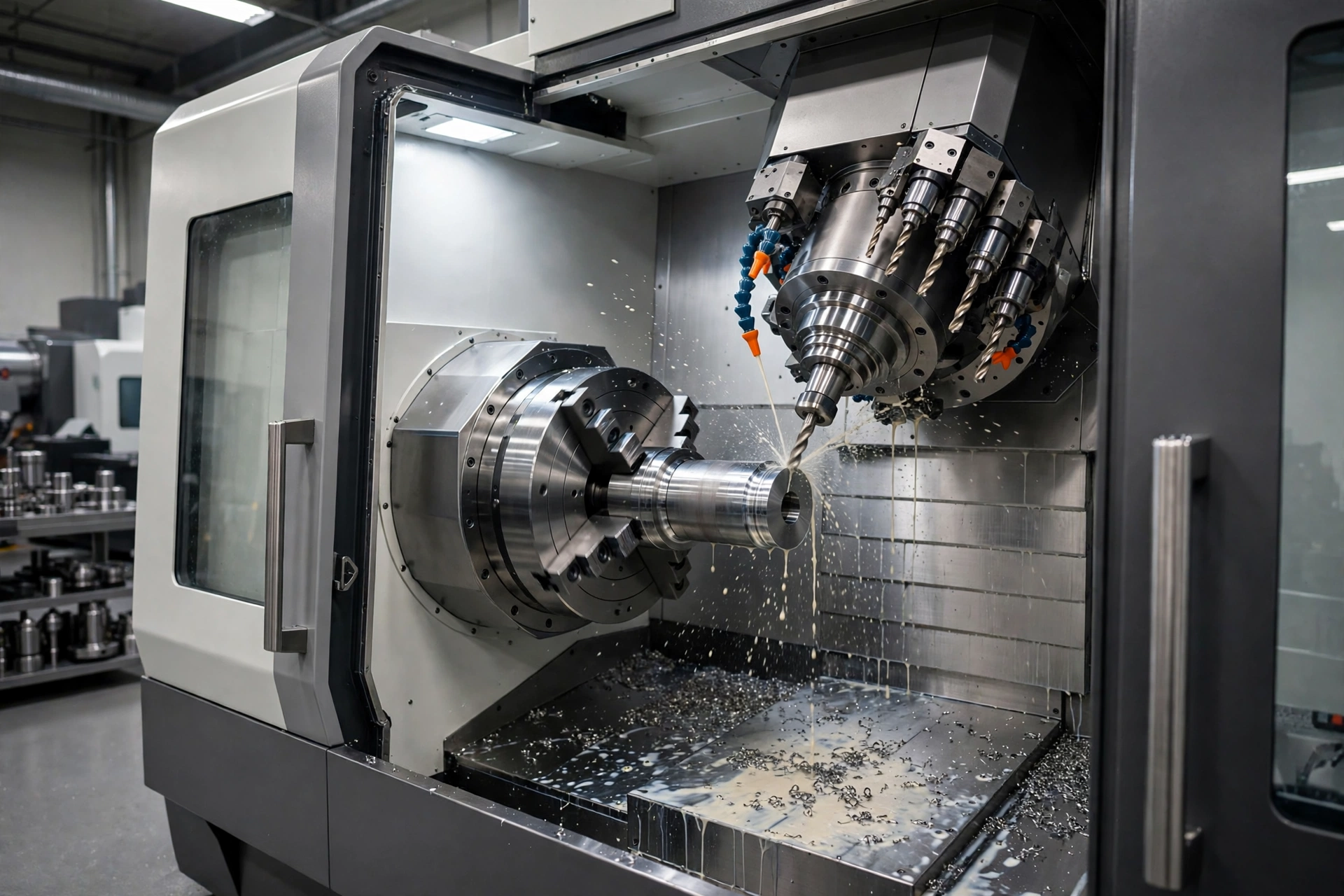
Un centro de torneado y fresado es un torno con un cabezal de fresado motorizado y, normalmente, un segundo husillo. La pieza gira para las operaciones de torneado; a continuación, la máquina detiene el husillo, indexa la pieza a un ángulo exacto y acciona una herramienta giratoria para fresar superficies planas, taladrar agujeros descentrados o cortar una ranura de chaveta, todo ello sin desmontar la pieza.
Las ventajas se acumulan rápidamente:
- One setup, one datum. Every feature is cut relative to the same reference, so concentricity and position error stay tiny.
- No re-fixturing labor. Moving a part between machines is human time, and human time is where cost and mistakes live.
- Shorter lead time. Fewer setups means fewer queue steps between machines.
- Better repeatability at volume. Once the program is proven, part 1 and part 5,000 look identical.
Para un proveedor de torneado de precisión, esta es la diferencia entre presupuestar un trabajo de 3 días y uno de 7 días a partir del mismo plano.
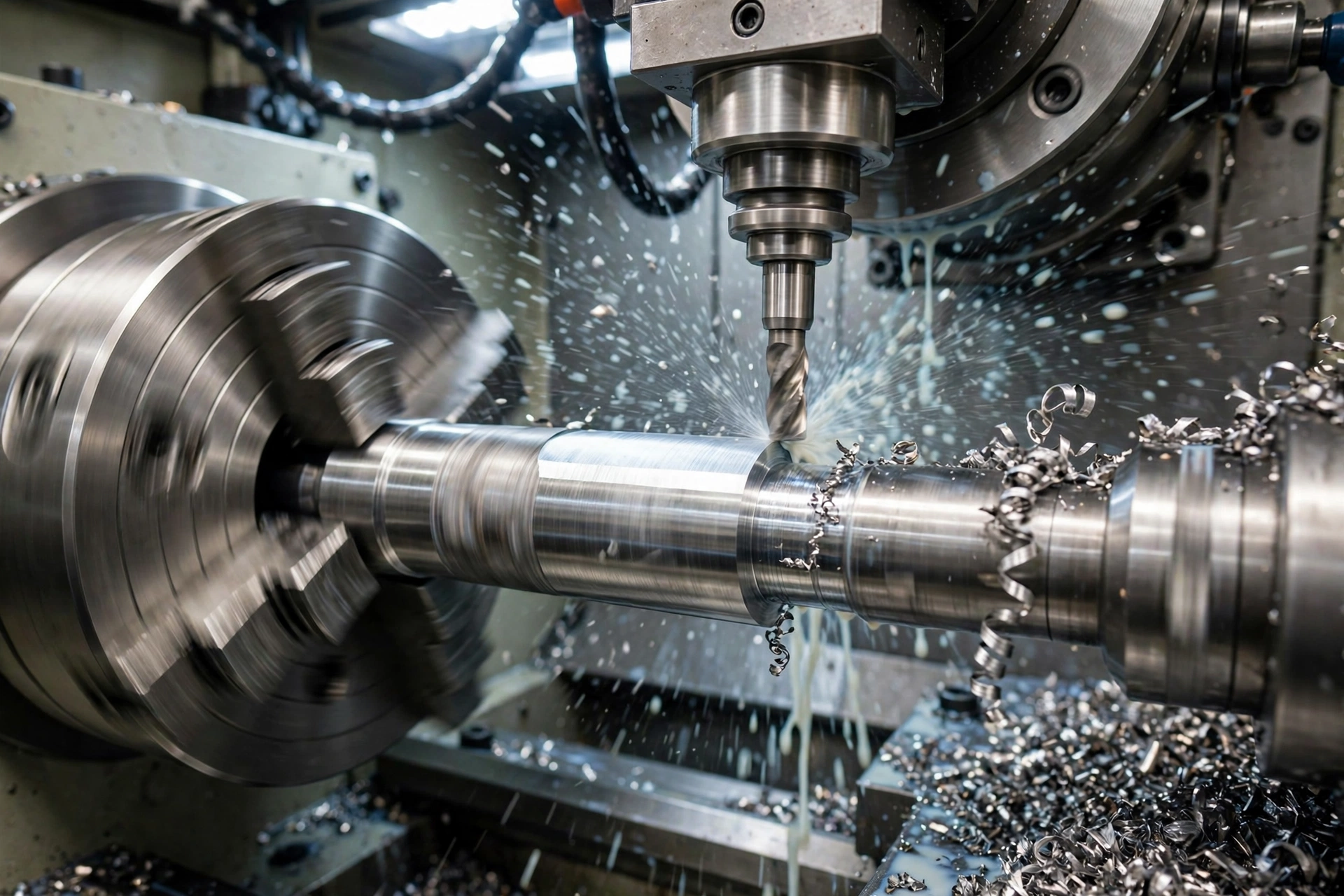
Una comparación realista de los costes y los plazos de entrega
Below is a representative comparison for a medium-complexity part — say, a threaded aluminum housing with a turned body and four milled side ports — at a quantity of 250. Numbers are illustrative and vary by geometry, material, and shop, but the shape of the difference is consistent with what we see on the floor.
| Enfoque | Configuraciones | Plazo de entrega estimado | Coste relativo por pieza | Riesgo de concentricidad |
|---|---|---|---|---|
| Torno independiente + fresadora independiente | 2 (reprogramado) | 6-8 días | Valor de referencia (100%) | Más alto |
| Torno-fresadora (máquina única) | 1 | 3-4 días | ~80–90% | Muy bajo |
| Solo torneado (parte rediseñada para evitar el fresado) | 1 | 2-3 días | ~70% | N/A |
La última fila es la que los compradores suelen pasar por alto: a veces, la opción más económica es un pequeño cambio en el diseño. Si un elemento fresado existe únicamente porque el diseñador original lo estableció por defecto, una breve conversación con el taller puede convertir una pieza de dos operaciones en una de una sola operación. Este es precisamente el tipo de enfoque de «diseño para la fabricación» que reduce el precio unitario. Trataremos este tema con más detalle en Cómo reducir los costes del mecanizado CNC.
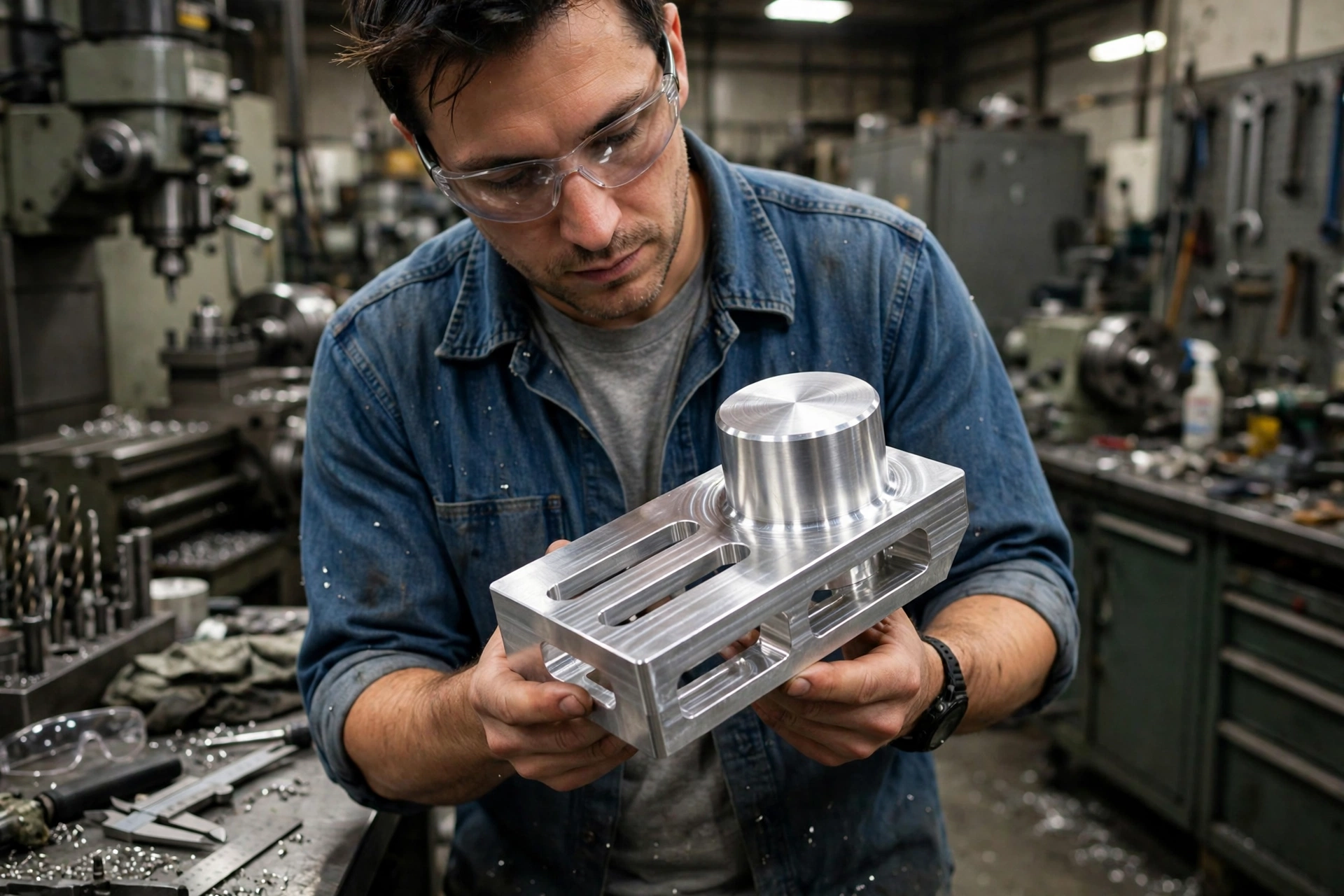
Cuando sigas queriendo tener dos equipos independientes
El torneado-fresado no siempre es la solución. Las máquinas especializadas pueden resultar más adecuadas cuando:
- Volumes are very high and geometry is simple. A plain turned pin at 100,000 pieces runs cheapest on a fast, dedicated lathe.
- Milling work is heavy and 5-axis. A complex impeller belongs on a full Mecanizado de 5 ejes centro, no un torno con cabezal de fresado.
- The turned and milled features have loose tolerances between them. If nothing needs to be concentric, the re-fixturing risk disappears and cost rules the decision.
Un buen taller te aconseja qué método se adapta mejor a tu diseño, en lugar de limitar todos los trabajos a una sola máquina.
Materiales: en qué se diferencian el fresado y el torneado
Material choice changes how each process performs. Free-machining brass and aluminum turn beautifully and mill cleanly. Stainless and titanium turn well but work-harden if the milling feeds are wrong, which is where an experienced operator matters more than the machine’s spec sheet.
| Material | Comportamiento en las curvas | Comportamiento durante el fresado | Notas |
|---|---|---|---|
| Aluminio 6061 | Excelente | Excelente | El valor predeterminado para los prototipos; véase 6061 frente a 7075 |
| Latón C360 | Excelente | Muy bien | El material más rápido de mecanizar |
| Acero inoxidable 303/304 | Bien | Moderado | Las máquinas 303 son mucho más fáciles que las 304 |
| Titanio Ti-6Al-4V | Moderado | Exigente | Avances lentos, herramientas afiladas, refrigerante abundante |
| Delrin / acetal | Excelente | Excelente | Ideal para piezas aislantes torneadas |
Cómo dar instrucciones a un taller para un trabajo de torneado y fresado
Para obtener un presupuesto preciso y rápido, facilita al taller:
- A STEP file plus a 2D drawing that calls out the critical dimensions — not every dimension, just the ones that matter for fit and function.
- Tolerances only where you need them. A blanket ±0.001 in on a whole part triples the price for no reason.
- Material and finish clearly stated, including any anodizado o galvanizado.
- Quantity and target date, so the shop can pick the right machine strategy.
Ese resumen de cuatro puntos es la herramienta más importante de la que dispones para controlar tanto los costes como los plazos de entrega.
Preguntas frecuentes
¿Es el torneado CNC más barato que el fresado CNC?
For round features, yes — turning removes material far faster than milling because the whole part is spinning. But comparing them in isolation misses the point. The real cost driver is how many setups your part needs. A part that is 90% round and 10% milled is cheapest on a mill-turn machine, because you pay for one setup instead of two. Judge cost by the finished part, not by the individual process.
¿Cuál es la diferencia entre una máquina de torneado y fresado y un torno con herramientas motorizadas?
Ambos conceptos se solapan y los términos se utilizan de forma imprecisa. Un torno con herramientas motorizadas puede accionar algunas herramientas giratorias para realizar fresados ligeros y taladrados transversales mientras la pieza está sujeta en el mandril. Un centro de fresado-torneado completo va más allá, ya que suele incorporar un eje Y, un segundo husillo para el mecanizado trasero y suficiente potencia de fresado como para utilizar la máquina casi como si fuera una fusión entre un torno y un centro de mecanizado. Para piezas complejas que requieren una sola configuración, el centro de fresado-torneado completo es la opción ideal.
¿Es realmente posible que una misma máquina mantenga la tolerancia tanto en los elementos torneados como en los fresados?
Sí, y precisamente por eso lo eligen los compradores. Como la pieza nunca sale del mandril, cada orificio y cada superficie plana fresados se refieren al mismo punto de referencia torneado. Los errores de concentricidad y de posición real que se producen al volver a fijar la pieza en una segunda máquina simplemente nunca se producen. Para cualquier aplicación en la que una característica fresada deba permanecer concéntrica con un orificio torneado, el mecanizado en una sola configuración es la opción más fiable.
¿Tengo que diseñar mi pieza específicamente para el mecanizado combinado de fresado y torneado?
No desde el principio, pero una breve revisión del diseño da sus frutos. Envía tu modelo al taller con antelación y pregunta si alguna característica obliga a realizar una operación adicional. Pequeños cambios —cambiar la ubicación de un orificio, ampliar una tolerancia no crítica, añadir un rebaje— pueden reducir una pieza de dos operaciones a una de una sola. Esa única conversación suele suponer un ahorro mayor que cualquier sustitución de material.
What is CNC milling and turning?
CNC milling and turning are the two core machining processes. Turning spins the workpiece against a fixed cutting tool to make round features — shafts, bores, threads — while milling spins the tool against a stationary part to cut flats, pockets, slots, and holes. Most real parts need both, which is why shops quote them together and why mill-turn centers finish both in one setup.
What is mill-turn machining?
Mill-turn machining is machining on a mill-turn center: a lathe with a powered milling head, usually with a second spindle, that turns and mills the same part in a single clamping. The part is never unclamped between operations, so every feature is cut relative to the same datum — that is what protects concentricity and cuts lead time.
What is the difference between CNC milling and turning?
The difference is what moves. In turning, the part rotates and the tool stays put, which is fastest for round features. In milling, the tool rotates and the part stays put, which is best for flats, slots, pockets, and complex 3D shapes. They are not competitors — they are two halves of the same job, and most parts need both.
Entonces, ¿qué configuración necesita tu pieza?
Milling and turning are not rival processes to pick between — they are partners. Turning gives you fast, precise round features; milling gives you flats, pockets, and holes.
The strategic decision is not which one, but how many setups your part needs, and whether a single mill-turn machine can finish it in one clamping. Get that right and you win on all three fronts buyers care about: tighter tolerances, lower cost, and shorter lead time.
Sobre el autor: Patrick Chen — Ingeniero de aplicaciones, XY Machining Patrick revisa los diseños de paredes delgadas para los equipos de ingeniería estadounidenses de XY Machining y colabora con el taller en el diseño de las fijaciones y las trayectorias de las herramientas que garantizan que las piezas delicadas se mantengan dentro de las tolerancias. Para someter a prueba de presión una pieza de pared delgada antes de elaborar el presupuesto, Envía tu modelo a nuestro equipo.