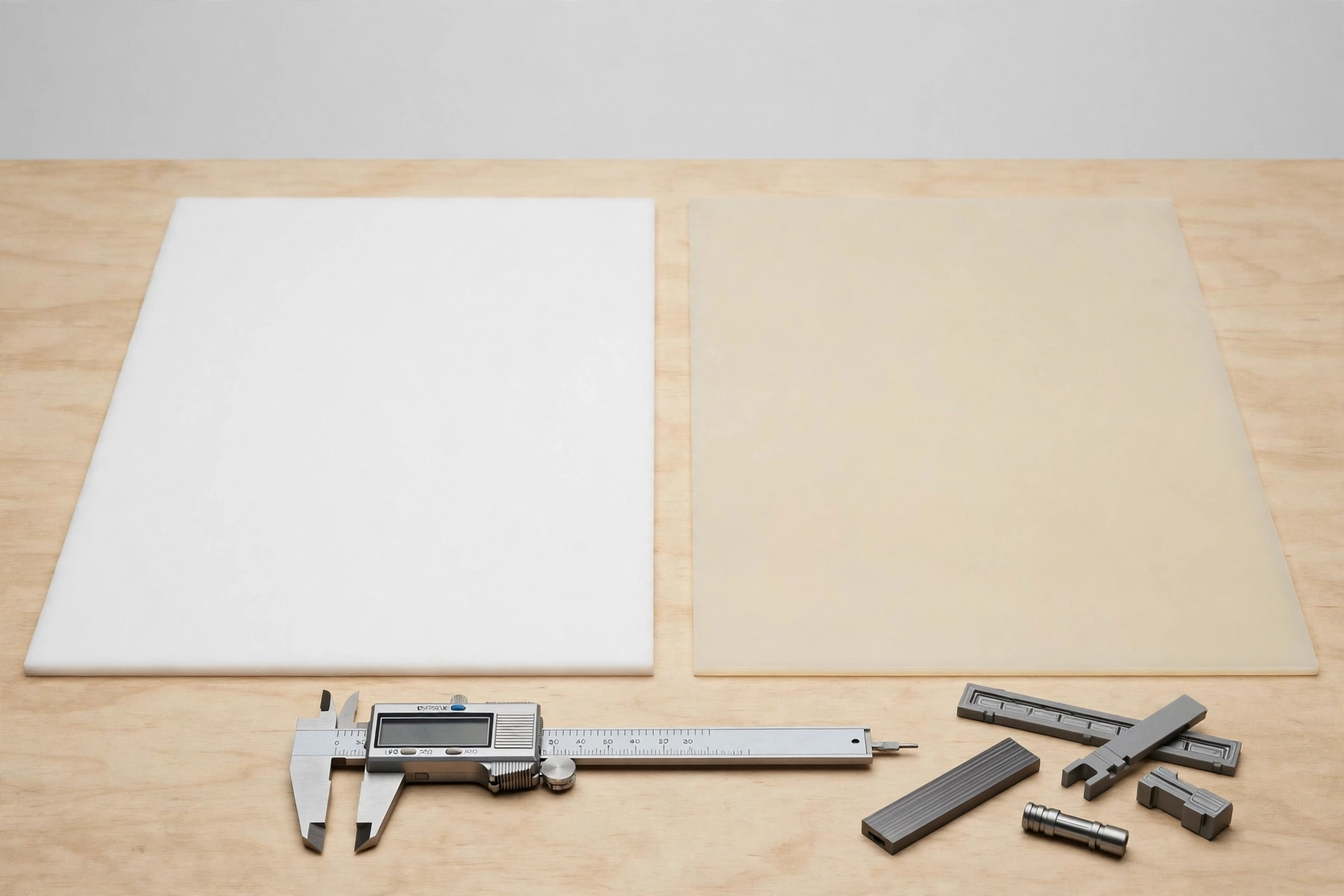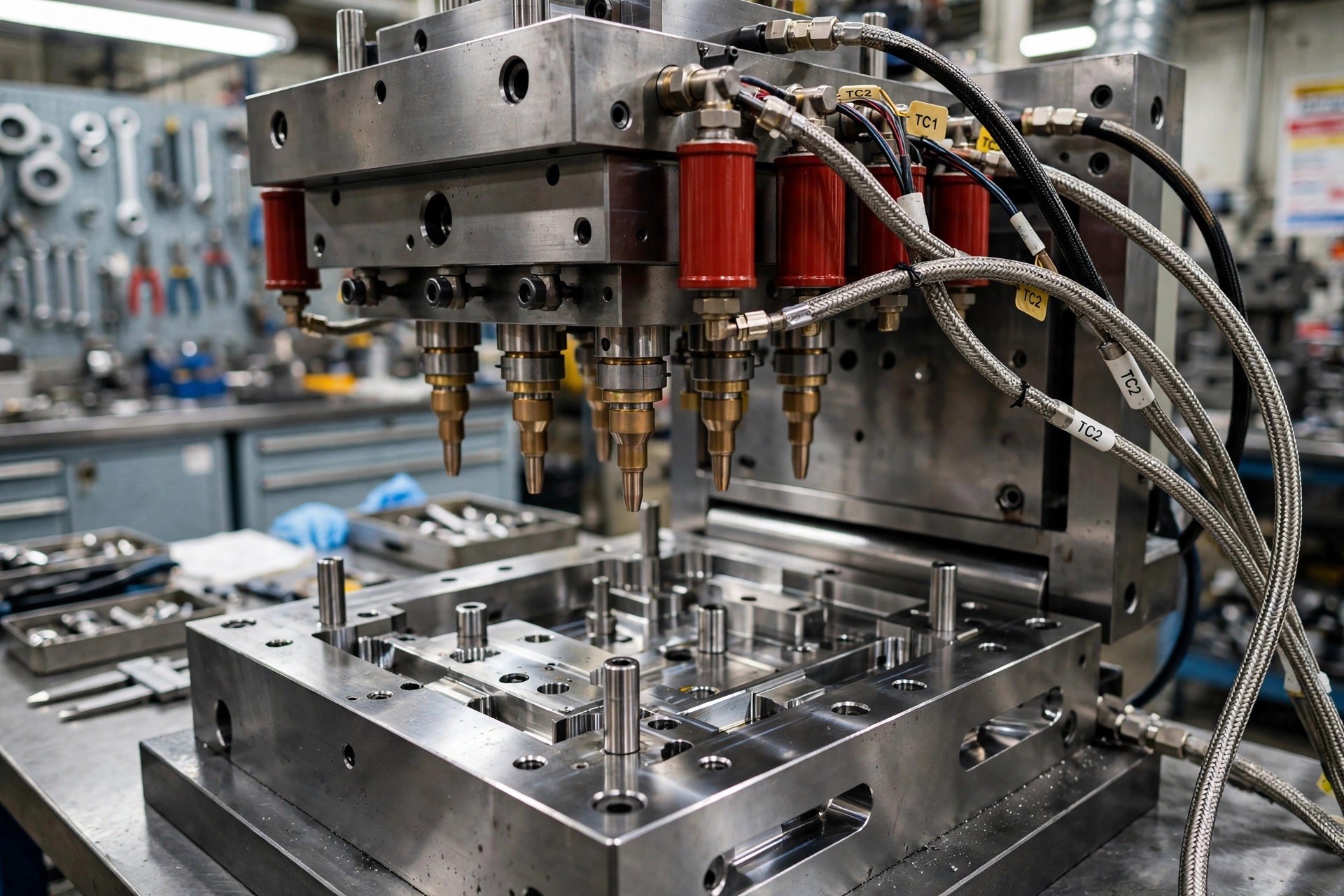
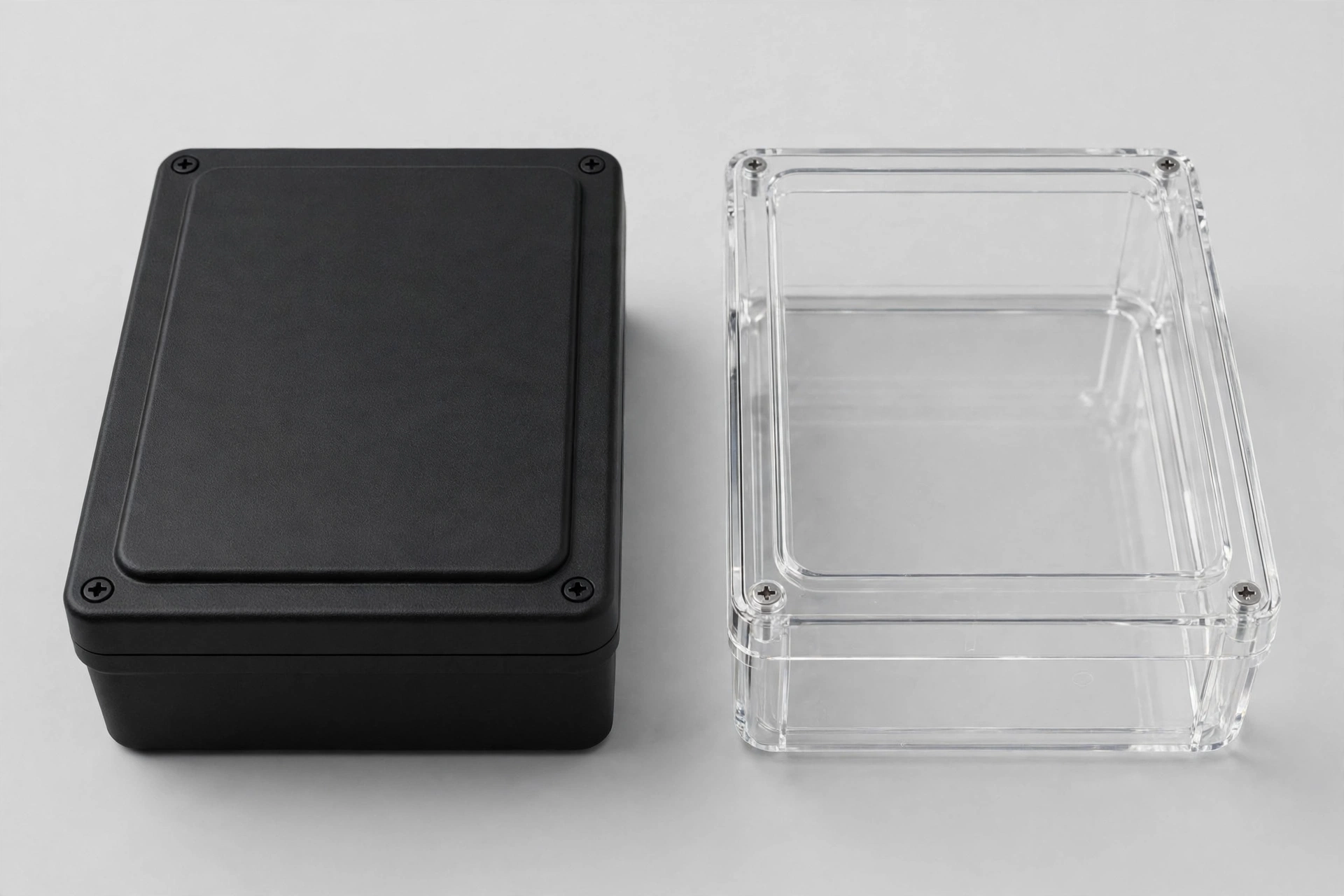
Choosing between ABS vs polycarbonate starts with what the part must survive, not with which plastic is more popular. Both are engineering thermoplastics used for housings, enclosures and covers, and both can be machined, molded or printed. The difference is how much impact, heat and cost each one brings to the job. See the full matériaux range to check how each grade fits alongside metals and other plastics.
Neither plastic wins every category. Polycarbonate is stronger, tougher and more heat resistant, while ABS is cheaper, easier to finish and easier to process. That trade off explains why the two are often used side by side, and why a blend of the two is so common.
What ABS Is
ABS stands for acrylonitrile butadiene styrene. It is made from three monomers, each adding a different trait. Acrylonitrile adds chemical resistance and hardness, butadiene adds impact resistance, and styrene adds rigidity and a smooth, glossy surface.
In practice, ABS is opaque, dimensionally stable and easy to mold, machine and paint. It is used for automotive interior panels, consumer electronics housings, electrical enclosures, toys and prototype housings. Its balance of toughness, finish and price makes it a default choice for everyday plastic parts.
What Polycarbonate Is
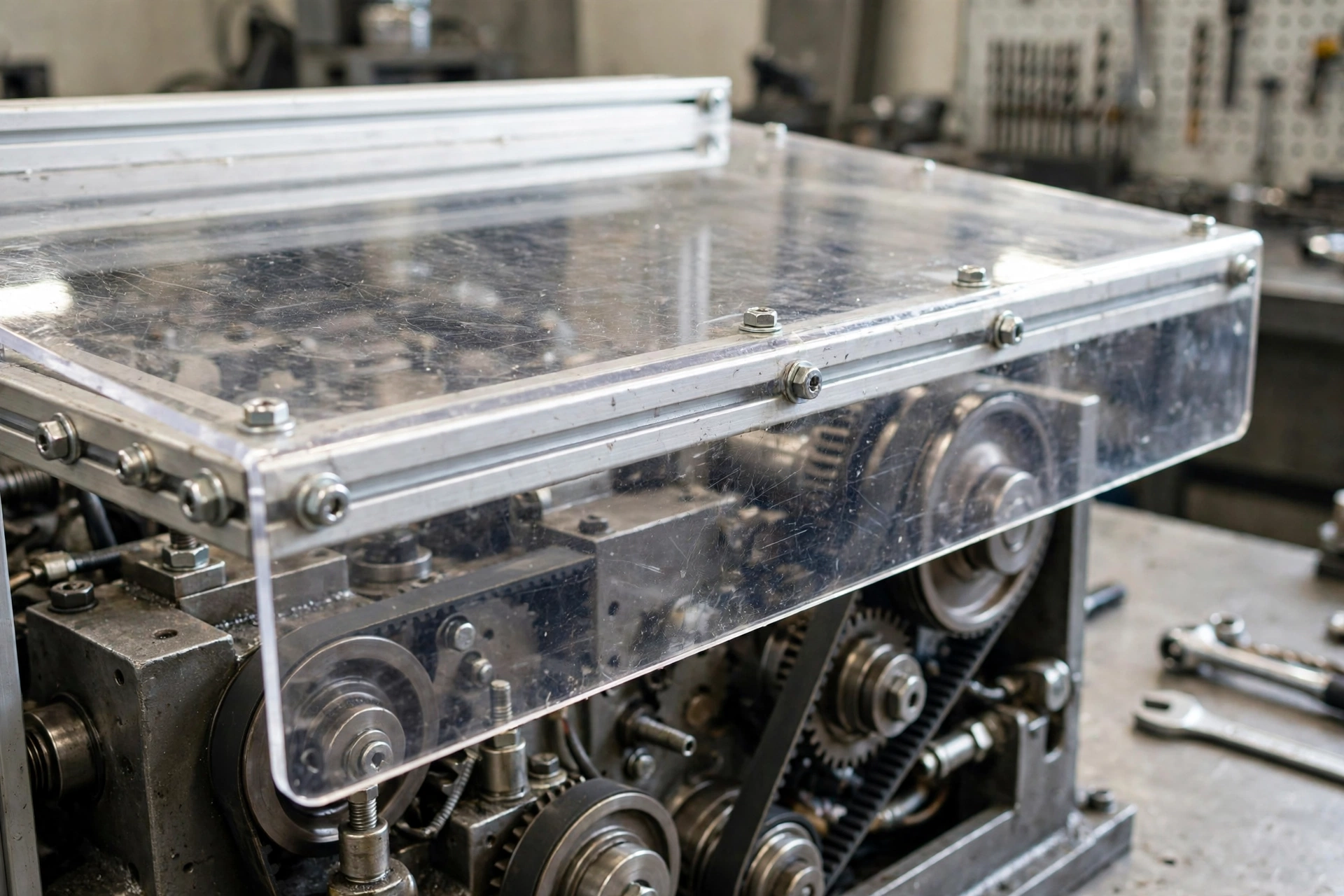
Polycarbonate, often shortened to PC, is a transparent thermoplastic known for toughness and optical clarity. It is used for safety shields, machine guards, light covers, lenses, sight glasses and transparent housings where a part must stay clear and resist impact at the same time.
A standard sheet grade transmits about 88 percent of light, according to the manufacturer data cited below. That clarity, combined with high impact strength, makes polycarbonate a practical glass alternative in many industrial and safety uses.
ABS vs Polycarbonate at a Glance
The table below puts the key published figures side by side. Grades vary, so treat these as typical values for standard grades, not guaranteed minimums for every supplier.
| Propriété | ABS | Polycarbonate |
|---|---|---|
| Résistance à la traction | 32 MPa | 62 MPa |
| Stiffness (modulus) | 1.7 GPa | 2.4 GPa |
| Densité | 1.04 g/cm3 | 1.20 g/cm3 |
| Heat deflection temperature | Lower than polycarbonate | 132 degrees C at 1.8 MPa |
| Clarity | Opaque | Transparent, about 88 percent light transmission |
| Relative material cost | Inférieur | About 50 percent more than ABS |
Polycarbonate vs ABS Strength
On tensile strength, polycarbonate leads clearly. The cited manufacturer comparison gives polycarbonate at 62 MPa and ABS at 32 MPa. Polycarbonate is also stiffer, at 2.4 GPa against 1.7 GPa for ABS, which matters for covers and panels that must not flex under load.
Impact behavior tells a similar story. Polycarbonate is noted for very high impact strength, with unnotched Izod samples not breaking in the cited data. ABS still offers good impact resistance for everyday use, and it is the right level of toughness for many housings that will never face a hard strike.
Polycarbonate vs ABS Heat Resistance
Heat is where the gap widens. Polycarbonate has a heat deflection temperature of 132 degrees C at 1.8 MPa in the cited sheet data. That is high for an unfilled plastic, and it explains why polycarbonate is used near lamps, motors and other warm components.
ABS softens at lower temperatures, which limits it in hot environments such as engine bays, lighting housings and parts left in direct sun inside a vehicle. Higher heat resistance also means higher processing temperatures for polycarbonate, so it often needs a heated chamber in printing to avoid warping.
Clarity, UV Resistance and Weathering
Clarity is a clear win for polycarbonate. It is naturally transparent, while ABS is opaque in its natural state. If a part needs a window, a lens, a sight glass or a light diffuser, polycarbonate is the only one of the two that can do the job without a separate clear insert.
Outdoor use is more mixed. ABS is reported to have higher natural ultraviolet resistance than polycarbonate, while polycarbonate needs a UV stabilized grade for long outdoor exposure. For an outdoor cover, ask for the UV stabilized grade rather than assuming standard polycarbonate will weather well.
Cost and Processing
Polycarbonate costs approximately 50 percent more than ABS, according to the cost comparison cited below. Pellet prices in that comparison are about 1.52 dollars per kilogram for standard polycarbonate and about 0.90 dollars per kilogram for standard ABS. Both are relatively inexpensive, but the gap adds up on large parts and high volumes.
ABS also tends to be cheaper to process, since its lower melting point reduces energy use and its surface takes paint well. Compare finished parts, not pellets: a thinner polycarbonate part that needs no extra guard can cost less over its life than a cheaper ABS part that cracks or warps.
PC ABS Blend: The Middle Path
A PC ABS blend combines polycarbonate and ABS into one material. It keeps much of the heat resistance and toughness of polycarbonate while keeping the easier processing and better surface quality of ABS. It is widely used for automotive parts, electronics housings and enclosures that need more than ABS alone.
The blend is also cheaper than polycarbonate alone, because adding ABS reduces the material cost per kilogram. If pure polycarbonate is overkill and pure ABS is not quite tough or heat resistant enough, a PC ABS grade is the first alternative to test.
ABS or Polycarbonate for Enclosures
For enclosures, the decision usually follows the environment. Indoor electronics enclosures with moderate impact risk suit ABS well. They are light, easy to finish, easy to modify and cheap to replace if a design changes.
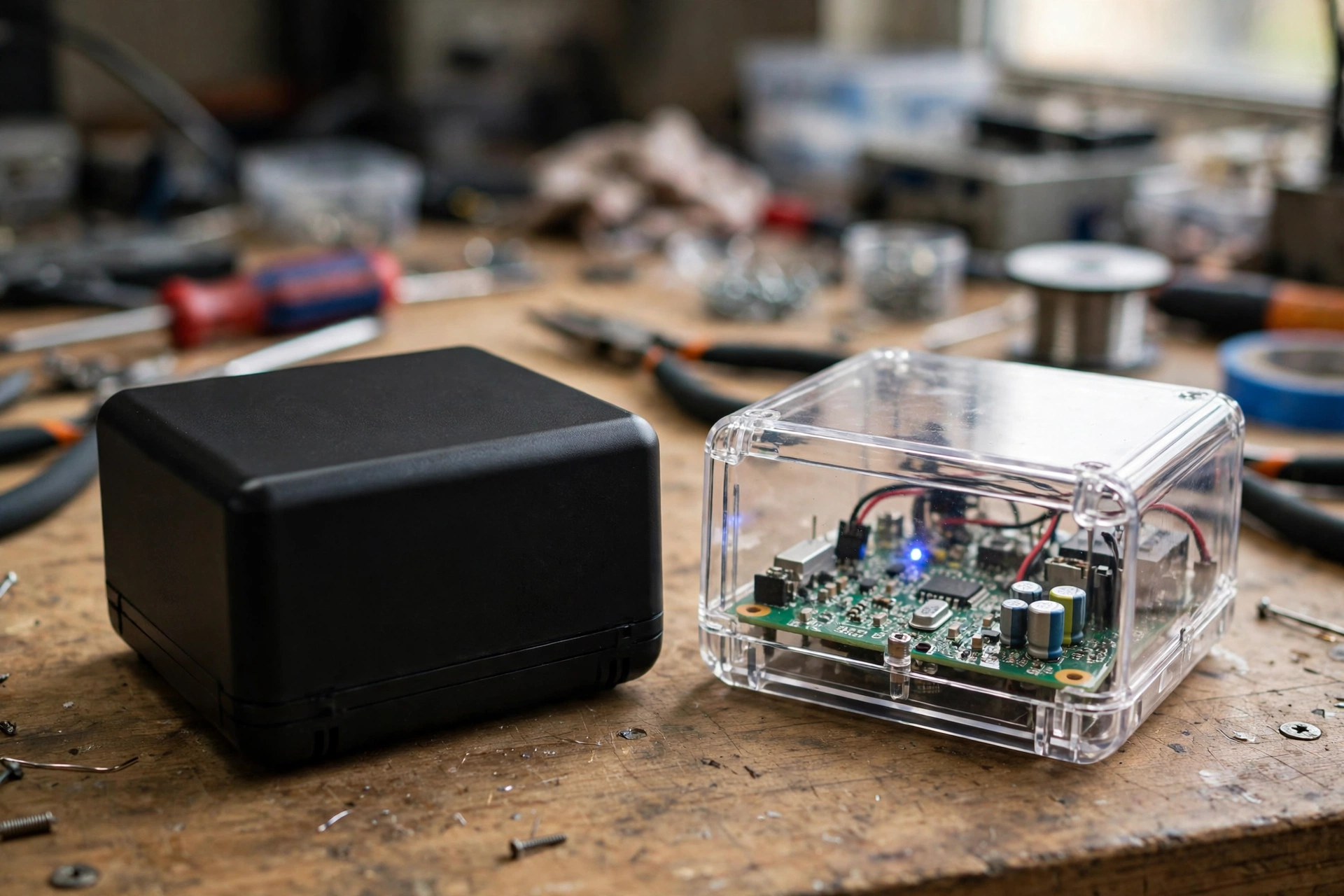
Outdoor, industrial or safety enclosures suit polycarbonate better. Transparent lids, inspection windows and covers that face impact, heat or rough handling benefit from its toughness and clarity. When an enclosure must be both clear and strong, polycarbonate is the practical choice.
ABS vs Polycarbonate Luggage
Luggage shows the trade off in everyday terms. ABS suitcases are generally cheaper and lighter, which suits travelers who value price and weight. Polycarbonate suitcases are generally tougher and more flexible under impact, which suits frequent travelers who want a case that survives rough handling.
The same logic applies to helmets and tool cases: frequent drops favor polycarbonate, gentle handling favors ABS. Design and thickness matter as much as the base plastic.
Disadvantages to Watch
ABS softens at lower temperatures than polycarbonate, it is opaque, and it can scratch and warp if a design ignores its heat and stress limits. Polycarbonate scratches more easily unless coated, it can stress crack when certain chemicals meet a part under tension, and it breaks down slowly in hot water and steam.
How to Choose in Practice
Start with the hardest requirement, not the cheapest material. If the part needs clarity, high impact strength or high heat resistance, start with polycarbonate and test whether ABS could still pass. If none of those apply, start with ABS and spend the saving on better finishing or a design improvement.
When the choice is close, prototype in both materials if the budget allows. A printed or machined sample will show finish, flex and fit far better than a data sheet alone. For Impression 3D prototypes, note that polycarbonate needs higher temperatures and better chamber control than ABS. For production, moulage par injection settings differ between the two, so a prototypage rapide run in the production material is the safest confirmation.
Conclusion
Polycarbonate wins on strength, impact, heat and clarity. ABS wins on cost, ease of processing and surface finish. A PC ABS blend sits between them and is often the best compromise for enclosures and housings. Match the material to the hardest job the part will face, and the right choice usually becomes clear.
Sources: Xometry, Polycarbonate vs. ABS et ArpTech, Polycarbonate (PC) CNC Machining, citing the SABIC LEXAN 9034 sheet data sheet.
Foire aux questions
Which is better, ABS or polycarbonate luggage?
Polycarbonate luggage is usually tougher and more flexible under impact, which suits frequent travel and rough handling. ABS luggage is usually cheaper and lighter, which suits occasional travel and tight budgets. The best choice depends on how often the case travels and how much rough handling it will face.
Which material is better, polycarbonate or ABS?
Neither material is better in every case. Polycarbonate is better for strength, impact resistance, heat resistance and clarity. ABS is better for low cost, easy processing and a smooth painted finish. Choose polycarbonate for demanding parts and ABS for simple indoor parts where cost matters most.
What are the disadvantages of ABS plastic?
ABS softens at lower temperatures than polycarbonate, it is opaque, and it can warp or scratch if the design ignores its heat and stress limits. It also relies on petrochemical feedstocks, and recycling access varies by location. For hot, clear or high impact parts, ABS is often the wrong starting material.
What is a major disadvantage of polycarbonate sheets?
A major disadvantage is scratching and chemical sensitivity. Polycarbonate can scratch unless it has a hard coating, and it can stress crack when solvents or strong alkalis meet a part under tension. It also costs more than ABS and needs UV stabilization for long outdoor use.
Can polycarbonate stop a bullet?
A standard polycarbonate sheet cannot stop a bullet. Bullet resistant glazing uses thick, laminated assemblies that are tested to a specific threat level, not a single consumer sheet. Do not treat any ordinary polycarbonate panel as bulletproof, and always check the tested rating for the complete assembly.