Choosing between thermoplastic vs 熱硬化性 plastics is one of the first material decisions in a plastic part project, and it affects everything downstream: the manufacturing process, the tooling, the service temperature and whether production scrap can be recycled. The two families behave in opposite ways when heated. A thermoplastic softens and melts every time it is reheated, so it can be molded, extruded and reprocessed repeatedly.
A thermoset, once cured, is permanently set: reheating it will not melt it, and enough heat will char or degrade it instead. This guide explains the chemistry behind that difference, compares the properties that matter in production, and gives you a practical method for choosing. For production parts, the choice usually points to プラスチック射出成形 or another molding process, so getting it right early saves tooling rework.
The Core Difference: Cross-Linking vs. Reversible Melting
Both families are polymers: long chains of repeating molecules. The difference in the thermoset vs thermoplastic comparison is what connects those chains. In a thermoplastic, the chains are largely independent. They are held together only by weak intermolecular forces, so heat gives the chains enough energy to slide past each other and the material flows. Take the heat away and it solidifies again, with no chemical change. That reversibility is the defining thermoplastic trait.
Thermosetting plastics start as liquid resins or soft prepolymers. During curing, triggered by heat, pressure or a catalyst, the chains form strong covalent bonds called cross-links, locking them into a rigid three-dimensional network. Curing is a one-way chemical reaction. The finished part cannot be melted back down, because separating the chains would require breaking the network itself. In short: thermoplastics melt, thermosets set.
Thermoplastic vs. Thermoset: Side-by-Side Comparison
The table below summarizes the differences engineers check most often when specifying a plastic part.
| プロパティ | Thermoplastic | Thermoset |
|---|---|---|
| Molecular structure | Linear or branched chains, no cross-links | Dense 3D network of covalent cross-links |
| Behavior when heated | Softens and melts; solidifies on cooling | Does not melt; chars or degrades at high heat |
| Remolding and recycling | Can be remelted, reshaped and mechanically recycled | Cannot be remelted; ground into filler or discarded |
| Heat resistance | Moderate; softens above its heat deflection temperature | High; holds shape and strength at elevated temperatures |
| Strength and stiffness | Good; typically tougher and more impact-resistant | Very good; rigid, hard and creep-resistant, but more brittle |
| 耐薬品性 | Varies by grade; some dissolve or craze in solvents | Excellent; cross-linked network resists solvents and swelling |
| Typical cost | Low to moderate per part at volume; regrind lowers waste cost | Resin often inexpensive, but slower cure cycles raise part cost |
| Common processes | Injection molding, extrusion, thermoforming, FDM 3D printing | Compression molding, transfer molding, casting, lamination |
| Examples | ABS, polycarbonate, nylon, polypropylene, polyethylene, PVC | Epoxy, phenolic (Bakelite), melamine, silicone, polyurethane |
Two practical consequences follow from this table. First, cost: thermoplastic molding wastes little material and cycles quickly, so it usually wins on price at volume, while thermosets trade longer cure times for performance. Second, end of life: a thermoplastic part can re-enter production as regrind, but a thermoset part leaves the process permanently once cured.
Strength, Heat Resistance and Chemical Resistance
Thermosets are generally the stronger, stiffer family. The cross-linked network resists deformation under load, so thermoset parts creep far less than thermoplastic parts, especially when warm. That is why thermosets are trusted for parts that must hold dimensions near engines, motors and heating elements. Most thermoplastics, by contrast, soften as they approach their heat deflection temperature and slowly deform under sustained load, although high-performance grades such as PEEK narrow this gap considerably.
The trade-off is toughness. Many thermoplastics absorb impact without cracking, while cured thermosets are hard but comparatively brittle. On chemical resistance, the cross-linked network cannot be dissolved or swollen easily, so thermosets handle solvents, oils and fuels well. Thermoplastics vary widely: polyethylene and polypropylene resist most chemicals, while ABS can be attacked by certain solvents and polycarbonate can stress-crack around alkalis and cleaning agents.
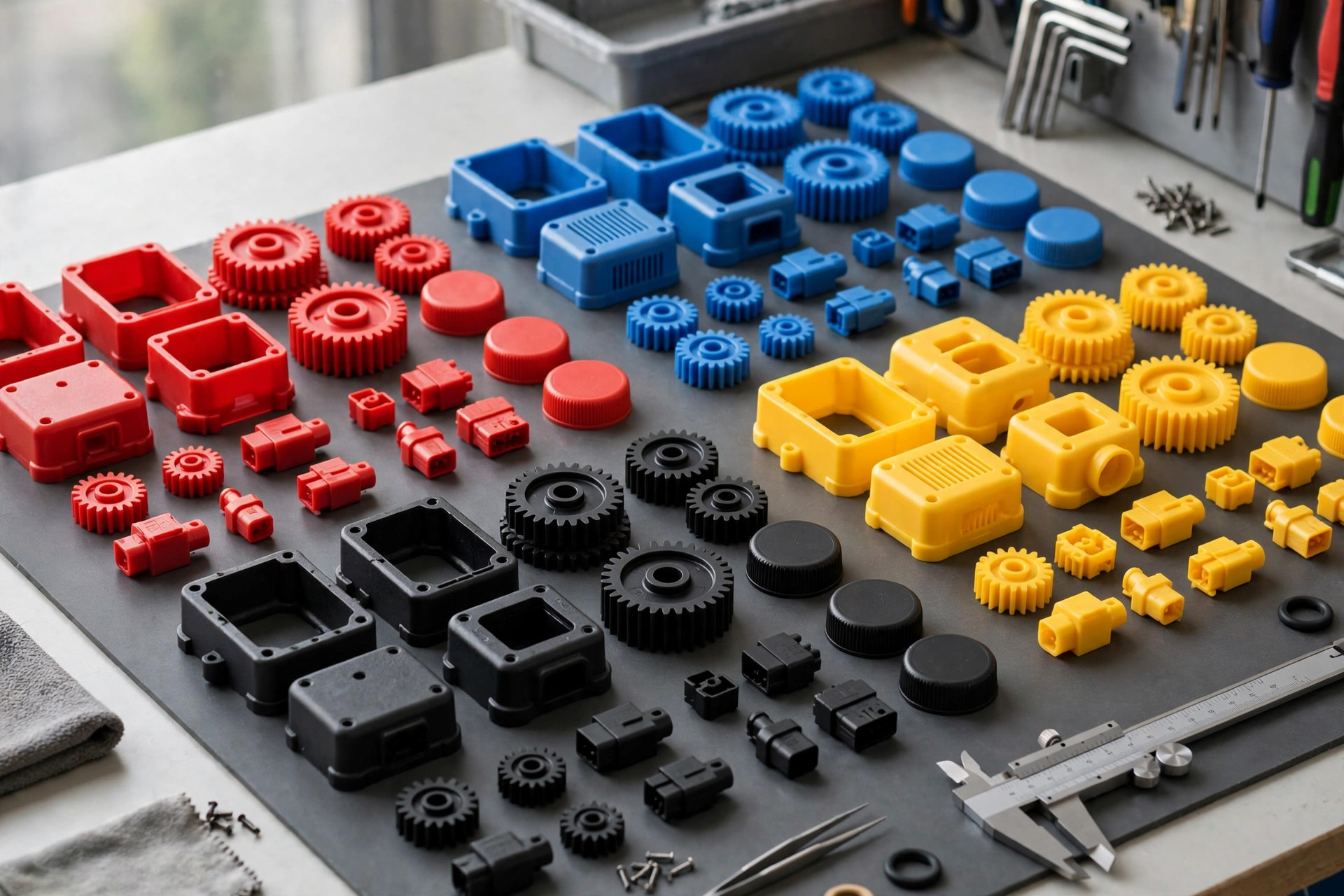
Examples of Thermoplastics and Where They Are Used
Examples of thermoplastics cover most of the plastic parts you handle daily. ABS is the default for enclosures, housings and consumer products because it is tough, easy to mold and easy to finish. Polycarbonate adds transparency and very high impact strength, so it appears in lenses, machine guards and medical components. Nylon (polyamide) is the engineering choice for gears, bearings and clips thanks to its wear resistance.
Polypropylene brings chemical resistance and living-hinge flexibility to containers, caps and automotive trim, while polyethylene in its HDPE form serves tanks, bottles and cutting boards. PVC dominates pipe and cable insulation, and PET is standard for bottles and food packaging.
Thermosetting Plastic Examples and Where They Are Used
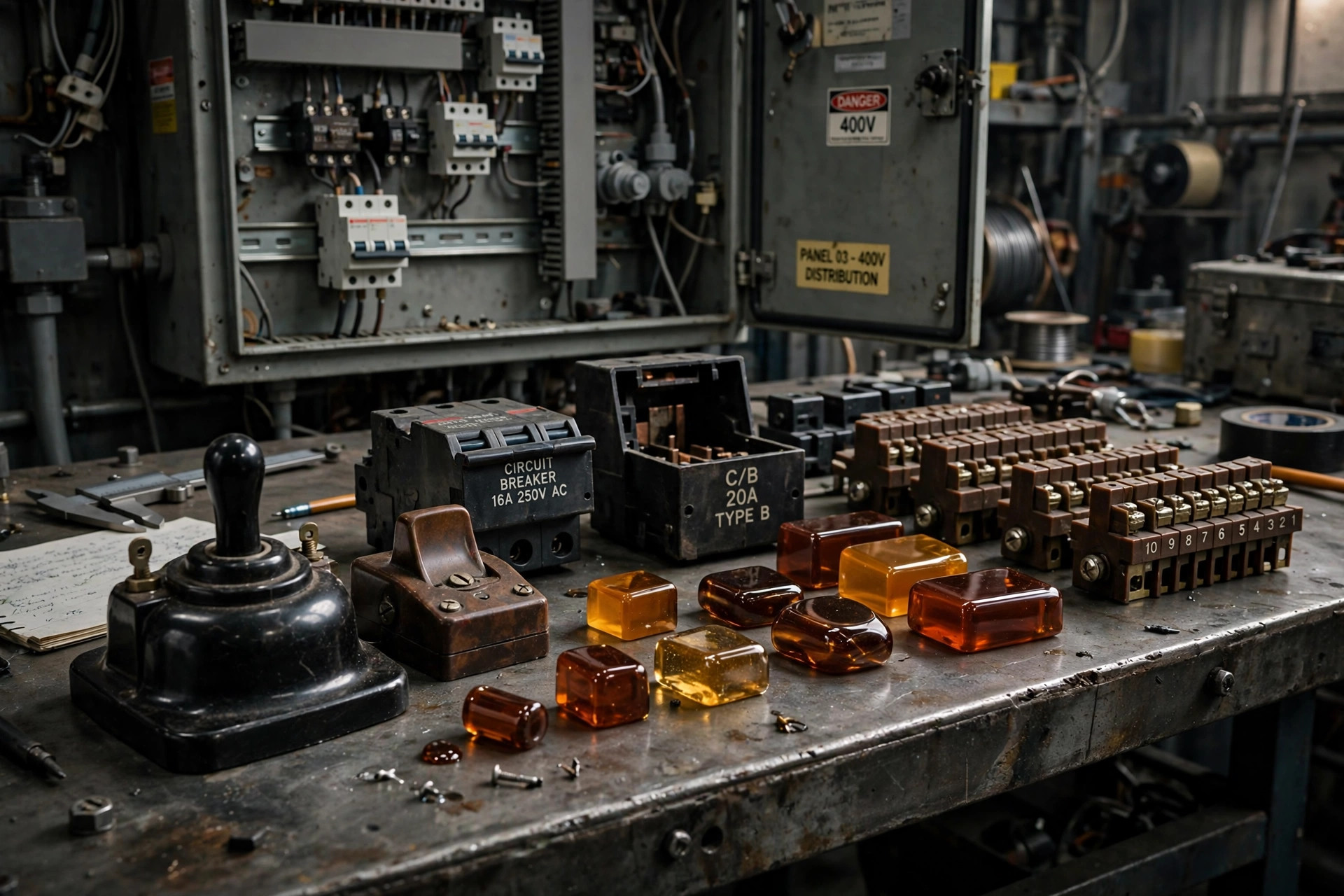
Thermosetting plastic examples are chosen where heat, electricity or chemicals would defeat a thermoplastic. Epoxy resins are used in structural adhesives, protective coatings, aerospace composites and the FR4 laminate inside printed circuit boards. Phenolic resin, best known as Bakelite, insulates electrical switchgear, distributor caps and cookware handles. Melamine-formaldehyde gives kitchen laminates and dinnerware their hard, scratch-resistant surface.
Silicone rubber, a cross-linked elastomer, stays flexible across a wide temperature range and is used for seals, gaskets, medical tubing and bakeware. Thermoset polyurethane appears in rigid foams, durable coatings and cast elastomer wheels, and unsaturated polyester reinforced with glass fiber forms boat hulls and body panels.
Which Manufacturing Processes Use Which?
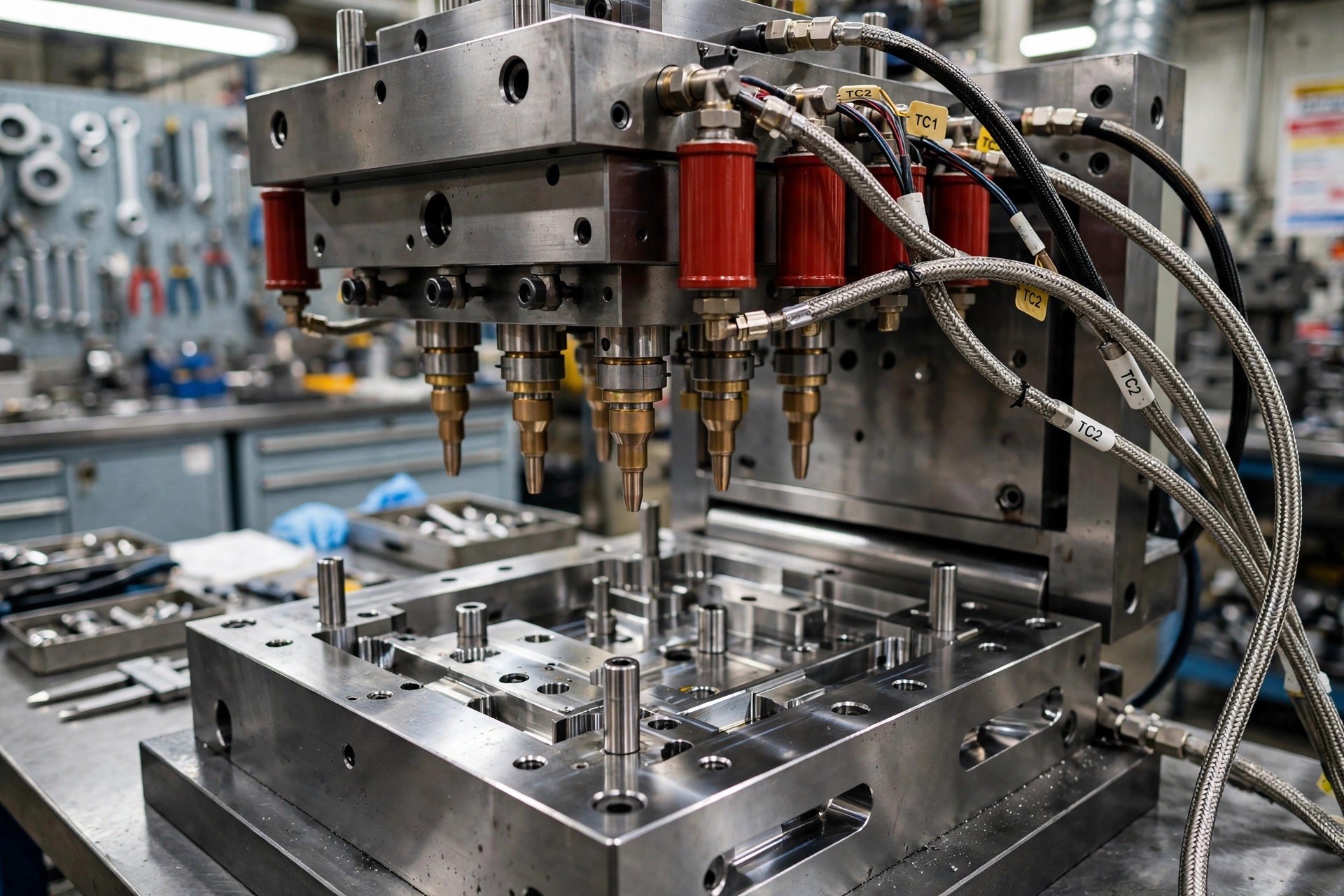
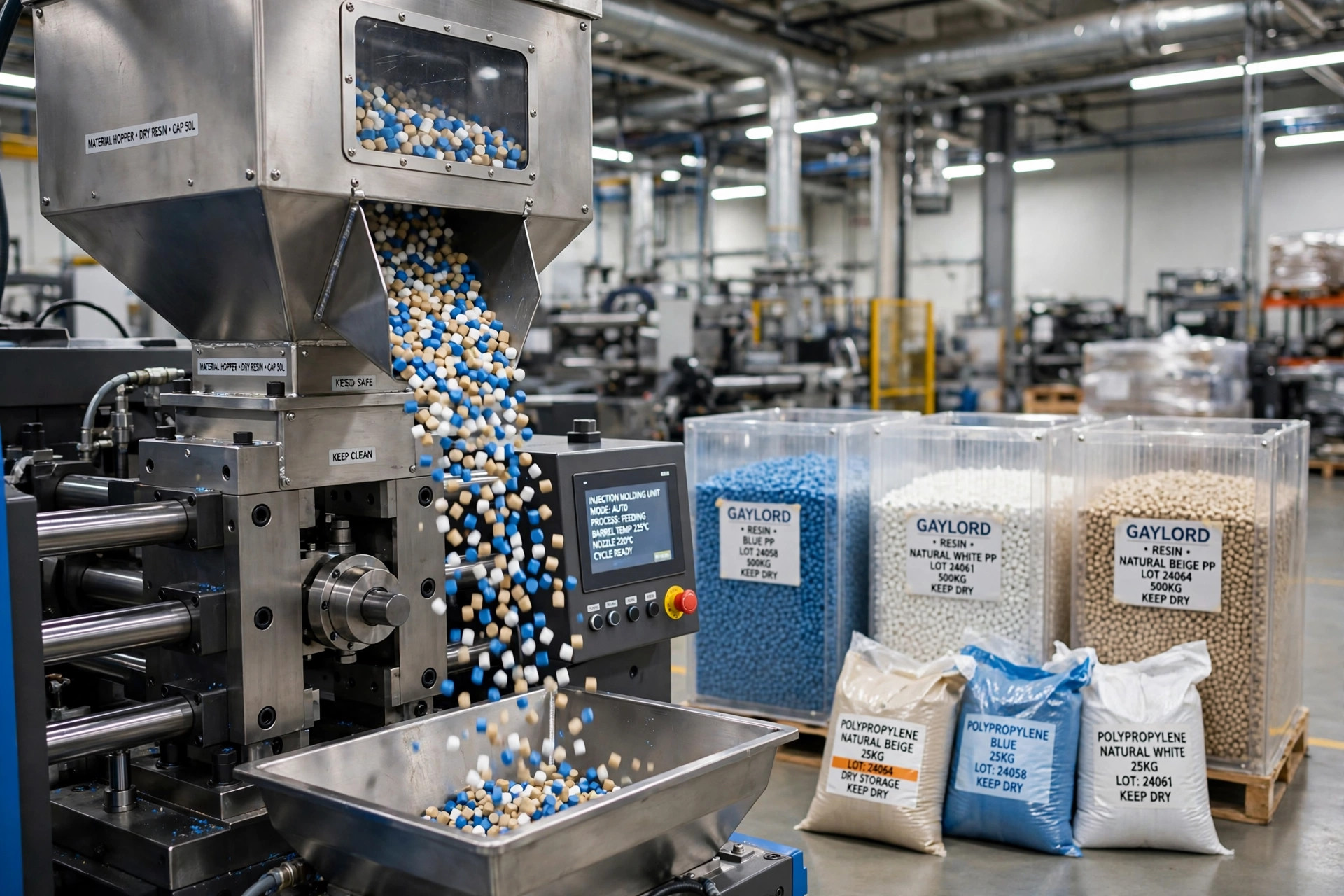
Most high-volume plastic production runs on thermoplastics. In プラスチック射出成形, pellets are melted and injected into a steel mold in cycles measured in seconds, which keeps per-part cost low. Extrusion, blow molding and thermoforming are also thermoplastic-only processes. For high-volume runs, 射出成形 remains the default process for thermoplastics.
Thermosets are molded differently: compression molding and transfer molding cure the material inside a heated mold, resin casting cures it in a silicone tool, and liquid silicone rubber is injection molded with a curing cycle rather than a cooling cycle.
CNC Machining and 3D Printing
CNC machining works with both families. Shops machine thermoplastics from sheet, rod and tube stock for prototypes and low-volume parts, and they also machine cured thermoset laminates such as G10 and FR4 for insulators and fixtures. In 3D printing, the split follows the chemistry: FDM printers melt thermoplastic filament and SLS sinters thermoplastic powder, while SLA and DLP printers use liquid photopolymer resins that cure into cross-linked, thermoset-like solids.
When XY Machining quotes a plastic part, the thermoplastic or thermoset decision usually comes first, because it determines which of these processes are even available.
Key Differences Between Thermoplastics and Thermosets
The difference between thermoplastics and thermosetting plastics is the difference between a thermoplastic and thermoset at the molecular level. Thermoplastic polymers consist of separate chains, while thermosetting polymers form a network, and that contrast defines thermoplastic and thermoset plastic behavior in every process.
Thermoplastics and thermosetting plastics are the two types of plastics every buyer meets first, and thermosetting plastics and thermoplastics differ in one decisive way: thermosetting and thermoplastic chains either stay independent or lock together. A thermoset plastic is a single type of plastic whose chains cross-link during the curing process, when the application of heat and pressure triggers the reaction.
Curing, Melting and Recycling
Once thermoset plastics undergo that reaction, the change is irreversible: the chains cannot slide apart again, so a thermoset plastic part keeps its shape even at high temperatures.
That chemistry decides what happens at the end of a part’s life. Thermoplastics can be melted and thermoplastics can be processed again, which is why manufacturers recycle production scrap and recycle sprues and runners instead of discarding them. A thermoplastic is recyclable in the practical sense: grind it, melt it, mold it again, and reshape it into a new part.
Grades, Heating and Cooling
Thermoplastics soften when heated and thermoplastics are generally easy to rework, because thermoplastics are widely used and thermoplastics are commonly used across the plastics industry. Thermoplastics are a type of material that engineers specify by grade, and thermoplastics are a class of their own among engineering plastics. Thermoplastics include polyethylene, polypropylene, ABS and nylon, and thermoplastics include polyethylene grades for tanks and bottles as well as thermoplastic polyurethane for flexible parts.
Thermoplastics and thermosets behave differently when heated: thermoplastics soften when heated, while thermosets do not melt at all. Thermosets do not melt, they char, which is why thermoset materials suit engine bays and electrical housings. To cool a thermoplastic part, you simply cool the mold and eject it; to cool a thermoset part, you wait for the cure to finish inside the mold.
Applications and Polymer Classes
Applications of thermoplastics range from packaging to automotive trim, and thermoplastic products fill most of the plastics form factors buyers see daily. Thermoplastics are used wherever rework matters, and materials are used in thermoset grades wherever heat matters. In a thermoplastics vs thermosets comparison, two examples make the split clear: a polyethylene bottle that can be remelted, and a Bakelite switch plate that cannot.
One more comparison helps buyers choose. A thermoset polymer is best understood as a class of polymer defined by its cured network, while a thermoplastic polymer is a class of polymer defined by chains that can move. A thermoset plastic part and a thermoplastic part may look identical, but only the thermoplastic can be reground to recycle scrap into new parts, so plants that recycle daily favor thermoplastics.
Stiffness and the Buyer’s Choice
During molding, chains cross-link only in the thermoset, and the cross-link network is what gives the part its heat resistance. Common types of thermoplastics include a common thermoplastic such as polypropylene alongside engineering grades, and unlike metals, plastics like thermoplastics soften when heated. Plastics also differ in stiffness once cured: phenolic becomes a plastic rigid material that holds its shape under heat.
For a buyer, the practical question is which type of polymer fits the job. So what’s the difference in practice? Each polymer belongs to the thermoplastic and thermosetting families, and a polymer chain either melts or sets. A thermosetting material such as an epoxy resin gives a composite panel its stiffness, while a thermoplastic material such as nylon gives a gear its toughness.
Molds and Heating in Service
The difference between thermoplastics and thermosetting grades shows up in the mold: the mold opens quickly for a thermoplastic, while the mold holds a thermoset until curing ends, and the mold itself must tolerate the full curing cycle. Thermoset and thermoplastic materials also differ in consumer goods: a thermoplastic housing survives a drop, while a thermoset housing survives an oven.
When plastics undergo heating in service, thermoplastics soften and thermosets hold, so match the family to the temperature, the load and the chemical exposure before you commit to tooling.
Thermoplastic vs. Thermoset: How to Choose
Choose a Thermoplastic If…
- You need high volumes at the lowest possible per-part cost, with fast molding cycles.
- Recycling matters: sprues, runners and rejected parts can be reground and run again.
- The part needs impact toughness, flexibility or a living hinge rather than maximum rigidity.
- Service temperatures are moderate and the part will not carry heavy loads while hot.
- You want to weld, thermoform or otherwise rework the material after molding.
Choose a Thermoset If…
- The part works near sustained heat from engines, motors, lighting or electronics.
- Dimensional stability under load is critical and creep cannot be tolerated.
- The part faces solvents, fuels, oils or aggressive chemicals in service.
- You need electrical insulation that keeps its properties at high temperature.
- A hard, rigid, scratch-resistant surface matters more than impact toughness.
If your part sits on the boundary, compare specific grades rather than families: a glass-filled nylon or PEEK part can outlast a generic thermoset in some hot, loaded applications, and a toughened epoxy can survive impacts that crack standard phenolic. Share the operating temperature, loads and chemical exposure with your manufacturer, and the right family usually becomes obvious.
よくある質問
What is the difference between thermoset and thermoplastic?
The difference comes down to molecular structure. Thermoplastics consist of separate polymer chains that soften and melt when heated, so they can be reshaped and recycled repeatedly. Thermosets form permanent cross-links between chains during curing. Once cured, a thermoset cannot be remelted; extreme heat degrades or chars it instead of melting it.
Is PVC a thermoset or thermoplastic?
PVC (polyvinyl chloride) is a thermoplastic. It softens when heated, so it can be extruded into pipe, thermoformed into trays and welded or solvent-bonded during installation. Rigid PVC pipe, vinyl flooring and cable insulation are all thermoplastic applications. Only specially modified, cross-linked PVC variants behave differently, and they are the exception.
What is an example of a thermoset?
Bakelite, a phenolic resin, is the classic example: it is used for electrical switchgear, distributor caps and pan handles because it insulates well and keeps its shape near heat. Other common thermosets include epoxy resins in adhesives and circuit boards, melamine in kitchen laminates, and silicone rubber in seals and bakeware.
What are the disadvantages of thermoplastics?
The main disadvantages are heat and creep. Most thermoplastics soften at temperatures thermosets tolerate easily, and they gradually deform (creep) under sustained load, especially when warm. Some grades are attacked by solvents or stress-crack around chemicals, and many need UV stabilizers outdoors. High-temperature exceptions like PEEK exist but cost considerably more.
Can thermoset plastics be recycled?
Not by remelting. Because curing creates permanent cross-links, a thermoset part cannot be melted down and molded again. End-of-life options are limited to grinding it into filler, energy recovery through incineration, or newer chemical recycling routes that are not yet widespread. This is a key sustainability advantage for thermoplastics.