El conformado de chapa convierte una lámina plana en una pieza tridimensional mediante la aplicación de fuerza para deformar el material de forma permanente, sin añadir ni eliminar metal. La gama de procesos es amplia: el plegado da forma a la chapa a lo largo de una línea; el estampado corta y da forma a geometrías complejas en una o varias pasadas; el embutido profundo estira y redistribuye el material para crear formas huecas, similares a copas; el perfilado por rodillos hace pasar una banda continua a través de una serie progresiva de rodillos para producir un perfil de sección transversal uniforme; y las operaciones de corte —punzonado, cizallado, corte por láser o por punzón, corte por chorro de agua: preparar la pieza en bruto plana y añadir orificios y perforaciones antes o después del conformado.
La mayoría de las piezas de chapa acabadas se fabrican mediante más de uno de estos procesos. Una carcasa típica puede cortarse con láser a partir de chapa plana, perforarse para crear orificios de ventilación, plegarse en una prensa plegadora e insertarse en ella los herrajes antes del acabado. Comprender en qué consiste cada proceso, qué geometría se adapta mejor a cada uno y dónde se sitúa en el espectro entre volumen y coste de utillaje permite a los diseñadores e ingenieros especificar el enfoque adecuado antes de solicitar un presupuesto.
Esta guía aborda cada uno de los procesos principales con el nivel de detalle necesario para tomar esa decisión sobre las especificaciones con total confianza. Todos los procesos aquí descritos se enmarcan en nuestro servicios de fabricación de chapas metálicas. Para saber cómo elegir entre el conformado general y el estampado en función de los distintos volúmenes de producción, consulta nuestra guía «Conformado de chapa frente a estampado». Para conocer las normas de diseño específicas del plegado —factor K, margen de plegado y radio mínimo—, consulta nuestra Guía de diseño para el plegado de chapa.
Flexión
El plegado es la operación de conformado de chapa más habitual y la base de la mayoría de las piezas fabricadas. Una prensa plegadora impulsa un punzón contra una matriz en V, lo que obliga a la chapa a deformarse a lo largo de una línea recta. El ángulo resultante depende de la distancia que recorra el punzón (plegado por aire), de si la chapa se presiona completamente contra las paredes de la matriz (plegado a fondo) o de si se aplica una fuerza extrema para acuñar el pliegue (acuñado). Cada método supone un equilibrio entre la fuerza y la especificidad del utillaje, por un lado, y la precisión y la repetibilidad, por otro.
El plegado con prensa plegadora ofrece flexibilidad en cuanto al equipamiento: la misma máquina puede fabricar hoy un soporte, mañana una carcasa y pasado mañana un panel de chasis, con solo cambiar las herramientas y el programa. La puesta a punto es rápida: normalmente, menos de una hora para una pieza nueva en una prensa plegadora CNC bien equipada. El coste de las herramientas es bajo, ya que los punzones y las matrices son artículos estándar disponibles en una amplia gama de anchuras de apertura en V y radios.
La geometría del plegado está limitada por el requisito de que la brida debe ser lo suficientemente larga como para apoyarse en la matriz, que el radio de plegado no puede ser más cerrado de lo que permite el material sin que se produzcan grietas, y que los plegados deben secuenciarse de manera que los primeros no impidan que la prensa realice los posteriores. En el caso de piezas con muchos pliegues en espacios reducidos, merece la pena realizar una simulación tridimensional del conformado en CAD antes de que el trabajo llegue al taller.
Parámetros clave de diseño para el plegado: material y espesor, radio interior de plegado (como mínimo un espesor del material para el acero dulce, 1,5 veces para el aluminio y dos veces para el acero inoxidable), ángulo de plegado y si las dimensiones del plano corresponden a antes o después del plegado. Para conocer los cálculos matemáticos del desarrollo del plano de corte, incluidos el factor K y el margen de plegado, consulte nuestra guía de diseño de plegado de chapa. Para una comparación detallada entre el plegado por aire, el plegado por fondo y el acuñado, consulte nuestra guía específica sobre estos tres métodos de plegado en V.
Estampado
El estampado utiliza un juego de troqueles a medida en una prensa mecánica o hidráulica para cortar y conformar chapa metálica a alta velocidad. En un troquel de un solo golpe, la pieza se fabrica en una sola carrera. En un troquel progresivo, la bobina se va alimentando a través de varias estaciones —cada una de las cuales añade un punzonado, una muesca, un relieve, un corte o una conformación— hasta que, con cada golpe de la prensa, sale una pieza completa. Los troqueles de transferencia desplazan piezas en bruto discretas de una estación a otra para piezas más grandes o complejas.
El estampado es un proceso extremadamente productivo cuando se trata de grandes volúmenes. Una matriz progresiva que funciona en una prensa servoaccionada puede producir miles de piezas por hora con una geometría uniforme en toda la tirada. Las tolerancias que se pueden alcanzar en el estampado —más o menos 0,05 mm o mejores para los agujeros perforados y las dimensiones conformadas, cuando la matriz está bien mantenida— superan lo que el conformado con prensa plegadora puede mantener de forma fiable a gran escala. La contrapartida son el coste del utillaje y el plazo de entrega: un troquel progresivo para una pieza de complejidad moderada suele costar decenas de miles de dólares y requiere entre seis y dieciséis semanas para su fabricación y puesta a punto.
El estampado es adecuado para piezas con grandes volúmenes anuales, diseños estables y una geometría que se beneficia del conformado simultáneo de múltiples elementos: dobleces compuestos, relieves y nervaduras para aumentar la rigidez, lengüetas y clips integrados, cavidades embutidas y patrones de orificios precisos. Los soportes para automóviles, los paneles de electrodomésticos, los contactos eléctricos y los herrajes de consumo son aplicaciones clásicas del estampado.
Embutición profunda
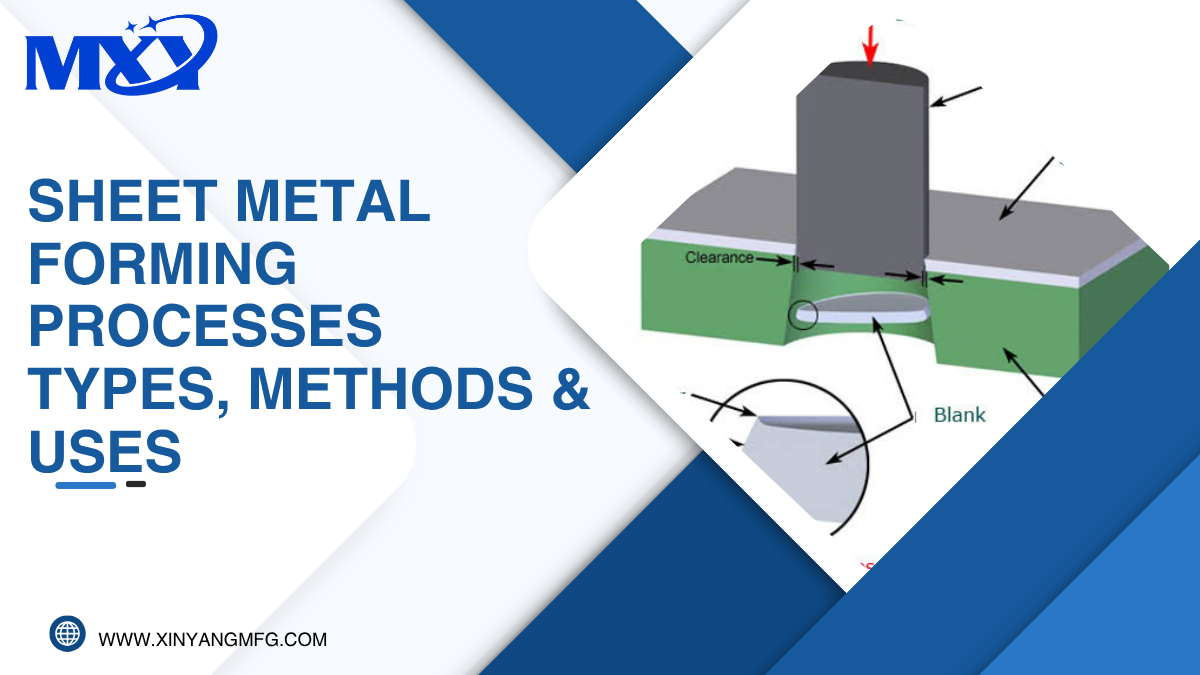
El embutido profundo transforma una pieza en bruto plana en una forma tridimensional hueca, presionando un punzón a través de la pieza en bruto hacia el interior de la cavidad de la matriz, mientras que un sujetador de pieza en bruto sujeta el material del reborde. El material de la pieza en bruto fluye hacia el interior desde el reborde, engrosándose ligeramente en el reborde y adelgazándose en la punta del punzón, para rellenar la cavidad del troquel. A diferencia del plegado, que deforma la chapa a lo largo de una línea, el embutido profundo redistribuye el material por una amplia superficie, produciendo piezas con paredes lisas y sin costuras.
El parámetro de diseño crítico en el embutido profundo es la relación de embutido, es decir, la relación entre el diámetro de la pieza en bruto y el diámetro del punzón (en el caso de piezas circulares). Una relación de embutido superior a aproximadamente 2,0-2,2 en una sola operación suele provocar desgarros o arrugas y requiere múltiples etapas de embutido con recocido intermedio para permitir que el material se recupere. La ductilidad del material es el factor limitante: el acero con bajo contenido en carbono y los aluminiums 3003 y 5052 se embuten bien; el aluminio 6061-T6 y el acero inoxidable requieren relaciones más conservadoras y una lubricación cuidadosa.
El embutido profundo permite fabricar piezas sin costuras y resistentes, con una excelente integridad de las paredes, razón por la cual es la técnica predominante en la fabricación de utensilios de cocina, latas de bebidas, depósitos de combustible para automóviles, tapas de recipientes a presión y carcasas que requieren una profundidad de embutido superior al diámetro. En la producción en serie, el embutido profundo resulta muy rentable: el coste del troquel se distribuye a lo largo de una tirada larga y los tiempos de ciclo son rápidos. En el caso de prototipos o cantidades reducidas, el coste del troquel hace que otros métodos resulten más económicos.
Perfilado
En el perfilado, una banda metálica continua pasa por una serie de pares de rodillos, y cada conjunto de rodillos añade un pequeño incremento de curvatura a la sección transversal. Tras pasar por todas las estaciones de rodillos, la banda ha adquirido progresivamente el perfil deseado. El perfil acabado se corta a medida mediante una matriz voladora o una prensa de corte situada más adelante en la línea de producción.
El perfilado está optimizado para piezas con una sección transversal constante a lo largo de su longitud: perfiles estructurales, perfiles en forma de sombrero, perfiles en Z, perfiles tubulares, extrusiones para marcos de puertas y ventanas, rieles de montaje de paneles solares y paneles laterales de automóviles. Dado que el proceso es continuo, se alcanzan ritmos de producción muy elevados y una excelente uniformidad dimensional a lo largo de la pieza. El espesor del material es uniforme en toda la sección transversal, ya que el proceso dobla el material en lugar de estirarlo.
La limitación es que el perfilado por rodillos no permite introducir cambios en la sección transversal a lo largo de la pieza, no es eficiente para piezas cortas y requiere un juego de rodillos específico para cada perfil. Las herramientas de perfilado son más económicas que los troqueles de estampación, pero siguen siendo específicas para cada perfil. Por lo tanto, el perfilado es más económico para perfiles consolidados y de gran volumen que para diseños únicos o que cambian con frecuencia.
Operaciones de corte: corte por láser, punzonado y cizallado
Los procesos de conformado casi siempre se combinan con el corte para preparar la pieza en bruto y añadir orificios y perforaciones. Los principales métodos de corte son el corte por láser, el punzonado con torreta y el cizallado, cada uno con sus propias ventajas.
El corte por láser CNC utiliza un rayo láser enfocado para fundir o vaporizar el material a lo largo de la trayectoria de corte programada. El resultado son cortes limpios y precisos recortar los bordes en una amplia gama de materiales y espesores, permite trabajar con perfiles complejos sin necesidad de utillaje específico para cada pieza y se configura rápidamente a partir de un archivo DXF o DWG. El corte por láser es la opción habitual para el corte y el perfilado de volúmenes bajos a medios, perfiles externos complejos y materiales de hasta unos 25 mm de espesor, dependiendo del tipo y la potencia del láser.
El punzonado con torreta utiliza un cargador de herramientas giratorio para perforar agujeros, ranuras y rejillas a gran velocidad. Es más rápido que el láser para patrones de agujeros repetitivos y permite crear detalles pequeños, como hoyuelos y avellanados, en una misma operación. Las herramientas de punzonado son económicas y el proceso funciona bien con acero dulce de hasta unos 6 mm de espesor.
El cizallado permite realizar cortes rectos de forma rápida y económica para recortar piezas rectangulares. No conlleva costes de utillaje, pero se limita a los cortes rectos. El entallado, que se utiliza para preparar las esquinas para el plegado, y el recorte, que se utiliza para cortar el contorno de un patrón plano complejo, son operaciones estrechamente relacionadas que a menudo se realizan en la misma máquina.
Cómo elegir un proceso de conformado
| Proceso | La mejor geometría | Rango de volumen | Coste de los utillajes | Restricción clave |
| Flexión | Soportes, carcasas, paneles con pliegues | De prototipo a alto | Bajo — utillaje estándar | Longitud de la brida, secuencia de curvaturas, límites de radio |
| Estampado | Piezas moldeadas complejas con múltiples características | Alto a muy alto | Alto — juego de troqueles a medida | Plazo de entrega largo; el diseño debe estar cerrado |
| Embutición profunda | Copas, cilindros, piezas huecas sin costuras | De medio a alto | Medio-alto — punzón y matriz a juego | Relación de estiramiento, ductilidad del material |
| Perfilado | Piezas largas de sección transversal constante | Alto | Medio — rodillos específicos para cada perfil | No se producen cambios en la sección transversal a lo largo de la longitud |
| Corte por láser | Perfiles planos complejos, cualquier disposición de orificios | Cualquiera | Ninguna — no se necesitan herramientas específicas para las piezas | Ancho de corte, zona afectada por el calor en material delgado |
Hay que adaptar el proceso a la geometría de la pieza y al volumen anual previsto. Para piezas de geometría general y bajo volumen, el plegado con prensa plegadora y el corte por láser cubren de forma económica la gran mayoría de las necesidades. Para perfiles huecos, el embutido profundo ofrece el resultado más resistente y el que permite un mayor aprovechamiento del material. Para piezas de gran volumen con características de conformado complejas, el estampado ofrece el menor coste por pieza. Para perfiles largos y uniformes, el perfilado en rodillos no tiene rival. La mayoría de las piezas de producción combinan varios procesos: corte por láser, plegado, inserción de herrajes y acabado.
Preguntas frecuentes
¿Qué es el conformado de chapa?
El conformado de chapa es cualquier proceso que da forma a una chapa plana para convertirla en una pieza tridimensional mediante la aplicación de fuerza, deformando el material de forma permanente sin añadir ni eliminar material. Los principales procesos de conformado son el plegado, el estampado, el embutido profundo y el perfilado, que suelen combinarse con operaciones de corte —corte por láser, punzonado o cizallado— para preparar la pieza en bruto y realizar orificios.
¿Cuál es la diferencia entre el plegado y el embutido profundo?
El plegado deforma la chapa a lo largo de una línea recta para crear un ángulo o una curva; el material situado fuera de la línea de plegado no se ve afectado de forma significativa. El embutido profundo redistribuye el material por una amplia superficie al presionar un punzón a través de la pieza en bruto hacia el interior de la cavidad de una matriz, formando una figura tridimensional hueca, como una copa, un cilindro o una carcasa. El embutido profundo implica un flujo de material considerablemente mayor y requiere una mayor ductilidad en el material de la pieza de trabajo.
¿Qué proceso de conformado es el más adecuado para grandes volúmenes?
El estampado y el perfilado son los métodos más rentables cuando se trata de grandes volúmenes. El estampado es adecuado para piezas con formas complejas producidas en grandes cantidades, en las que el coste de un juego de matrices a medida puede amortizarse a lo largo de la tirada. El perfilado es adecuado para piezas largas con un perfil de sección transversal uniforme, en las que la velocidad de producción continua es fundamental. Ambos métodos requieren una inversión significativa en utillaje que solo resulta rentable si se alcanza un volumen suficiente.
¿Se pueden combinar diferentes procesos de conformado en una misma pieza?
Sí, la mayoría de las piezas de chapa metálica se fabrican mediante una combinación de procesos. Una pieza típica puede cortarse con láser para darle forma, perforarse, plegarse en una prensa plegadora, embutirse en profundidad para crear una cavidad y, finalmente, someterse a un acabado. Los troqueles de estampado progresivo integran muchas de estas operaciones en una sola herramienta. Saber qué procesos están disponibles en las instalaciones de su proveedor ayuda a diseñar piezas que avancen de forma eficiente a lo largo del proceso de producción.