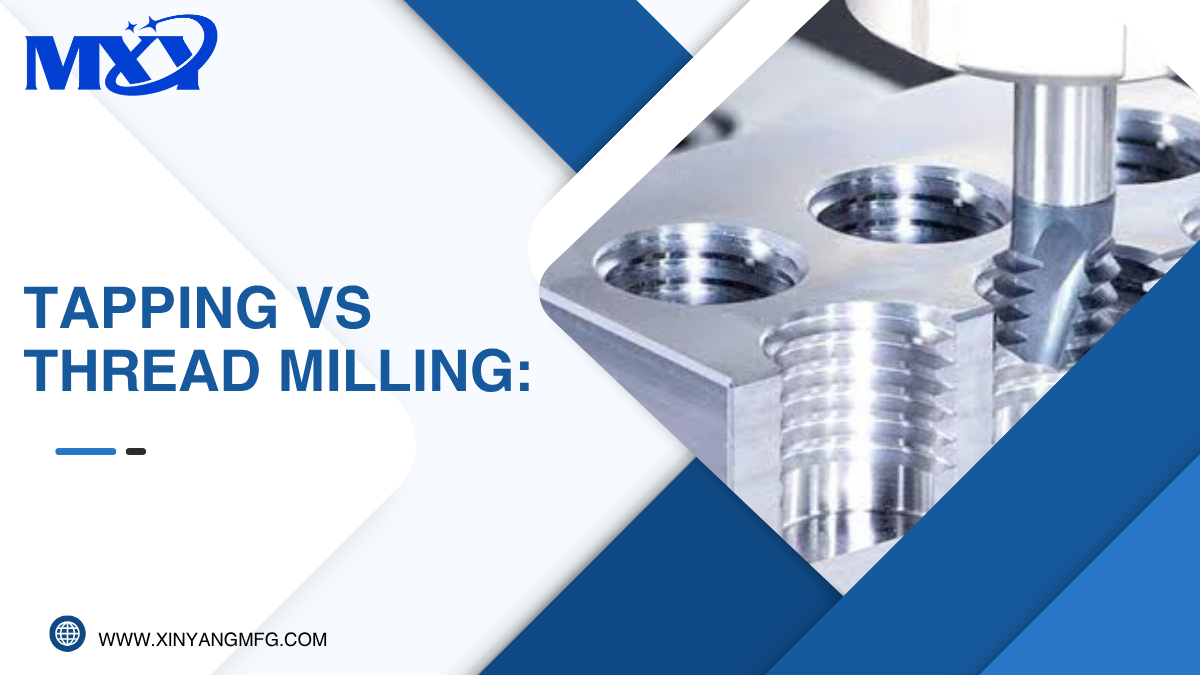
めねじが切られているCNC加工部品はすべて、タップ加工またはスレッドミル加工のいずれかによって製造されています。どちらの加工方法も、ねじ穴という同じ結果を生み出しますが、その仕組みは全く異なり、どちらを選ぶかによって、工具破損のリスク、公差、材料との適合性、および総コストに実際の影響が生じます。.
タッピングとは、専用のタップを、あらかじめ開けられた穴に軸方向へ一度に突き刺す加工方法です。 タップの形状はねじ形状と完全に一致しているため、加工は迅速に行え、プログラミングも最小限で済みます。延性のある材料における標準ねじの大量生産においては、タップ加工のスピードと経済性に勝る加工法はほとんどありません。その弱点は工具の破損です。硬質材料の盲穴内でタップが破損した場合、多くの場合回収が不可能であり、本来なら完成品となるはずの部品を廃棄せざるを得なくなることがあります。.
ねじ切り加工では、より小型の回転カッターを使用し、らせん状のCNCツールパス(X軸とY軸で穴の周囲を円を描くように移動しながら、Z軸方向に進む)に沿って、数回のパスでねじ形状を形成します。 カッターはねじ径と一致しないため、1本の工具で同じピッチの範囲のねじサイズをカバーでき、ツールパスの半径を調整することで適合性を微調整することができます。 ねじ切りフライス加工は加工速度が遅く、より高度なプログラミングを必要としますが、安全性が高く、柔軟性に富み、硬質材料、大径ねじ、底面での確実な噛み合わせが求められる盲穴、および破損リスクが許容できない高価な部品に適しています。.
このガイドでは、速度、使用工具、破損リスク、材料との適合性、盲穴加工性能、ねじの品質、および大量生産時の経済性など、重要なあらゆる要素について、両方の方法を比較しています。どちらの方法も、当社の CNC加工サービス, 、また、スレッディングは、当社の CNC旋盤加工とフライス加工の比較 ガイド。.
タッピングの仕組み
タップとは、溝が削り込まれ、対象となる内ねじ形状に完全に一致するように研削された、硬化処理済みの切削工具です。これはスピンドルに取り付けられ、そのピッチに同期した送り速度で、あらかじめ開けられた穴に軸方向へ送り込まれます。これが「リジッドタッピング」であり、現代のCNCマシニングセンターにおける標準的な加工方式です。 リジッドタッピングでは、スピンドル回転数と軸方向送り速度が電子的に同期されるため、タップは1回転につき正確に1ピッチ分進み、その後、逆回転して引き抜かれるという一連の連続したサイクルで行われます。.
6061アルミニウム製でM5の穴が30個ある部品の場合、タップ加工の生産性は極めて高い。標準サイズの場合、1穴あたりのサイクルタイムは通常1~3秒である。ねじサイズとピッチごとに1本のタップが必要となるため、5種類のMサイズねじには5本のタップが必要となり、工具マガジンのスロットを5つ消費することになる。大量生産向けの専用セルでは、これは無視できる程度である。 しかし、複雑な形状の部品を加工し、ねじ仕様が混在する受注生産の現場では、ツールマガジンの管理が重要な課題となります。.
タップ加工では、ねじ切りフライス加工に比べて切りくずの管理がより困難であり、特に盲穴ではその傾向が顕著です。タップが前進するにつれて、溝が切りくずを穴の外へ排出する必要があります。304ステンレス、チタン、一部のニッケル合金など、長くて糸状の切りくずが発生しやすい材料では、切りくずが溝の周囲に堆積し、固着や破損のリスクが高まります。 スパイラル溝(ガンタップ)構造は、切りくずを軸方向に盲穴から排出するため、このリスクを低減しますが、完全に排除するわけではありません。.
タップが折れてしまった場合――特に、盲穴内の硬化材に折れた場合は――、そのタップは通常、硬化HSSや超硬合金製であるため、ドリルで削り取ることはできません。多くの場合、EDM(放電加工)が唯一の確実な除去方法となりますが、これは費用がかかり、時間もかかります。部品の複雑さや価値によっては、最終的にスクラップとなることもあります。.
スレッドミリングの仕組み
ねじ切りミルは、通常、耐摩耗性コーティングが施された超硬合金製の多歯回転カッターであり、CNC工作機械がX、Y、Z軸を同時に補間しながららせん状の軌道に沿って移動させることで、ねじ形状を形成します。 カッターの歯形状はねじのプロファイルと一致しており、ツールパスの直径によってねじのサイズが決まります。サイズを決定するのは工具本体ではなくパス直径であるため、プログラムされた半径を調整することで、1本のねじ切りミルで同じピッチを持つ複数のねじサイズを加工することができます。.
ねじ切り加工では、タップ加工では不可能なねじの嵌合精度の制御も可能になります。プログラムされた工具経路の半径を数ミクロンずらすことで、オペレーターは工具を交換することなく、嵌合クラスをきつくしたり緩めたりすることができます。これは、部品ごとに嵌合クラスを確認・調整する必要がある精密機器の筐体、油圧継手、流体コネクタなどにおいて、特に有用です。.
安全面での利点は非常に大きい。ねじ切り用フライスは、完成したねじの直径よりも小さい。万が一破損しても、破片はねじ山から自然に脱落するか、磁石やピンセットを使って取り除くことができる。通常、加工部品は回収可能であり、これは盲穴に折れたタップが詰まってしまう場合とは対照的である。.
ねじ切り加工は加工速度が遅くなります。これは、1回の軸方向のプラング加工ではなく、1つの穴につき複数のヘリカルパスを行うためです。この加工には、3軸同時補間が可能なCNCマシニングセンターと、CAMシステム、あるいはねじ切り加工用の固定サイクルが必要です。延性のある材料で標準的なねじを非常に大量に加工する場合、1穴あたりの加工時間の遅れが累積するため、タップ加工の方が経済的です。.
タッピングとスレッドミリングの比較表
| 因子 | タッピング | ねじ切り |
| 1穴あたりのサイクルタイム | 最速 — 1回の潜水 | 低速 — ヘリカル・マルチパス |
| プログラミングの複雑さ | 単純なリジッドタップサイクル | ヘリカル補間、CAMが必要 |
| サイズ・ピッチ別ツール | サイズとピッチごとに1タップ | 1つのミルでさまざまなサイズに対応(ピッチは同一) |
| 破損のリスク | 中~高;一部欠損 | 低;カッターが自由に落下する |
| 最適な素材 | アルミニウム、軟鋼、真鍮 | チタン、ステンレス、焼入れ鋼 |
| ブラインドホールの性能 | チップパッキングのリスク;底部のランアウトゾーン | 底部のねじ山をきれいにし、切りくずを外側へ排出する |
| 糸の品質と仕上がり | よし、タップの形状を調整して修正した | 素晴らしい。ツールパスオフセットで調整可能 |
| 右利き用・左利き用 | 別途蛇口が必要です | 同じ加工機で、ツールパスの方向を逆にする |
| 雄ねじ | 該当なし | クライムカットのヘリカルパスであれば可能 |
| 最適な音量 | 大口径、標準ねじ | 低~中程度、精密、または特殊なねじ |
加工ガイド:タップ加工とスレッドミル加工の使い分け
アルミニウム合金(6061、7075、鋳造用グレード)は、タップ加工に最適な素材です。この材料は延性があり、処理しやすい切りくずが発生し、降伏強度が比較的低いため、タップ加工時の力や摩耗も抑えられます。 標準的なHSSまたはコバルト製タップは、摩耗するまでに数千個の穴を開けることができます。アルミニウムのねじ切り加工にはねじ切りフライス加工も可能であり、M20以上のねじや、底面での確実な噛み合わせが必要な盲穴にはこの方法が好まれますが、M3からM16までの大量生産においては、タップ加工の方が経済的です。.
ステンレス鋼(304、316、17-4 PH)は、急速に加工硬化し、長く糸状の切りくずを発生させ、切削刃を摩耗させます。 ステンレス鋼へのタップ加工は、鋭利なスパイラル溝のタップ、適切な切削液、そして慎重な同期操作があれば可能ですが、アルミニウムの場合に比べて摩耗が早く、破損のリスクも高くなります。 ステンレス鋼のM12以上のねじ切りには、ねじ切りフライス加工の方が適している場合が多い。これは、カッターが1パスあたりの切りくず断面積を小さくし、加工硬化を複数の浅い切削に分散させ、破損のリスクを大幅に低減できるためである。.
チタン合金、特に6Al-4Vは、以下の理由により、切削刃に熱が集中する。 熱伝導率が低い, 、これにより摩耗が加速し、かじれのリスクが高まります。チタンのタップ加工には、超硬タップ、スピンドル貫通式の高圧クーラント、および控えめな切削速度が必要ですが、それでも破損のリスクは依然として現実的な問題です。一方、超硬ソリッドカッターと適切なコーティングを用いたチタンのねじ切り加工では、熱管理が改善され、破損リスクも大幅に低減されます。 航空宇宙分野の構造用チタン製ねじにおいては、ねじ切り加工が業界標準となっています。.
HRC約40を超える焼入れ鋼には、一般的にタップ加工は行われません。破損のリスクが極めて高いためです。硬質材料用に設計された超硬カッターを用いたねじ切り加工であれば、HRC約65までのねじを加工できますが、工具の摩耗が激しく、送り速度は控えめに設定する必要があります。.
ブラインド穴:ねじ切り加工の主な利点
盲穴(ワークピースを貫通しない穴)は、どちらの方法においても特有の課題をもたらします。標準的なテーパータップを使用する場合、面取り形状の影響により、穴の底から3~5ピッチ分の範囲でねじが完全に噛み合いません。ボトムタップを使用すると、この範囲は1~2ピッチに縮小されますが、穴底での切りくずの堆積により、タップの破損リスクが高まります。 ブラインド穴の端部付近でねじ山が完全に噛み合うことが構造上の要件である場合は、図面にその旨を明記してください。そうすることで、加工担当者が適切なタップの種類を選択したり、ねじ切り加工を推奨したりできるようになります。.
ねじ切りフライス加工は、ブラインド穴をよりきれいに加工できます。カッターはねじ深さの底面かららせん状の軌跡を描き始め、穴の入口に向かって螺旋状に上昇するため、切りくずは底部に堆積することなく、開放端に向かって排出されます。カッターはブラインド端から1ピッチ以内の位置でねじ形状に噛み合うことができるため、指定されたねじ深さ全体にわたってほぼ完全に噛み合うことが可能です。 ねじ深さが制限されており、構造上完全な噛み合わせが求められる盲穴の場合、通常はねじ切り加工が適切な選択となります。.
適切な手法の選定:意思決定の枠組み
以下の条件を満たす場合は、デフォルトでタップ加工を行う:材料がアルミニウム、軟鋼、または真鍮であること;ねじが標準的なサイズおよびピッチであること;生産量が専用のタップ加工サイクルを導入するに足る量であること;および穴の深さと部品の価値から、許容できない破損リスクが生じないこと。延性のある材料を用いた大量生産のほとんどの場合、タップ加工が経済的なデフォルトの選択肢となる。.
以下のいずれかに該当する場合は、スレッドミリングを選択してください:材料がステンレス鋼、チタン、または焼入れ鋼である場合;ねじがM20以上、特殊なピッチ、または左ねじである場合;穴がブラインド穴であり、底面でのねじの確実な噛み合わせが必要な場合; 公差クラスが「タイト」であり、部品ごとの調整が必要な場合;または、部品の価値が高いため、タップの破損による廃棄が大きな損失となる場合。.
理にかなっている場合は、同じ部品に対して両方の加工法を用いる:アルミニウム製ブラケットの20個のM5穴にはタップ加工を施し、ステンレス製インサートの2つのM30穴にはスレッドミル加工を行う。部品全体に対して単一の加工法を指定すると、コストや品質の面で妥協を余儀なくされることが多い。.
よくある質問
スレッドミリングは、タップ加工よりも常に優れているのでしょうか?
必ずしもそうとは限りません。ねじ切り加工は柔軟性が高く、硬質材料ではより安全で、フィット感を調整できるという利点がありますが、加工速度は遅く、より高性能な機械とプログラミング環境が必要となります。一方、タッピングは、延性のある材料における標準的なねじの大量生産においては、より迅速かつ簡便です。最適な方法は、材料、ねじのサイズと種類、穴の形状、部品の価値、および生産量によって異なります。.
タップ加工の代わりにスレッドミリングを使用すべきなのはどのような場合ですか?
硬質材料(チタン、ステンレス鋼、焼入れ鋼など)、大型または特殊なねじ、底面まで確実に噛み合う必要がある盲孔、調整が必要な厳しい嵌合公差、およびタップが破損すると高額な廃棄費用が発生する高価な部品などに適しています。.
なぜタッピングはスレッドミリングよりも速いのですか?
タップは、1回の軸方向への切り込みでねじ山全体を加工し、通常、1穴あたり1~3秒で完了します。一方、ねじ切り加工では、機械が軸方向に進みながら穴の周囲を回る「完全ならせん状のパス」を、複数回にわたって繰り返す必要があります。標準的なねじの大量生産においては、タップ加工の方が1穴あたりの加工時間が大幅に短縮されるという利点があります。.
盲穴の中で蛇口が壊れたらどうなるのでしょうか?
盲穴にタップが折れてしまった場合、CNC加工において最も困難な回収作業の一つとなります。タップは焼入れ処理されたHSS(高速度鋼)または超硬合金製であるため、ドリルで削り出すことはできません。多くの場合、EDM(放電加工)が唯一の確実な除去方法となりますが、これは費用と時間がかかり、最終的には部品を廃棄せざるを得なくなることもあります。 ねじ切りフライス加工は、このリスクを大幅に低減します。カッターは穴よりも小さいため、破損しても破片は通常、自然に落下し、部品を回収可能に保つことができます。.
スレッドミリングで左ねじを加工することはできますか?
はい。スレッドミリングでは、らせん状の工具経路の方向を反転させることで左ねじを加工できます。この際、工具や工具ホルダーの交換は必要ありません。一方、タッピングでは、左ねじのサイズごとに専用の左ねじタップを用意し、スピンドルの回転方向を反転させて加工する必要があります。.